Movies & TV Shows from 1953
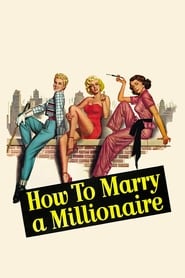
Movie
1953•
6.8
How to Marry a Millionaire
Three women set out to find eligible millionaires to marry, but find true love in the process.
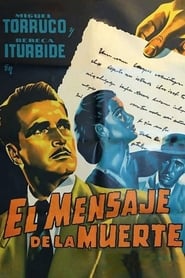
Movie
1953•
5.3
El mensaje de la muerte
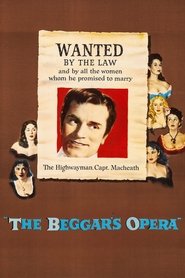
Movie
1953•
4.1
The Beggar's Opera
Adaptation of John Gay's 18th century opera, featuring Laurence Olivier as MacHeath and Hugh Griffith as the Beggar.
Movie
1953
Ehe für eine Nacht
Movie
1953•
6.6
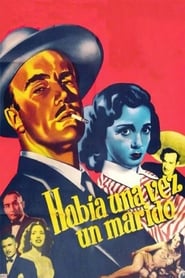
Había una vez un marido
Due to confusion, Rafael is believed responsible for the death of Teresa. His wife Lilia and his brother looking for the real culprits.
Movie
1953•
4.9
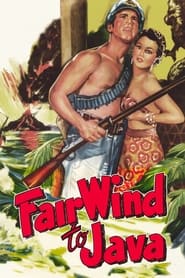
Fair Wind to Java
The Dutch East Indies, at the end of the nineteenth century. An adventurous captain of an American merchant vessel is looking for a sunken Dutch vessel containing 10,000 precious diamonds. Unfortunately, he's not the only one and then there's also that volcano on the nearby island of Krakatau, waiting to explode in its historical, disastrous eruption...
Movie
1953
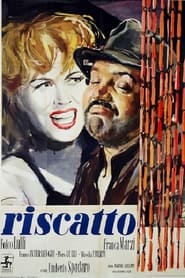
Riscatto - Tu sei il mio giudice
Roberto Biasetti and a friend are unjustly sentenced to sixteen years in prison for murder. The true perpetrator of the crime is a man named Maremmano, who happens to be in the same cell. Released after a partial pardon, he feels indebted to the two men and to Roberto's girlfriend. He returns to prison and confesses his guilt.
Movie
1953•
5.8
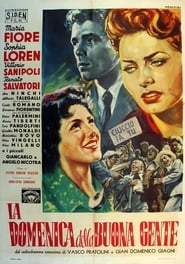
Good Folk's Sunday
In the background of the football match Roma - Napoli different stories intertwine.

Movie
1953•
3.8
Adolf Hitler - Ein Volk, ein Reich, ein Führer: Dokumente der Zeitgeschichte
The film begins with the First World War and ends in 1945. Without exception, recordings from this period were used, which came from weekly news reports from different countries. Previously unpublished scenes about the private life of Adolf Hitler and Eva Braun were also shown for the first time. The film was originally built into a frame story. The Off Commentary begins with the words: "This film [...] is a document of delusion that on the way to power tore an entire people and a whole world into disaster. This film portrays the suffering of a generation that only ended five to twelve. " The film premiered in Cologne on November 20, 1953, but was immediately banned by Federal Interior Minister Gerhard Schröder in agreement with the interior ministers of the federal states of the Federal Republic of Germany.
Movie
1953•
5.8
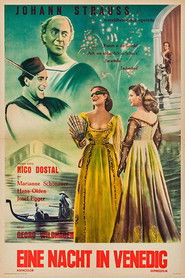
Eine Nacht in Venedig
There is great excitement in the Palazzo Urbino. Much to the delight of the ladies, the Duke, known as Don Juan, is expected. But the men of the city are less pleased by his arrival. Senator Delagua therefore decides to hide his beautiful wife in a convent and introduce the lady's maid to the Duke as his wife. When the Duke's valet devises a ruse of his own, the complications seem endless.
Movie
1953
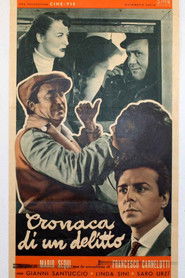
Cronaca di un delitto
After a factory worker is killed, Sergio Bruni is placed on remand for two years before being released for lack of evidence. Shunned by his wife and his colleagues, he must now discover the true culprit.
Movie
1953•
5.3
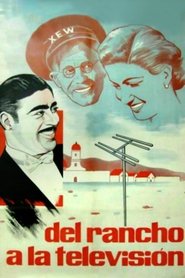
From the Village to TV
A young man goes to the capital to prove himself as an opera singer, after being rejected he must find other means to achieve fame
Movie
1953
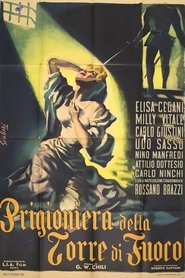
La prigioniera della torre di fuoco
Italy, 15th century: Marco and Cesco, two youths from rival families are friends but become enemies when they both fall in love with the same girl, Germana, who is kept prisoner by Cesco's family in a tower. Germana is however in love with Marco and Cesco, feeling betrayed, has Marco imprisoned. During a battle Marco proves however his loyalty to his friend, who falls unfortunately deadly wounded.
Movie
1953•
6.7
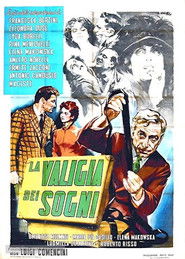
The Suitcase of Dreams
A former silent film actor who has saved old movies of his time from destruction uses them to set up recreational performances at schools. After an accidental fire and the risk of prison, he meets a rich producer who helps him to build a film museum.
Movie
1953•
5.9
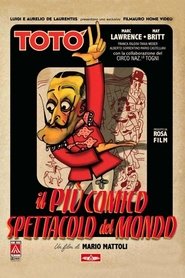
Funniest Show on Earth
A clown named Tottons of the Togni circus, obliged to never take off his clown makeup or reveal his identity, is continually persecuted by the jealousy of three women and even by a policeman.
Movie
1953•
5.7
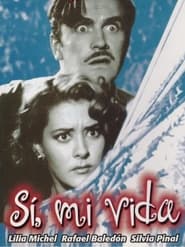
Si, Mi vida
Dr. Castellanos is saved from bankruptcy.
Movie
1953•
6.0
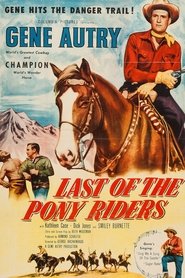
Last of the Pony Riders
Ex-Pony Express rider Autry ties to protect his US mail franchise as the Pony Express gives way to stage coach mail and the telegraph. Gene's last film appearance as a singing cowboy.
Movie
1953•
7.6
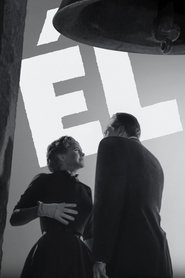
Él
Gloria encounters Francisco, a man whose social veneer betrays a truer self burrowed underneath.
Movie
1953•
6.3
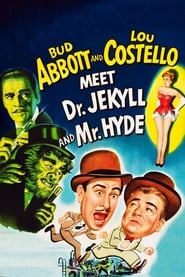
Abbott and Costello Meet Dr. Jekyll and Mr. Hyde
As American policemen in London, Bud and Lou meet up with Dr. Jekyll and Mr. Hyde.
Movie
1953•
4.9
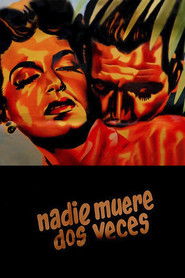
Nadie muere dos veces
Big-league criminal escapes from jail, tracks down his ex-wife at a seaside resort. She kills him in self-defense, and then a guy who looks exactly like him comes along. Massive complications!

TV
1953
The Good Old Days
The Good Old Days was a popular BBC television light entertainment programme which ran from 1953 to 1983. It was performed at the Leeds City Varieties and recreated an authentic atmosphere of the Victorian–Edwardian music hall with songs and sketches of the era performed by present-day performers in the style of the original artistes. The audience dressed in period costume and joined in the singing, especially "Down at the Old Bull and Bush" which closed the show. The show was compered by Leonard Sachs. In the course of its run it featured about 2,000 performers.

TV
1953•
6.2
Panorama
Current affairs programme, featuring interviews and investigative reports on a wide variety of subjects.

TV
1953•
7.0
The Oscars
An annual American awards ceremony honoring cinematic achievements in the film industry. The various category winners are awarded a copy of a statuette, officially the Academy Award of Merit, that is better known by its nickname Oscar.
TV
1953•
6.0
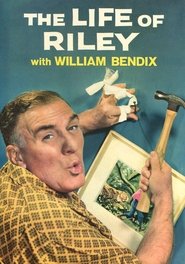
The Life Of Riley
Riley worked in an aircraft plant in California, but viewers usually saw him at home, cheerfully disrupting life with his malapropisms and ill timed intervention into minor problems.
TV
1953•
6.0
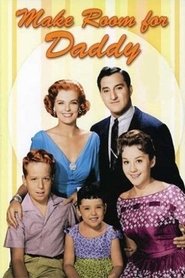
The Danny Thomas Show
Danny Thomas, an entertainer, tries to balance his home life with the needs of his career, with hilarious results.

TV
1953•
7.0
Meet Mr. McNutley
Meet Mr. McNutley is an American situation comedy which aired on CBS Television from 1953–1955, with Ray Milland in the role of fastidious Professor Ray McNutley, the head of the English Department at the fictitious Lynnhaven College for girls. Phyllis Avery portrayed McNutley's wife, Peggy. The half-hour series aired on Thursday evenings opposite Groucho Marx's NBC program, You Bet Your Life. The show aired concurrently on radio during its first season. Both versions were sponsored by General Electric, and originally presented under the umbrella title of The General Electric Comedy Theatre.
TV
1953•
6.2
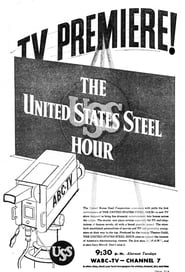
The United States Steel Hour
The United States Steel Hour is an anthology series which brought hour-long dramas to television from 1953 to 1963. The television series and the radio program that preceded it were both sponsored by the United States Steel Corporation.
TV
1953•
7.0
The Pepsi-Cola Playhouse
The Pepsi-Cola Playhouse is an American dramatic anthology series that aired on ABC from 1953 to 1955, sponsored by Pepsi-Cola. The show was hosted by Arlene Dahl, Anita Colby, and, finally, Polly Bergen
TV
1953
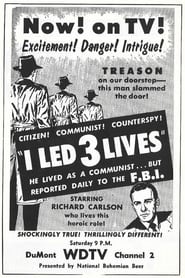
I Led Three Lives
I Led Three Lives is an American drama series which was syndicated by Ziv Television Programs from October 1, 1953 to January 1, 1956. The series stars Richard Carlson. The show was a companion piece of sorts to the radio drama I Was a Communist for the FBI, which dealt with a similar subject and was also syndicated by Ziv from 1952 to 1954.
TV
1953•
3.0
Valiant Lady
Valiant Lady is an American soap opera which ran daily on CBS radio and television from October 12, 1953 to August 16, 1957 at 12:00 PM. The show's title was taken from a 1930s radio soap opera about a young woman struggling through life but is otherwise very different. Like many early soap operas, the show was broadcast live from CBS studios in New York City. The series was created by Adrian Spies; the head writer was Charles Elwyn.
TV
1953•
5.7
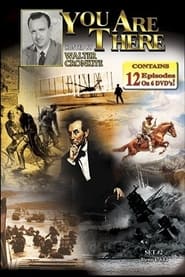
You Are There
You Are There is an American historical educational television and radio series broadcast over the CBS Radio and CBS Television networks.
TV
1953•
7.0
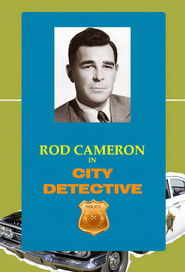
City Detective
Crime drama starring Rod Cameron as 43-year-old Bart Grant, a tough 1950s New York City police lieutenant.

TV
1953•
5.8
Topper
Topper is an American fantasy sitcom based on the 1937 film of the same name. The series was broadcast on CBS from October 9, 1953 to July 15, 1955, and stars Leo G. Carroll in the title role.
TV
1953•
5.5
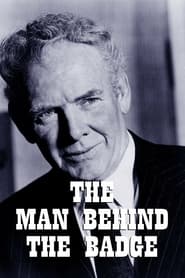
The Man Behind the Badge
The Man Behind the Badge is the title of a half-hour American television police drama series which aired on the CBS from 1953-1955 starring and hosted by character actor Charles Bickford. Years later, Bickford appeared as one of the owners of Shiloh Ranch in the NBC western series, The Vrginian. In its first season, The Man Behind the Badge aired on Sundays at 9:30 p.m. EST opposite ABC's Jukebox Jury.
TV
1953
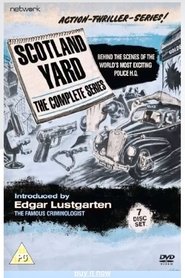
Scotland Yard
Scotland Yard was perhaps the best-known series to emerge from Anglo-Amalgamated’s output of crime drama. Shot as cinema support features at the company’s Merton Park Studios in South Wimbledon, these half-hour thrillers – based on real-life cases from the vaults of London’s Metropolitan Police headquarters – were a successful regular feature in cinemas over nearly a decade from the early 1950s onwards. Like sister series Scales of Justice, Scotland Yard is introduced by celebrated writer and criminologist Edgar Lustgarten and presents case after intriguing case, with many solved onscreen by the redoubtable Inspector Duggan (played by Australian-born Russell Napier).
TV
1953•
2.5
Space Command
Space Command was a Canadian children's science fiction television adventure series broadcast on CBC (Canadian Broadcast Company) Television in 1953 and 1954. It was the first time the network (CBC) aired its own dramatic series. The series presented life on the fictional space ship XSW1 operated by Space Command, an international organization working to explore and colonize space. Each episode featured the activities of Frank Anderson covering many subject areas such as sunspots, asteroids, space medicine, meteors and evolution. Although short-lived, Space Command proved to be a hit dramatic program for CBC's earliest years. The series aired weekly from 13 March 1953 – 29 May 1954 Unfortunately, only a single episode from November 1953 is know to exist at this time.
TV
1953•
4.7
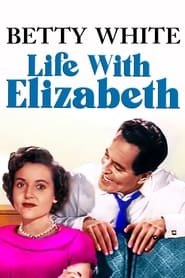
Life with Elizabeth
Elizabeth and Alvin are a married couple who live an ordinary suburban life, but inevitably managed to get into predicaments. At the end of most predicaments, Alvin, in variable degrees of frustration, would say, "I shall leave you now, Elizabeth" and would walk out of sight. The announcer would say, "Elizabeth, aren't you ashamed?" She would slowly nod, but then, with a slightly devilish grin, would vigorously shake her head to indicate she wasn't.
TV
1953•
5.0
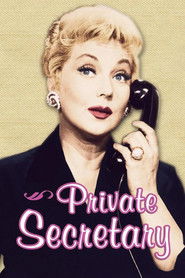
Private Secretary
Private Secretary is an American sitcom that aired from February 1, 1953 to September 10, 1957 on CBS, alternating with The Jack Benny Program on Sundays at 7:30pm EST. The series stars Ann Sothern as Susan Camille "Susie" MacNamara, devoted secretary to handsome talent agent Peter Sands, played by Don Porter.
TV
1953•
6.5
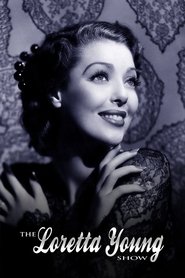
Letter to Loretta
Letter to Loretta is an American anthology drama series telecast on NBC from September 1953 to June 1961 for a total of 165 episodes. The filmed show was hosted by Loretta Young who also played the lead in various episodes. Letter to Loretta was sponsored by Procter & Gamble from 1953 through 1960. The final season's sponsor was Warner-Lambert's Listerine.
TV
1953•
6.0
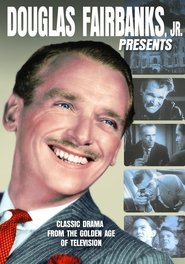
Douglas Fairbanks, Jr., Presents
Douglas Fairbanks, Jr., Presents, is a 1950s syndicated anthology series hosted and occasionally starring Douglas Fairbanks, Jr.. The series offered Buster Keaton in his first dramatic role in the episode entitled "The Awakening". British actor Christopher Lee appeared in varied role in thirteen episodes, including "Destination Milan". The program aired from 7 January 1953 to 11 February 1957 for a total of 117 episodes. Fairbanks himself starred in forty-eight episodes. In Melbourne, Australia the series was aired under the title Chesebrough Ponds Playhouse.