Movies & TV Shows from 1949
Movie
1949•
5.0
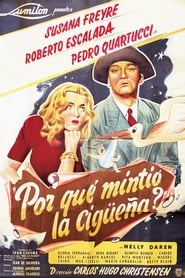
¿Por qué mintió la cigüeña?
To avoid the abandonment of her husband, a woman rents three children with the intention of making him believe that he is the father. Sudden maternity will bring complications in triplicate.

Movie
1949•
6.5
The Walls of Malapaga
A French fugitive arrives in Genoa, where he becomes entangled with an Italian woman and her daughter.
Movie
1949
Ein Herz schlägt für dich

Movie
1949
Diese Nacht vergess ich nie
Movie
1949
La otra y yo
Movie
1949
Píseň o sletu – I. část – Mládí
A documentary about the 11th All-Sokol Rally in Prague in 1948, focusing in the first part on performances by schoolchildren, youth days, and their parade.
Movie
1949•
6.0
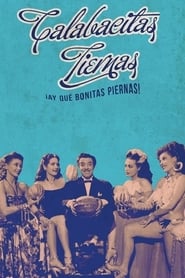
What a Beautiful Legs!
A man hired to impersonate a bankrupt business mogul who is currently on the run from creditors sets out organize a musical starring beauties from Brazil, Mexico, and Spain in this Spanish-language comedy starring popular funnyman Tin Tan. Now, as the hapless imposter attempts to finance a musical without any money, he also discovers just how difficult it can be to juggle three beautiful starlets who all have eyes for their presumably wealthy producer.
Movie
1949
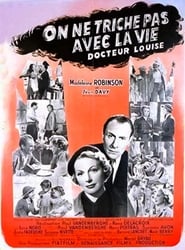
The Story of Dr. Louise
The struggle of a female doctor against superstition and healers.
Movie
1949•
5.0
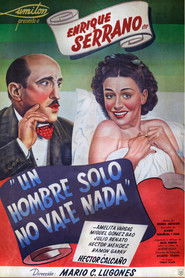
Un hombre solo no vale nada
An employee progresses in the factory where he works by having his wife pass by an attractive Cuban singer.
Movie
1949•
6.6
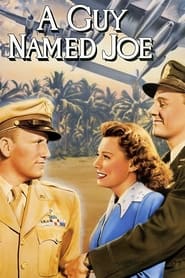
A Guy Named Joe
A cocky U.S. Army Air Force pilot stationed in England during World War II falls for a daring female flier. After he's killed on a mission, he's sent back to Earth by a heavenly General with a new assignment.
Movie
1949•
6.0
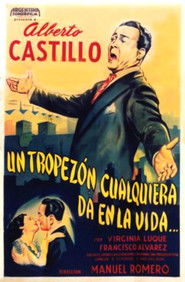
Un tropezón cualquiera da en la vida
Movie
1949•
6.0
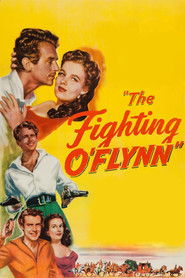
The Fighting O'Flynn
A swashbuckling Irishman opposes French agents during the Napoleonic wars.
Movie
1949
Pojď s námi na palubu!
Movie
1949
Píseň o sletu – II. část – Bratři a sestry
Movie
1949•
4.0
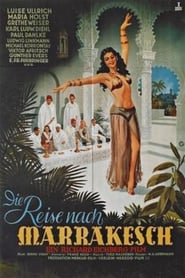
The Trip to Marrakesh
Armande, the wife of surgeon Colbert, has numerous love affairs and pursues Jacques, whom Armande’s girlfriend Liliane has in her sights.
Movie
1949•
5.0
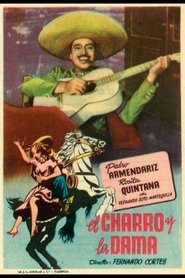
El charro y la dama
Bratty rich girl plays practical jokes on the man that she'll obviously end up marrying.
Movie
1949•
5.8
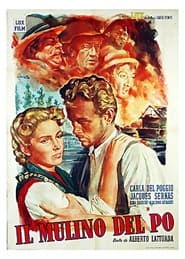
The Mill on the Po
In the Po Valley during the 19th century, a rich girl engaged to a well-to-do farmer ends up penniless and is forced to work for her fiancé’s relatives. Peasant unrest, carried to extremes by both workers and landowners, leads to violence and tragedy.
Movie
1949•
5.5
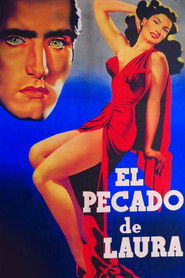
Laura's Sin
Young woman breaks her engagement to be married when an opportunity for stardom comes her way.
Movie
1949•
6.5
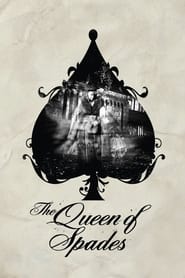
The Queen of Spades
A czarist captain stops at nothing to learn the secrets of a countess rumored to have sold her soul to the devil in order to always win at cards.
Movie
1949•
7.2
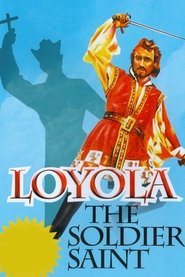
Loyola, the Soldier Saint
A historical drama based on St. Ignatius of Loyola as a Warrior, as a Founder of the Jesuit Order and as a Saint .
TV
1949•
6.8
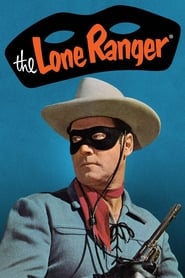
The Lone Ranger
The Lone Ranger is an American western television series that ran from 1949 to 1957, starring Clayton Moore with Jay Silverheels as Tonto. The live-action series initially featured Gerald Mohr as the episode narrator. Fred Foy served as both narrator and announcer of the radio series from 1948 to its finish and became announcer of the television version when story narration was dropped there. This was by far the highest-rated television program on the ABC network in the early 1950s and its first true "hit".

TV
1949•
4.9
Suspense
An anthology series adapted from the radio program of the same name. Like the radio program, many scripts were adaptations of literary classics by well-known authors. Classic authors such as Edgar Allan Poe, Agatha Christie, and Charles Dickens all had stories adapted for the series, while contemporary authors such as Roald Dahl and Gore Vidal also contributed.
TV
1949•
5.8
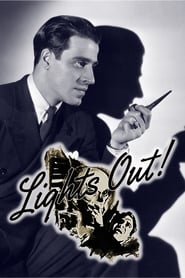
Lights Out
Lights Out was an extremely popular American old-time radio program, an early example of a network series devoted mostly to horror and the supernatural, predating Suspense and Inner Sanctum. Versions of Lights Out aired on different networks, at various times, from January 1934 to the summer of 1947 and the series eventually made the transition to television. In 1946, NBC Television brought Lights Out to TV in a series of four specials, broadcast live and produced by Fred Coe, who also contributed three of the scripts. NBC asked Cooper to write the script for the premiere, "First Person Singular", which is told entirely from the point of view of an unseen murderer who kills his obnoxious wife and winds up being executed. Variety gave this first episode a rave review ("undoubtedly one of the best dramatic shows yet seen on a television screen"), but Lights Out did not become a regular NBC-TV series until 1949.
TV
1949•
10.0
The BAFTA Awards
BAFTA presents awards for film, television and games, including children's entertainment, at a number of annual ceremonies across the UK and in Los Angeles, USA.
TV
1949•
7.9
The Emmy Awards
An annual awards ceremony honoring the best in U.S. prime time television programming as chosen by the Academy of Television Arts & Sciences.
TV
1949•
7.2
Fireside Theater
Fireside Theater is an American anthology drama series that ran on NBC from 1949 to 1958, and was the first successful filmed series on American television. Stories were low budget and often based on public domain stories or written by freelance writers such as Rod Serling. While it was panned by critics, it remained in the top ten most popular shows for most of its run. It predated the other major pioneer of filmed TV in America, I Love Lucy, by two years.
TV
1949•
7.5
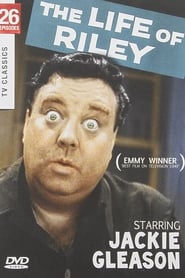
The Life of Riley
Riley worked in an aircraft plant in California, but viewers usually saw him at home, cheerfully disrupting life with his malapropisms and ill timed intervention into minor problems. His stock answer to every turn of fate became a catch phrase: 'What a revoltin' development this is!"
TV
1949•
6.0
Crusade in Europe
TV
1949•
6.7
The Big Story
Based on a popular radio series, each show tells a different reporter's Big Story, a true story selected from newspapers across the United States. Comments from the actual reporter open and close each show but the permanent narrator drives the plot line and a featured actor dramatizes the reporter's role.
TV
1949
A Woman to Remember
A Woman to Remember is a soap opera which ran on the DuMont Television Network from February 21, 1949 to July 15, 1949. The show initially ran in daytime, but starting May 2, aired Monday through Friday from 7:30 to 7:45 pm ET. John Haggart served as creator and writer, and Bob Steele was producer and director. The show followed Captain Video and His Video Rangers and had no sponsor.
TV
1949•
6.0
Man Against Crime
Man Against Crime, one of the first television programs about private eyes, ran on CBS, the DuMont Television Network and NBC from October 7, 1949 to August 26, 1956. The show was created by Lawrence Klee and Paul Alter and was broadcast live until 1952. It was also directed by Paul Alter. The series was one of the few television programs ever to have been simulcast on more than one network: the program aired on both NBC and DuMont during the 1953-1954 television season.
TV
1949•
7.0
The Ed Wynn Show
TV
1949•
6.0
The Voice of Firestone
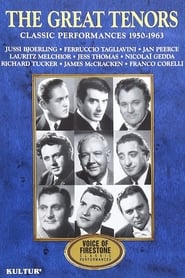
The Voice of Firestone is a long-running radio and television program of classical music. The show featured leading singers in selections from opera and operetta. Originally titled The Firestone Hour, it was first broadcast on the NBC Radio network on December 3, 1928 and was later also shown on television starting in 1949. The program was last broadcast in 1963.
TV
1949•
6.0
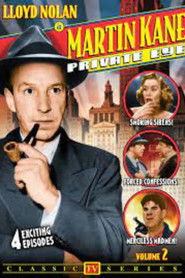
Martin Kane, Private Eye
Martin Kane, Private Eye was an early radio series and television crime series sponsored by United States Tobacco Company.
TV
1949
The Front Page
TV
1949
The Clock
The Clock is a 30-minute American anthology television series based upon the American Broadcasting Company radio series which ran from 1946–48. The half-hour series mostly consisted of original dramas concerning murder, mayhem or insanity. Series narrator Larry Semon was the only regular; each week a new set of guest stars were featured. The title of the series was derived from a clock which was a major plot element in each story. The show's musical theme was "The Sands of Time". Ninety-one episodes aired from 1949 to 1952, most of them on NBC, except for the final season which aired on ABC. Courtesy of Wikipedia.
TV
1949
These Are My Children
These Are My Children is a short-lived American television soap opera which ran on NBC from January 31, 1949 to February 25, 1949. The show was broadcast live from Chicago, Illinois, airing fifteen minutes a day, five days a week, at 5:00 p.m. EST. These Are My Children was the first soap opera to air on a major television network. Created by Irna Phillips and directed by Norman Felton, the show was based in large part on Phillips' early radio soaps Today's Children and Painted Dreams. Children centered on an Irish widow, Mrs. Henehan and her struggles to run a boarding house as well as help her three children and new daughter-in-law Jean. Critics were not impressed; Television World ended their review with: "There is no place on television for this type of program, a blank screen is preferable."
TV
1949•
8.0
Mama
Mama was a weekly Maxwell House and Post-sponsored CBS television comedy-drama series from July 1, 1949 until March 17, 1957.
TV
1949
Hands of Murder
Hands of Murder was an American mystery/anthology series that aired on the DuMont Television Network.
TV
1949•
6.3
The Silver Theatre
The Silver Theatre is a television series that was broadcast on the CBS television network from 1949 to 1950. It was a live anthology series consisting of dramatic teleplays about romance. It was sponsored by the International Silver Company.