Movies & TV Shows from 1927

Movie
1927
Wenn Menschen reif zur Liebe werden
Movie
1927
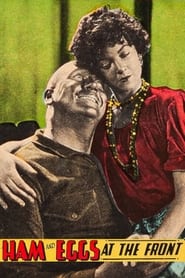
Ham and Eggs at the Front
Fifi, a dusky, sultry Senegalese spy, uses her wiles to get information out of two American army soldiers, Ham and Eggs, in France during World War I.
Movie
1927•
6.8
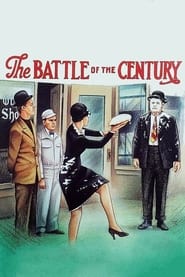
The Battle of the Century
Fight manager takes out an insurance policy on his puny pugilist and then proceeds to try to arrange for an accident so that he can collect.

Movie
1927•
6.3
The Battles of Coronel and Falkland Islands
The film focuses on the naval warfare around the Battle of Coronel and Battle of the Falkland Islands during the First World War. It was the last in a successful series of documentary reconstructions of First World War battles by British Instructional Films made between 1921 and 1927.
Movie
1927•
7.5
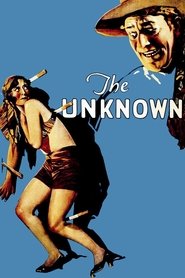
The Unknown
On the lam, criminal Alonzo hides in the circus as The Armless Wonder – a performer who uses his feet to hurl knives. Alonzo keeps the arms he really has concealed to hide his identity. Meanwhile, ringmaster's daughter Nanon has a phobia of being touched by men, but is romantically pursued by not only Alonzo but the strongman Malabar. Alonzo's desperation to remain with Nanon will only end in tragedy.
Movie
1927•
5.4
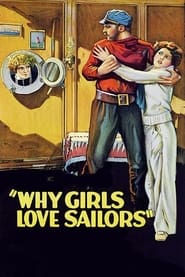
Why Girls Love Sailors
Stan is a sailor whose girl gets kidnapped by a rough sea captain. Stan dresses in drag and seduces the captain but the captain's wife catches him. Stan and his girl beat a hasty retreat as the captain's wife fires off a parting shot.
Movie
1927•
6.3
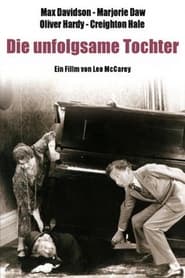
Why Girls Say No
A short comedy by Leo McCarey about a Jewish father who is worried about his daughter.
Movie
1927
Die Stadt der tausend Freuden
Movie
1927
Grand Hotel...!
German adaptation of Béla Balázs's Grand Hotel, which was later remade by MGM in 1932.
Movie
1927•
6.4
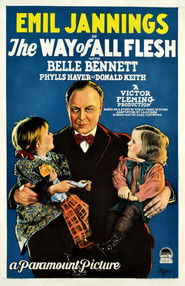
The Way of All Flesh
The story takes place in Milwaukee during the early 1900s with a bank clerk named August Schiller who is happy with both his job and his family. He is tasked with transporting $1,000 in securities to Chicago. On the train he meets a blond seductress who convinces him to buy her a bottle of champagne, and takes him to a saloon. The next morning he awakes alone in a dilapidated bedroom and without the securities.
Movie
1927•
6.5
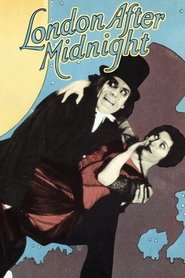
London After Midnight
The abandoned Balfour House, the owner of which was found dead five years earlier, comes back to life with the arrival of two suspicious sinister-looking tenants. This film was lost in the 1965 MGM vault fire; only a few stills exist.
Movie
1927•
6.0
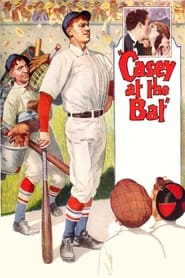
Casey at the Bat
Casey is a slovenly junk man in a turn of the twentieth century hick town who has a remarkable ability to play baseball. An unscrupulous New York scout signs him up, so Casey and his equally dishonest manager go to the big leagues. Eventually, the scout and manager conspire to get him drunk and bet against him for a crucial game with the pennant at stake.
Movie
1927•
7.0
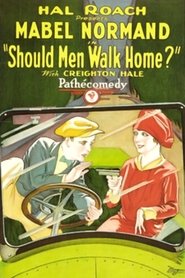
Should Men Walk Home?
Mabel plays an out-and-out crook, a "Girl Bandit," no less. And she quickly hooks up with a male partner in crime, in this case a Gentleman Crook played by perpetually grinning Creighton Hale. Mabel seems a little livelier in this film than in some of her other late works. In the very first scene we find her hitch-hiking, and she's forced to make a mad dash for cover when Hale's car nearly hits her. Soon they team up and crash a swanky party in a mansion to steal a jewel from the host's safe.
Movie
1927•
6.0
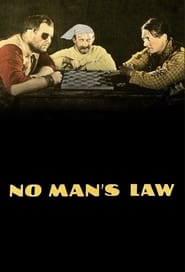
No Man's Law
A wild stallion (Rex the Wonder Horse) becomes the protector of a prospector and his foster daughter as two thugs plot to steal their claim.
Movie
1927
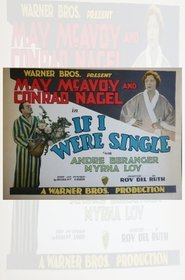
If I Were Single
Rich girl Joan Whitney does her flirtatious best to break up the marriage of May and Ted Howard and almost succeeds, but not before May Howard has a light flirtation with a light-in-the-slippers specimen named Claude.
Movie
1927
A Made-To-Order Hero
Bert Lane and Margery Murray are in love, but her aunt insists she marry either a society man or a hero, so his hands decide that he will be a made-to-order hero - but society man Fred Van Ralt keeps getting the credit.
Movie
1927•
5.7
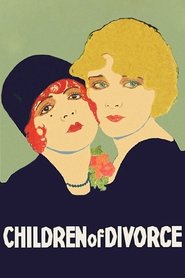
Children of Divorce
A young flapper tricks her childhood sweetheart into marrying her. He really loves another woman, but didn't marry her for fear the marriage would end in divorce, like his parents'. Complications ensue.
Movie
1927
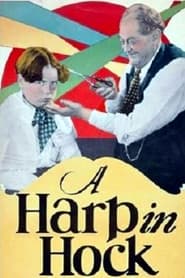
A Harp in Hock
A Harp in Hock, also known as The Samaritan, is a lost 1927 American silent melodrama film directed by Renaud Hoffman, produced by DeMille Pictures, and distributed by Pathé Exchange. The film starred Rudolph Schildkraut, Junior Coghlan, May Robson, and Bessie Love, and was based on the short story by Evelyn Campbell.
Movie
1927•
9.0
Chicken Feathers
Comedy starring Jack Duffy and Anne Cornwall, featured in James Roots' 100 Essential Film Comedies

Movie
1927•
7.5
Berlin: Symphony of a Great City
A day in the city of Berlin, which experienced an industrial boom in the 1920s, and still provides an insight into the living and working conditions at that time. Germany had just recovered a little from the worst consequences of the First World War, the great economic crisis was still a few years away and Hitler was not yet an issue at the time.