Movies & TV Shows from 1902
Movie
1902•
4.2
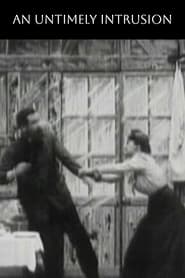
An Untimely Intrusion
A fighting couple gets interrupted by the landlady.
Movie
1902•
7.9
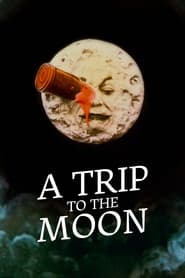
A Trip to the Moon
Professor Barbenfouillis and five of his colleagues from the Academy of Astronomy travel to the Moon aboard a rocket propelled by a giant cannon. Once on the lunar surface, the bold explorers face the many perils hidden in the caves of the mysterious planet.
Movie
1902•
4.0
Danse fantaisiste
"Danse fantaisiste" (Gaumont #589) is part of the "Miss Lina Esbrard. Danseuse cosmopolite et serpentine" series of 4 films, and should not be confused with "Danse excentrique" (Gaumont #587), "Danse serpentine" (Gaumont #588, the only extant film in the series), or "La Gigue" (Gaumont #590).
Movie
1902•
5.0
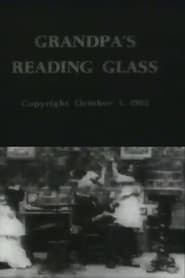
Grandpa's Reading Glass
A very clever and interesting picture. A family group composed of grandpa, mamma and several children are seen about a library table. One of the little girls takes a large reading glass, and with the other children looks at various objects about the room. As each object is inspected, it appears on the screen in enlarged form, just as it might look when viewed through a large magnifying glass. Among the objects thus shown are: 1. Little girl playing with kitten; 2. Monkey eating banana; 3. Parrot; 4. Baby's face; 5. Page from comic paper; 6. Mamma's face; 7. Mamma's eye.

Movie
1902•
4.7
Eccentric Dance
"Danse excentrique" (Gaumont #587) is part of the "Miss Lina Esbrard. Danseuse cosmopolite et serpentine" series of 4 films, and should not be confused with "Danse serpentine" (Gaumont #588, the only extant film in the series), "Danse fantaisiste" (Gaumont #589) or "La Gigue" (Gaumont #590).
Movie
1902
La Gigue
"La Gigue" (Gaumont #590) is part of the "Miss Lina Esbrard. Danseuse cosmopolite et serpentine" series of 4 films, and should not be confused with "Danse excentrique" (Gaumont #587), "Danse serpentine" (Gaumont #588, the only extant film in the series), or "Danse fantaisiste" (Gaumont #589).
Movie
1902
Mother Goose Nursery Rhymes
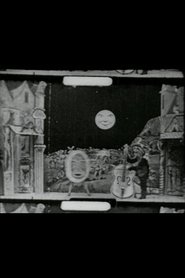
Compilation of 7 short scenes: ‘Sing a Song of Sixpence’; ‘Old Mother Hubbard’; ‘Little Miss Muffet’; ‘Goosey Gander’; ‘Jack and Jill’; ‘Old Woman in a Shoe’; ‘Hey Diddle Diddle’. Only the last one is known to have survived and to be available to watch.
Movie
1902•
6.0
The Fairy of Spring
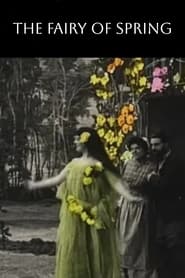
It is the depths of winter, and the snow is falling. The desolate landscape casts a melancholic note over the scene. A poor peasant woman awaits her husband, who has gone to gather firewood in the forest. When he finally arrives, they lament their sad fate. If only they had a child! This wish has been granted by the Spring Fairy, who appears before them. With a wave of her magic wand, she transforms the scene into a cheerful, flowery landscape. They themselves are dressed in rich costumes. The fairy summons flowers, which flow into her hand to form a magnificent bouquet, instantly transformed into a beautiful pink baby, which she gives to them. Then she vanishes, leaving them overflowing with joy and longing. This film, tinted in Barcelona by Segundo de Chomón, is currently lost and should not be confused with the remake done by Vincent Lorant-Heilbronn in 1905, also tinted by Chomón in Paris, which is widely available to watch.
Movie
1902•
5.2
Miss Dundee and Her Performing Dogs
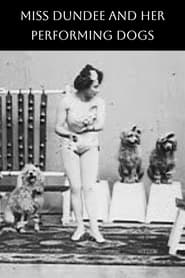
A woman shows off her trained dogs.
Movie
1902
Delhi Durbar
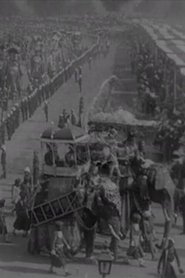
Aristocracy, army, elephants and more mark the start of the 1903 Durbar.
Movie
1902•
2.0
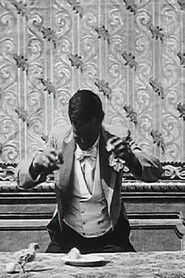
Nos bons moines
Two monks are seen sitting at a table drinking their beer and smoking their pipes. One has evidently told a funny story judging from their actions. Between laughs they exchange snuff boxes, and one in particular helping himself to a plentiful supply, sneezes until he rolls on the floor.
Movie
1902•
4.0
The Marvelous Hen
A magician performs tricks with a chicken and eggs.
Movie
1902
Jésus chassant les vendeurs du temple
Jesus enters the temple while the merchants are selling their wares. Jesus overturns the tables of the money lenders by showing them their error.
Movie
1902
Les malabares: Les acrobats
"Les Acrobats" is the second short film (out of 5) in the series "Les Malabares", which were filmed during the exhibition of the Malabari, an Indian tribe from the Malabar region, in the Jardin d'Acclimatation from August 15 to October 5, 1902. In this film, the Malabars perform various acrobatic exercises. Some dance on a rope stretched at the end of two bamboos stuck in the ground, carry on their head in perfect balance a pile of earthenware vessels. Others climb like monkeys with a surprising agility, perform the dance of GUYARATIS birds, scratch their heads, peck the ground.
Movie
1902•
3.5
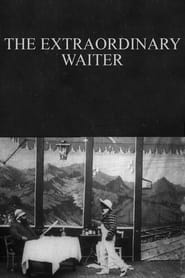
The Extraordinary Waiter
A Swiss tourist knocks the head off a negro waiter.

Movie
1902•
7.7
The Flying Train
The Flying Train depicts a ride on a suspended railway. The footage is almost as impressive as the feat of engineering it captures. For many years our curators believed our Mutoscope rolls were slightly shrunken 70mm film, but they were actually shot on Biograph’s proprietary 68mm stock. Formats like Biograph’s 68mm and Fox’s 70mm Grandeur are of particular interest to researchers visiting the Film Study Center because the large image area affords stunning visual clarity and quality, especially compared to the more standard 35mm or 16mm stocks.
Movie
1902•
4.3
The Judgment of Paris
Three goddesses, Venus, Juno and Minerva each of whom claims to be the most beautiful, call a shepherd "Paris" and ask him to decide the question and to give an apple which he holds in his hand on the one whom he considers to be the prettiest.
Movie
1902•
5.0
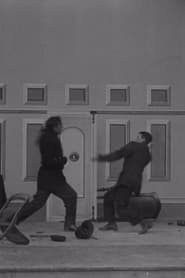
Policeman and Burglar
A bracing fight scene
Movie
1902•
4.6
The Emperor of Russia's Arrival in Elsinore
Nikolai II (1868-1918), the last Russian czar, son of Alexander III and Dagmar. He had been in Denmark on vacation with his parents several times. The royal houses usually met in September to celebrate Queen Louise's birthday. Even after Queen Louise's death, the families still kept the tradition.
Movie
1902•
3.5