Movies & TV Shows from 1896
Movie
1896•
4.8
Paris: Les souverains russes et le président de la République aux Champs-Élysées
Russian sovereign Nicholas II and Alexandra Fiodorovna, and President Felix Faure, parading down the Champs-Elysées in a carriage, followed by horsemen.
Movie
1896
III. Défilé de hussards devant Guillaume II
Several military companies parading, on foot, in front of Wilhelm II, in Breslau, Germany (nowadays Wroclaw, Poland).
Movie
1896•
4.0
Cherbourg: Entrée des souverains russes et du président de la République sous le hall
Sovereign Nicholas II, Alexandra Feodorovna and President Félix Faure, walking by, followed by their respective escorts.
Movie
1896•
7.1
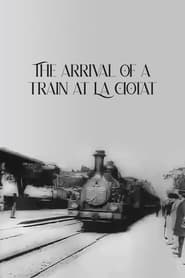
The Arrival of a Train at La Ciotat
A group of people are standing along the platform of a railway station in La Ciotat, waiting for a train. One is seen coming, at some distance, and eventually stops at the platform. Doors of the railway-cars open and attendants help passengers off and on. Popular legend has it that, when this film was shown, the first-night audience fled the café in terror, fearing being run over by the "approaching" train. This legend has since been identified as promotional embellishment, though there is evidence to suggest that people were astounded at the capabilities of the Lumières' cinématographe.
Movie
1896•
4.2
Les souverains et les invités se rendant au sacre (escalier rouge)
Sovereign Nicholas II and Alexandra Feodorovna and their suite slowly walk down a staircase, preceded by a company of cuirassiers.

Movie
1896•
5.0
Panorama pris d'un bateau
Panorama of the docks, the city and the bridge of a boat sailing the Rhine river in Cologne, Germany.
Movie
1896•
4.3
Défilé du 8e bataillon
A battalion, preceded by three riders and a military marching band, parades in front of the crowd. A man is manoeuvring a handcart bearing the inscription "Sunlight Soap" in the foreground.

Movie
1896•
5.0
London Street Scene / Turn Out of a Fire Brigade
The first part of the film shows an actuality street scene of traffic in the Strand. Behind the traffic we can see the entrance to the Gaiety Theatre on the Strand, advertising its latest show 'My Girl'. The second part is a different film altogether, spliced onto the first and is R W Paul’s Turn Out of a Fire Brigade filmed in November 1896 in Newcastle at the Westgate Road fire station. The film date is 1896.
Movie
1896•
5.9
Panorama of the Grand Canal Taken from a Boat
Filmed in 1896 by Alexandre Promio for the Lumière company, this short actuality presents one of the earliest traveling shots in cinema. With the camera mounted on a gondola, the film glides along Venice’s Grand Canal, capturing passing gondolas, bustling waterfront activity, and the city’s iconic architecture from a moving perspective. This simple yet groundbreaking technique introduced audiences to a new way of experiencing motion on screen.
Movie
1896•
4.4
New York. Arrival of a Train at Battery Place

Movie
1896•
1.0
Défilé du génie

Movie
1896•
6.2
The Vanishing Lady
Georges Méliès makes a woman disappear, then reappear.
Movie
1896•
4.6
La foule sur la place de l’Opéra
A black and white short from the Lumière brothers in which a crowds is filmed at the Place de l'Opèra in Paris.
Movie
1896•
5.0
Rentrée à l'étable
Geneva (Exhibition 1896): back to the barn.
Movie
1896•
4.7
Panorama of St. Mark's Square Taken From a Boat

Movie
1896•
5.2
The Cabbage-Patch Fairy
A brief fantasy tale involving a strange fairy who can produce and deliver babies coming out of cabbages. This film is lost or never existed. Copies of it online are actually the 1900 remake.
Movie
1896
Chargement d’un wagon de tonneaux
Movie
1896
New York, Broadway and Wall Street
Movement of pedestrians, cabs, carts and trams at the crossroads of two avenues.
Movie
1896
Görlitz : revue devant Guillaume II et Nicolas II
The German infantry parades in front of Nicholas II and Wilhelm II.
Movie
1896
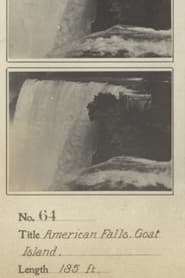
American Falls from Goat Island
The first movie audiences took particular delight in scenes of rushing, churning water. These scenes of Niagara Falls were taken in September 1896, while Dickson and Bitzer were filming McKinley and the Empire State Express.