Woman in Chains
Gallery director Stanislas bolsters the development of modern art with his collection of surprising works. His newest acquisition is a sculpture by Gilbert, whose wife Josée is captivated by Stanislas. But unbeknownst to her, Stanislas is amassing photographs of a very perverse, disturbed nature.
Cast

Laurent Terzieff
Stanislas Hassler
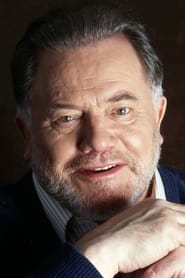
Bernard Fresson
Gilbert Moreau

Elisabeth Wiener
Josée
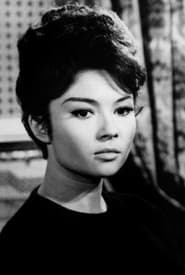
Dany Carrel
Maguy

Claude Piéplu
Le père de Josée
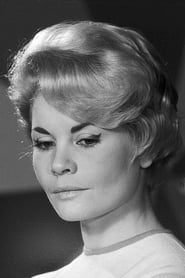
Noëlle Adam
La mère de Josée

Germaine Delbat
La gérante
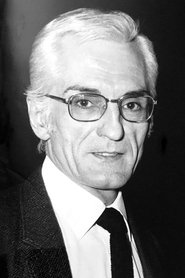
Michel Etcheverry
Surgeon
Daniel Rivière
Maurice

Gilberte Géniat
La patronne de l'auberge
Darío Moreno
Sala

Béatrice Altariba
Une invitée au vernissage (uncredited)

Jacques Ciron
Le spécialiste au vernissage (uncredited)
Henri Garcin
Le journaliste au vernissage (uncredited)
André Luguet
L'invité au vernissage qui dit 'C'est simple, mais ça existe!' (uncredited)
Jean Ozenne
Un invité au vernissage (uncredited)
Michel Piccoli
L'invité pressé au vernissage (uncredited)
Pierre Richard
L'artiste qui a besoin de lumière (uncredited)

Jackie Sardou
La caissière (uncredited)

Joanna Shimkus
Une invitée au vernissage (uncredited)
More Like This







Reviews
CinemaSerf
This has quite a complex plot from which we start even before Henri-Georges Clouzot stars messing with our heads... Laurent Terzieff ("Stan") is a wealthy, somewhat voyeuristic gallery owner/photographer who has oddly passionate - yet physically sterile relationships with women. Elisabeth Weiner (Josée) is a woman, married to an unfaithful artist, who becomes enthralled by Terzieff and is soon completely under his control as she tries to construct a television documentary about him and his art. There is a languor to the delivery of this story; but that lends to the wonderfully potent sense of sexual frustration; ambiguity and uncertainty. The characters are pretty unpleasant, it has to be said - especially the rather venal, ambitious husband "Gilbert" (Bernard Fresson) but that only contributes more to the essentially disturbing nature of this drama. Though clear at the start, by the rather confused (and weak, I found) conclusion we are really not too sure who is controlling whom, and why and it does rather surrender to the more basic emotions that now rob it of the intellectual "terror" it worked so hard, and cleverly, to establish. I ought to add, too, that some of the artwork featured is truly spacial, colourful and adds significantly to the mood of this work.
You've reached the end.