Available For Free On
Trailers & Videos
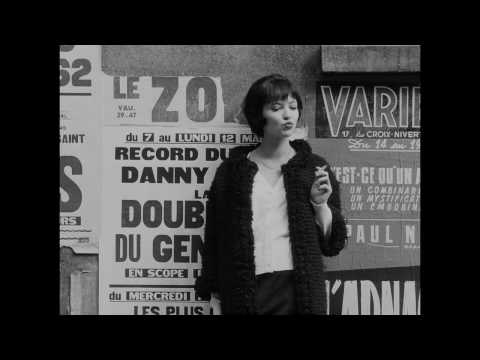
VIVRE SA VIE Trailer (1962) - The Criterion Collection
Cast
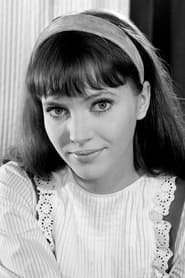
Anna Karina
Nana Kleinfrankenheim
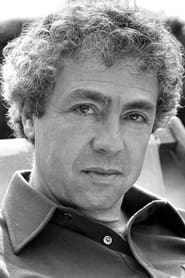
Sady Rebbot
Raoul
Gérard Hoffmann
Chef
Monique Messine
Elisabeth

Paul Pavel
Journalist
Peter Kassovitz
Young Man
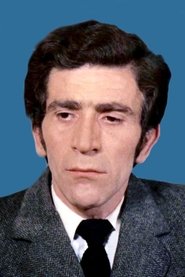
Henri Attal
Arthur
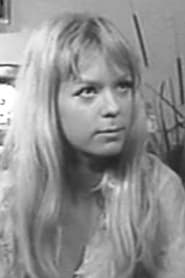
Odile Geoffroy
The Cafe Waitress
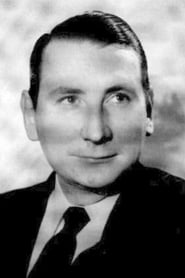
Alfred Adam
(uncredited)
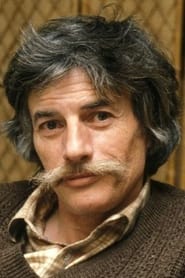
Jean Ferrat
Man Near the Jukebox (uncredited)

László Szabó
Injured Man (uncredited)
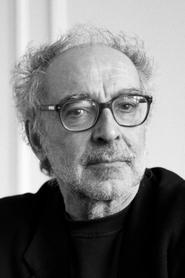
Jean-Luc Godard
The Lover Reading Poe (voice) (uncredited)
More Like This



Reviews
CRCulver
Vivre sa vie was Jean-Luc Godard's fourth feature film. The protagonist Nana (Anna Karina) is a young Parisian woman who is not especially bright, but full of life and endowed with great beauty. Unable to make ends meet by working at a record shop, and unable to break into films as she dreams, she starts to work as a prostitute. Postwar French law permitted prostitution, with certain rules and regulations that the film explains in a documentary-like segment. Nana, who yearns to live her life according to her own desires, initially thinks that this new profession has set her free from cares. In fact, Nana's liberation from penury through prostitution only subjects her to new constraints imposed by her pimp and clientele. The film, divided into twelve tableaux with fade-to-black transitions that quicken as it goes on (which one commentator compares to breathing faster and faster) brings us to one of the most shocking endings I have ever seen.
This is a superlative film. Clocking in at 85 minutes, it lasts exactly as long as its story demands, with not a single moment that feels superfluous. Everything fits together, perfectly even things that ought to seem extraneous, the overindulgence of the auteur. Early in the film Nana goes to see Carl Dreyer's 1928 silent film La Passion de Jeanne d'Arc, and this is not a mere gratuitous tribute to earlier cinema as is common in French New Wave films. Nana speaks with an elderly philosopher in a café, who is in fact the real-life philosopher Brice Parain whose dialogue here consists of his own writings, and yet this is not shallow intellectualism. Rather, these scenes increase the three-dimensionality of Nana as a character: not very intelligent and with negligible education, an easy woman since long before the film begins, but feeling strongly that there must be more out there.
The believability of Nana as a character is increased all the more by Anna Karina's masterful performance. When coming to Godard's films, after the filmmaker has taken a beating from some circles, one might think that Karina was simply a beauty with no especial talent that enchanted the director due to her looks and foreign origin. Nope, the Danish actress here presents a completely believable Parisian airhead who is so easily moved by sentimental art.
badelf
It's Jean-Luc Godard at the avant-garde of filmmaking. It's a brilliant film with so many new ideas for early the 60s. What else is there to say?
You've reached the end.