The Scarlet Letter
When intimacy is forbidden and passion is a sin, love is the most defiant crime of all.
Set in puritanical Boston in the mid 1600s, the story of seamstress Hester Prynne, who is outcast after she becomes pregnant by a respected reverend. She refuses to divulge the name of the father, is "convicted" of adultery and forced to wear a scarlet "A" until an Indian attack unites the Puritans and leads to a reevaluation of their laws and morals.
Production



Production
Trailers & Videos
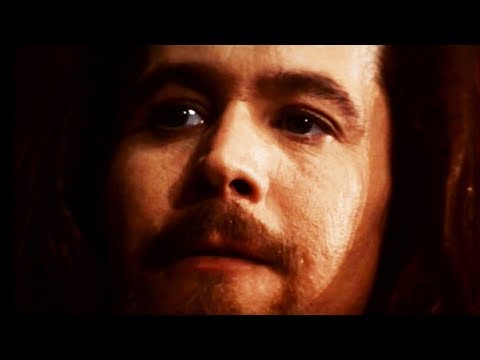
The Scarlet Letter (1995) ORIGINAL TRAILER
Cast

Demi Moore
Hester Prynne

Gary Oldman
Rev. Arthur Dimmesdale

Robert Duvall
Roger Chillingworth

Lisa Andoh
Mituba
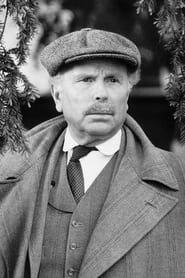
Edward Hardwicke
Gov. John Bellingham

Robert Prosky
Horace Stonehall
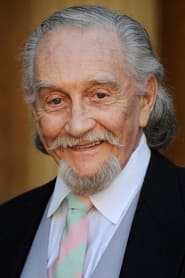
Roy Dotrice
Rev. Thomas Cheever
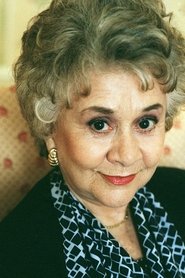
Joan Plowright
Harriet Hibbons
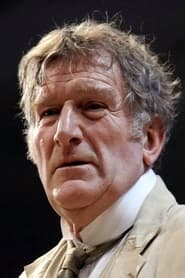
Malcolm Storry
Maj. Dunsmuir

Larissa Laskin
Goody Mortimer

Amy Wright
Goody Gotwick
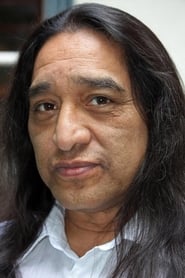
George Aguilar
Johnny Sassamon

Tim Woodward
Brewster Stonehall

Joan Gregson
Elizabeth Cheever

Dana Ivey
Meredith Stonehall

Diane Salinger
Margaret Bellingham

Jocelyn Cunningham
Mary Rollings

Eric Schweig
Metacomet

Kristin Fairlie
Faith Stonehall

Deborah Tennant
Quaker Lady
More Like This




Reviews
CinemaSerf
Heavens, but this is heavy going. Demi Moore is "Hester", sent on to a Massachusetts colony ahead of her husband to set up their new home. Determined to stand on her own two feet, she invites the enmity of the community by insisting on living on her own. Her only ally seems to be the preacher "Dimmesdale" (Gary Oldman) and he becomes more crucial when it looks like her husband has been killed in a shipwreck and when, shortly thereafter, she becomes pregnant. Determined not to reveal the identity of the father, she endures the disdain from her somewhat puritanical neighbours and both her and her daughter are shunned. Suddenly, enter Robert Duvall ("Roger") her long lost, and not very likeable, husband who decides that vengeance shall be his - and a burning might soon be in the offing. Despite an half decent cast, with some very solid supporting characters from the likes of Edward Hardwicke and Joan Plowright, the story is stolid in it's delivery. The opportunities to illustrate and expose the superstitious and hypocritical standards of the day; of the population who lived in a male-dominated, god-fearing society are lost in a stodgy dialogue with repetitive scenarios that look good, but take the story forward with the speed of a rhino stuck in treacle. This suffered from too much resource, too long a filming schedule and a very weakly delivered narrative and at the end I may well have volunteered myself for the flames.
Wuchak
**_A glimpse of what it was like to live on the Northeast coast in the mid-1600s_**
Hester Prynne arrives at the Massachusetts Bay Colony in 1666 (Demi Moore) to set up a homestead in preparation for her husband. As she gets to know the local pastor, Arthur Dimmesdale (Gary Oldman), they get word of tragedy concerning her spouse (Robert Duvall).
"The Scarlet Letter” (1995) is notorious for being one of the worst adaptions of a well-known novel ever made, but movies usually make significant changes, such as Coppola & writer James Hart adding a love story to “Bram Stoker’s Dracula,” which didn’t hinder that movie from being a popular (modest) hit. Even films based on recent novels make notable changes, such as “Serena.” How much more so with a book from 1850?
Adding details on how Hester meets Arthur and how their relationship evolves works in my book. After all, viewers need to know why the protagonists were susceptible to the moral transgression in question. Of course, the reason Hawthorne’s book delayed the revelation of who Hester committed adultery with was to create suspense and provoke shock when it’s revealed to be the minister.
Speaking of Arthur, he’s more noble here compared to the book where he’s an over-the-top hypocrite. They made the lumber baron in “Serena” more honorable as well. Or consider Roger Moore, who refused to portray James Bond as a woman-beater after his first movie in the role, which was a hit. Once actors gain an amount of clout, they’ll play the part the way they want to, not the way the book (or scriptwriter or director) technically says.
Other changes include the addition of a slave woman, Mituba, but her role is so marginal, it doesn’t matter. Expanding the roles of the Wampanoag and Mi'kmaq peoples (the latter referred to as the Tarrantines) is also so slight that it’s not a big deal. And, honestly, I feel their expansion enhances the proceedings. So, the biggest change, is the ending, which isn’t as downbeat as the book, but isn’t exactly Disney-fied either, if you pay attention to Pearl’s narration.
What I like most is how the movie successfully puts you into the setting of the Massachusetts Bay Colony of the mid-1600s and makes the Puritans & others come alive. While this is romantic drama within a historical setting, there are bits of adventure, thrills, moral complexity and theological ruminations, as well as tragedy. It comes across as a mixture of films like “The Last of the Mohicans,” “Rob Roy” and “The Crucible,” the latter not debuting until the year after this one.
It runs 2 hours, 15 minutes, and was shot on Vancouver Island in British Columbia, including areas around Campbell River. Other scenes were shot on the other side of Canada in Nova Scotia; specifically in the towns of Yarmouth and Shelburne, as well as the village of Saint Alphonse in Clare.
GRADE: B+/A-
You've reached the end.