

Trailers & Videos

Official Trailer

Official Teaser Trailer
Heart
"We Three Meet Again" Official Clip
“Grief Is What Connects Us” – Inside the Making of ‘Hamnet’
Building Hamnet: Designing Chloé Zhao’s Cinematic World - Reel Destinations

Acclaimed Audience Award

"What Do You Wish To Do" Official Clip

Cinematic Event
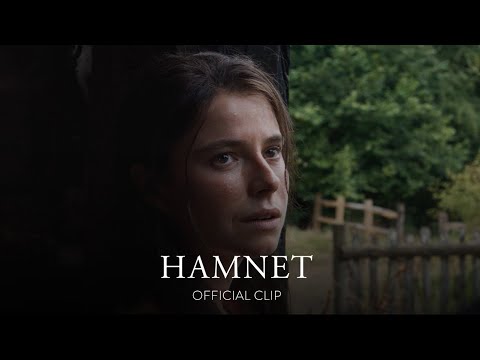
"When We Kiss" Official Clip
Cast

Jessie Buckley
Agnes

Paul Mescal
Will

Emily Watson
Mary

Jacobi Jupe
Hamnet

Joe Alwyn
Bartholomew

David Wilmot
John

Bodhi Rae Breathnach
Susanna

Olivia Lynes
Judith

Noah Jupe
Hamlet

Justine Mitchell
Joan

Faith Delaney
Young Agnes

Smylie Bradwell
Young Bartholomew

Freya Hannan-Mills
Eliza

Dainton Anderson
Edmond

Sam Woolf
Bernardo
Jack Shalloo
Marcellus

Laura Guest
Midwife

Elliot Baxter
Richard

Louisa Harland
Rowan

James Lintern
James
More Like This






Reviews
Manuel São Bento
FULL SPOILER-FREE REVIEW @ https://fandomwire.com/hamnet-review/
"Hamnet is a true work of art that, despite its slow march and some more challenging moments for the uninitiated, rewards perseverance.
It's a film about how pain destroys, but also about the miracle of how art can serve as a vessel for redemption or, at least, for understanding. Chloé Zhao took an empty space in history — the life of a forgotten woman and the silence of a lost son — and filled it with an emotion that's, ultimately, a testament to the power of creation.
It's proof that the greatest tragedy in literature was, in fact, born from the greatest possible act of family love and memory."
Rating: A-
Brent Marchant
William Shakespeare is widely regarded as the greatest writer in the English language, though there’s some disagreement about whether he actually wrote the materials attributed to him. Even sketchier than this are some of the details about his personal life, aspects of his character that have been the subject of much conjecture, especially where they may have influenced his literary undertakings. And an examination of that nexus is where this latest offering from writer-director Chloé Zhao makes its appearance on the stage (or, in this case, the screen). Based on the best-selling speculative novel Hamnet by Maggie O’Farrell (who co-wrote the screenplay with Zhao), the film presents a fictional take on how the Bard’s most noteworthy work, the quintessential theatrical tragedy, Hamlet, came into being. Essentially, the narrative maintains that the stage play (which, in Shakespeare’s time, used the names “Hamlet” and “Hamnet” interchangeably) came about as a grief/coping response after the author (Paul Mescal) and his wife, Agnes (Jessie Buckley), lost their young son, Hamnet (Jacobi Jupe), to “the pestilence” (assumed to be bubonic plague). It’s presumed that the tragic but heroic Hamlet is a fictional homage to Shakespeare’s courageous, honorable but ill-fated real life progeny (though, admittedly, it’s something of a stretch to understand what connection an 11-year-old boy from rural England might have to a prince of the Danish royal family). Bringing the play to life often led to marital discord between Will and Agnes, given that he was working on the production in London while she maintained the family household in Stratford-on-Avon. And, all the while, the couple struggled to come to terms with their feelings of loss, something that Shakespeare hoped to resolve by creating this latest work. As noble as this sentiment might be (and as truly effectively as it’s addressed in the picture’s closing 15 minutes), the overall execution otherwise leaves much to be desired. To its credit, “Hamnet” features superb performances (particularly by Buckley and Noah Jupe as Hamlet, though Mescal comes across as a bit hammy at times), along with a fine score, stunning visuals and an excellent period piece production design. But, even with all these assets in its favor, this release is sorely in need of editing and a better script, one with fewer repetitious and incongruent elements (most notably the clumsy integration of original Shakespearean on-stage dialog with contemporary off-stage exchanges). These shortcomings, regrettably, make for an often-dull tale, one that prompted a number of viewers at the screening I attended to start nodding off – literally. What’s more, the screenplay would appear to assume that most audience members have an intimate familiarity with both the minutiae of the play and the details of Shakespeare’s biography, inferences that ask an awful lot of viewers upon entering the theater. Indeed, when all is said and done, “Hamnet” truly is a major disappointment, an unapologetic example of Oscar bait, a picture that holds itself in bloated esteem simply because of its lofty attributes and subject matter. But that kind of unrepentant cinematic preening has grown tiresome over time, even though it’s a formula that this filmmaker never shies away from employing in her productions – and this offering, unfortunately, is once again no exception.
CinemaSerf
Maggie O’Farrell said at this screening that adapting her novel for the screen was akin to watching the sand flow through an hour glass. She started with something extensive, whittled it down to 90-odd pages and then gave it to a director (Chloé Zhao) who frilled it all out again to make a couple of hours for the screen that is somewhat different from the original. I reckon that’s the perfect way to describe just how this story of a part of Shakespeare's life comes across, and at last - I have seen something from Paul Mescal that isn’t just hype. He is the bard, before he was the bard. He taught Latin to uninterested children so he could pay of his father’s debt, and was bored. Then he encounters “Agnes” (Jessie Buckley) and it’s love at first sight - despite some family reservations. After the birth of their first child, he concludes that he can make a better living in London and so heads off in best Dick Whittington style to make his fortune. He finds writing work with some theatrical players, and from now on divides his time between his wife in Warwickshire and his increasingly successful career. Then come the twins, “Judith” and “Hamnet”. Both parents understand the necessity of his being away, but their children - upon whom they both dote - miss their father, and when the plague visits their town a tragedy ensues. Devastated, the couple must deal with this in their own way, and it’s the premise of the novel that it was this grief that inspired Shakespeare to write his “Hamlet”. You can tell that loads of research has gone into this project, and from the production design through to the last twenty minutes in which this most famous of plays is presented in an abridged fashion, the film is engaging, entertaining and really quite a poignant exponent of sixteenth century English life. Mescal’s portrayal starts off with a glint in his eye, but as the plot thickens his character displays a depth to it that mixes joy, frustration and remorse in what I think is his best effort yet. On the other side of this coin, we have a Buckley who has come a long way since I first saw her in “Wild Rose” (2018). Her efforts here border on the visceral, especially when childbearing and parenting. Both Joe Alwyn and Emily Watson add some gravitas as brother and mother, respectively, and not for the first time in their careers, both Jacobi and Noah Jupe stand out, the latter quite literally bringing the house down at the end. Speculative? Well of course it is, but it's still a story that pulls at the heart strings, and leaves precious little room for sentimentality at a time in history when mortality was all too often writ large for all, rich or poor. A love story, a grief story and what’s also rewarding is that we don’t get a rose-tinted conclusion, either. You don’t need to be a period drama fan, nor a lover of complex and wordy prose, to enjoy this. It’s some people at the top of their craft delivering really quite compellingly a story that’s just as relatable now.
You've reached the end.