Trailers & Videos
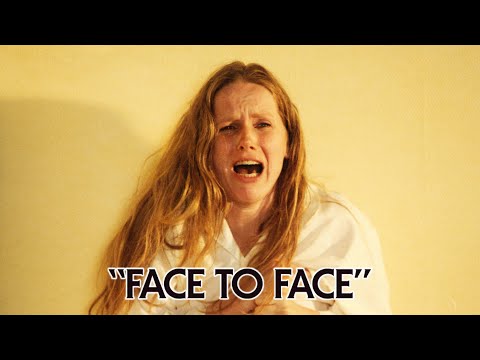
Blu-ray Trailer
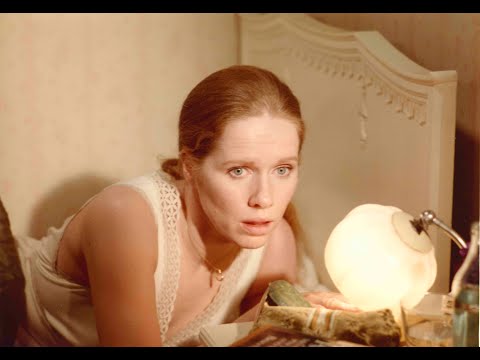
Face to Face (1976)_TV-series_clip
Cast

Liv Ullmann
Dr. Jenny Isaksson
Erland Josephson
Dr. Tomas Jacobi
Aino Taube
Jenny's Grandmother
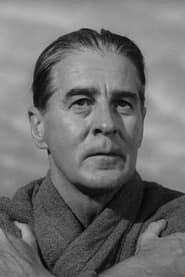
Gunnar Björnstrand
Jenny's Grandfather
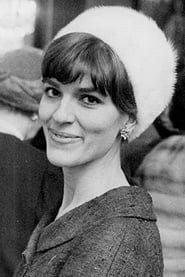
Kristina Adolphson
Nurse Veronica

Marianne Aminoff
Jenny's Mother

Gösta Ekman
Mikael Strömberg

Ulf Johansson
Helmuth Wankel

Sven Lindberg
Erik Isaksson
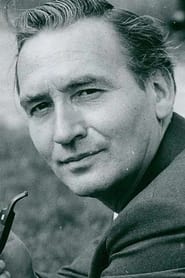
Jan-Erik Lindqvist
Jenny's Father

Birger Malmsten
Older Rapist
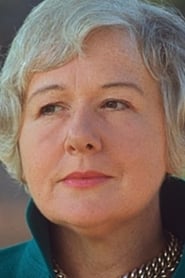
Sif Ruud
Elisabeth Wankel

Göran Stangertz
Younger Rapist

Mona Andersson
Patient (uncredited)

Daniel Bergman
Boy at Concert (uncredited)

Käbi Laretei
The Concert Pianist (uncredited)

Lena Olin
Shop Assistant (uncredited)

Margareta Pettersson
Girlfriend (uncredited)
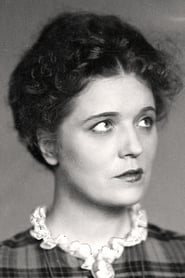
Tore Segelcke
The Woman (uncredited)
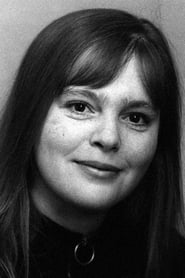
Kari Sylwan
Maria Jacobi (uncredited)
More Like This







Reviews
CRCulver
Shot in 1975, originally for Swedish television, Ingmar Bergman's film ANSIKTE MOT ANSIKTE (Face to Face) explores the idea of a psychiatrist herself struggling with mental illness.
As the film opens, Dr. Jenny Isaksson (Liv Ullmann) is standing in an empty house, her family having removed everything in preparation for a move into a new house later that year. In the meantime, her husband is working in America for a few months and her daughter is at a summer camp. Waiting for the family to be reunited and move into the new house, Jenny temporarily settles in with her grandmother (Aino Taube) and grandfather (Gunnar Björnstrand), the latter of whom is poignantly suffering from dementia. Jenny is initially happy to dedicate herself to a new position at the clinic, but soon she finds the wall between reality and delusion breaking down, and the film chronicles her deterioration.
I personally don't consider ANSIKTE MOT ANSIKTE "major Bergman". Firstly, the cut theatrical version feels sputtering and unfocused and consequently its 2-hour length can seem interminable. Sadly, the original television version has never been released, so neither can audiences have that. Secondly, Bergman had made a few films before that dealt with madness or the dark regions of the psyche, and especially in the second half of ANSIKTE MOT ANSIKTE the director resorts to what had already become some cliches for him.
Still, even second-rate Bergman is worth at least one viewing. In spite of often retreading past ground in showing us what's in Jenny's head, Bergman does at times give us a fresh angle on the theme of mental illness, attempting to convey how much loneliness and shame it involves. Jenny is wracked with emotion but unable to communicate it to those around her, and she feels utterly alone as even those close to her fail to understand her plight. The acting is also superb, with Liv Ullman able to portray a whole spectrum of mental states. Erland Josephson appears in a supporting role, one of the threatening, Mephistophelian characters he did so well.
There is, incidentally, one aspect of this film that makes it a real curiosity in Bergman's body of work. Over the preceding couple of decades, Bergman had shot films that were either period films (medieval or early 20th century) or were fairly contained dramas about small, mainly upper-class circles, with little representation of broader society and changing mores. Here, however, the outside world suddenly and rather crudely intrudes on a Bergman film: early on, Jenny attends a party thrown by a campy, somewhat Cathy Berberian-like elderly woman (Sif Ruud) who dotes on a pair of gay men that she has quasi-adopted. The two men are homosexual stereotypes, sashaying, tight jeans and all, and the party involves some sexually libertine folk dancing to Abba-like pop music of the time. One gets the impression that Bergman was feeling challenged by younger filmmakers like Vilgot Sjöman, but this sudden reflection of 1970s Sweden quickly disappears and the film returns to more traditional Bergman territory.
You've reached the end.