A Bittersweet Life
When doing right goes very, very wrong.
Kim Sun-woo is an enforcer and manager for a hotel owned by a cold, calculative crime boss, Kang who assigns Sun-woo to a simple errand while he is away on a business trip; to shadow his young mistress, Hee-soo, for fear that she may be cheating on him with a younger man with the mandate that he must kill them both if he discovers their affair.
Production


Production
Trailers & Videos
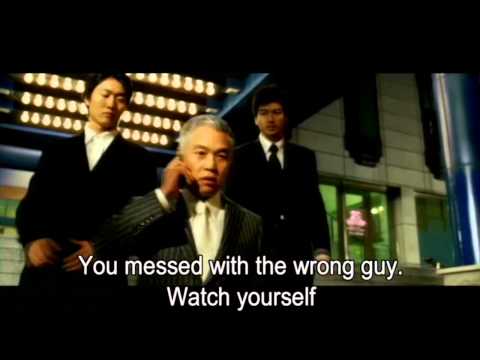
"A Bittersweet Life" (2005) Trailer - Kim Ji-woon, Lee Byung-Hun
Cast

Lee Byung-hun
Sun-woo
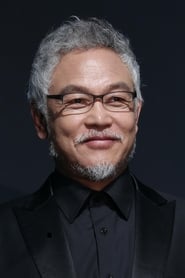
Kim Yeong-cheol
Mr. Kang

Shin Min-a
Hee-soo
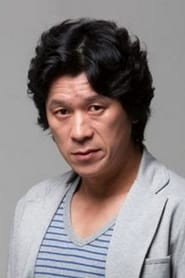
Kim Roi-ha
Moon-seok
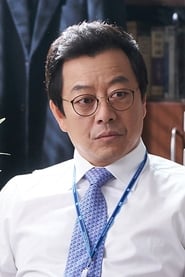
Lee Ki-young
Oh Moo-seong

Hwang Jung-min
Mr. Baek

Eric Mun
Tae-goo
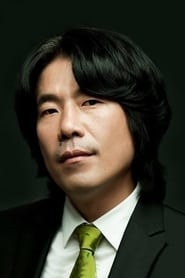
Oh Dal-su
Myeong-goo
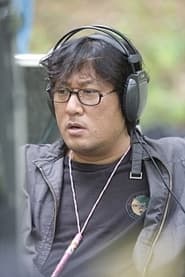
Kim Hae-gon
Tae-woong

Kim Han
Se-yoon

Jin Goo
Min-gi
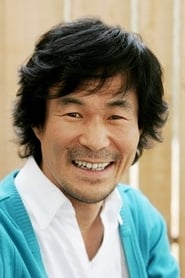
Oh Kwang-rok
Gangster
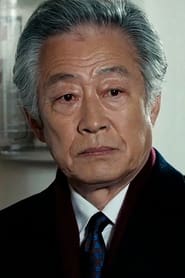
Jeon Kuk-hwan
Chairman Baek

Lee Seung-ho
Mr. Park

Kim Seung-o
Moo-seong's Subordinate

Lee Han-sol
Moo-seong's Subordinate
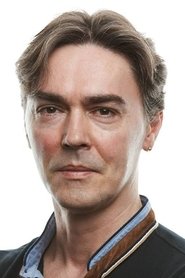
Vadym Domashchenko
Mikhail

Kim Soo-nam
Shoulder Bag

Heo Myeong-haeng
Shoulder Bag
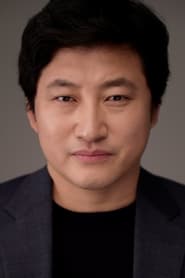
Park Jin-woo
Cheol-moon
More Like This











Reviews
badelf
A Bittersweet Life: When Mind and Heart Move
Kim Jee-woon's "A Bittersweet Life" is less a crime drama and more a philosophical treatise dressed in the razor-sharp suit of a gangster film. From its opening invocation—"It is not the wind and trees that move, it is your mind and heart that move"—the film announces itself as something far more profound than a simple revenge narrative.
The cinematography is a masterclass in controlled chaos. Kim Jee-woon doesn't just frame scenes; he choreographs them with the precision of a ballet and the brutality of a street fight. Each frame feels like a carefully composed painting, reminiscent of Park Chan-wook's "Oldboy", but with a distinctly personal touch that prevents it from feeling derivative.
Lee Byung-hun's performance is a masterpiece of minimalism. As Sun-woo, he embodies the film's philosophical core through an almost impossibly restrained physicality. His movements are calculated, his expressions barely perceptible - yet each micro-gesture speaks volumes. It's as if he's performing a kind of cinematic zen meditation, his body a canvas revealing the internal disintegration of a man whose discipline is slowly unraveling.
At its core, the film is a profound exploration of consciousness and perception. The opening zen koan isn't just a poetic device, but the film's philosophical spine: reality is not an external condition, but a reflection of our internal state. When Kang warns Sun-woo that "one mistake can change everything," he's articulating a deeper truth about mindfulness and the razor's edge of perception. Both master and disciple ultimately demonstrate this principle by making fundamental errors that transform their entire reality, proving that our consciousness shapes our world more definitively than any external action.
You've reached the end.