Movies & TV Shows from East Germany

Movie
1963•
5.8
Mother Holly
The widow has an ugly and lazy daughter, Pechmarie, and a beautiful and hard-working step-daughter, Goldmarie. Because Pechmarie is her real daughter, the widow clearly favors her and makes Goldmarie do all the work. Poor Goldmarie must also sit and spin all day by the well until her fingers bleed. When she tries to rinse out the spindel, it drops into the cold water. Her unsympathetic step-mother tells her to jump in after it. Goldmarie does as she is told, and then wakes up in the middle of a beautiful field of flowers. This is the land of Frau Holle, who welcomes Goldmarie and invites her to stay, as long as she will help with the housework. Marie stays and serves Frau Holle gladly, until she suffers so terribly from homesickness that she asks to go home. Before bringing her back, Frau Holle rewards Marie with a shower of gold. Upon her return, Goldmarie and her gold are welcomed by her greedy step-sister and -mother. Hoping for the same kind of reward, the step-mother sends ...

Movie
1980•
4.6
The Fiancee
The wrenching story of a woman sentenced in 1934 to ten years in prison for antifascist activities. The love between her and her fiancée enables her to survive the tribulations of her time in prison, where she is one of few political prisoners.
Movie
1961•
6.4
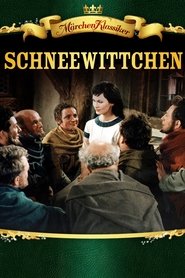
Snow White
Hated by her jealous and bloodthirsty stepmother, Snow White flees a murder attempt and seeks shelter in the woods with seven kindly dwarfs. Feeling she is safe from harm, Snow White welcomes the disguised queen into her home...with fatal consequences.

Movie
1983•
5.2
The Scout
1877, the tribe of the Nez Percés Indians are driven into the reservation by a white cavalry force. So that they can not escape, their horses are requisitioned. Sub-chief "White Feather" has no choice but to make a scout with the cavalry and retrieve the stolen horses through his life.

Movie
1972•
4.4
Tecumseh
At the beginning of the 19th century, white settlers regularly make and break treaties with the Native American inhabitants to gain possession of vast hunting grounds at ludicrously low prices without any bloodshed. Harrison, Governor of Indiana, has made and broke no less than fifteen such treaties, driving increasing numbers of Indians out to the infertile West. To put a stop to this criminal practice, the Shawnee Chief Tecumseh tries to unite the Native Americans.
Movie
1958•
6.0
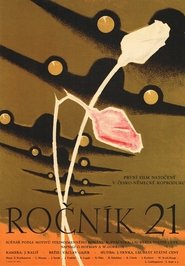
Jahrgang 21
At the beginning of the Second World War, Czech music student Honsik comes to Germany from Prague to join a "foreign worker company". After rescuing a boy from the rubble of a bombed-out house, he himself is seriously injured and taken to a hospital in Stralsund. There he is regarded as a second-class citizen and the Germans are preferred to him. Nurse Käthe stands up for him, cares for him and defies all prohibitions. A love affair is kindled between the two, but it is not under a good star. Honsik tries to flee to his homeland with his comrades and Käthe supports him. At the last moment, however, Honsik realizes that his love for Käthe is stronger than his homesickness and makes his way back. Once back home, he can only watch as Käthe is arrested by the Gestapo. With the help of a resistance fighter, the young man from Prague manages to escape after all.
Movie
1967
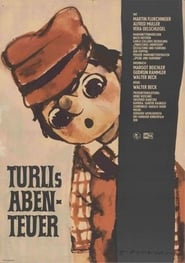
Pinocchio
The puppet boy Turli, who was only recently been carved from wood by the toymaker Kasimir, suddenly springs to life. Turli has nothing but nonsense on his mind and wreaks chaos everywhere he goes, although he is actually supposed to attend school.
Movie
1952
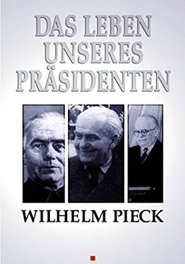
Wilhelm Pieck - Das Leben unseres Präsidenten
Basing his work on documentary material, Andrew Thorndike tells the life story of Wilhelm Pieck: from young worker to fighter for the German working class, and from enemy of national-socialism to the first president of the German Democratic Republic.
Movie
1957•
5.0
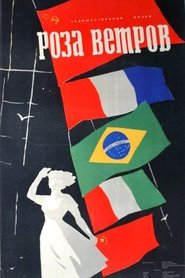
The Wind Rose
An international anthology about the struggles of female workers around the world.
Movie
1962
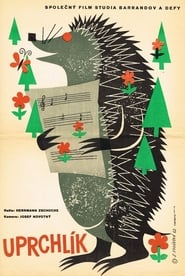
The Hedgehog Friendship
A funny story about a friendship between the children of East Germany and Czechoslovakia.
Movie
1956•
5.0
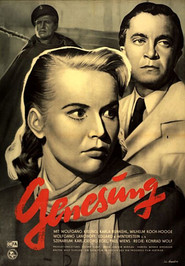
Recovery
The authorities expect the case of Friedel Walter, alias "Dr. Mueller," to be a straightforward one: he was working as a doctor without proper credentials under a false name. But Mehlin, the man in charge of his case, knows that there is more to the story. When he was injured fleeing from a concentration camp, resistance worker Irene asked her medical student boyfriend Walter to give him medical care.
Movie
1959•
5.0
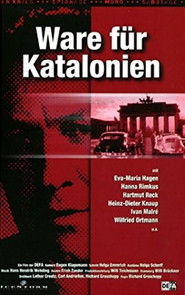
Ware für Katalonien
At the end of the 1950s, the production of optics in the German Democratic Republic has reached top quality and instigates interest in the West. When national demand rises strongly and at the same time the export to South America heavily decreases, the Volkspolizei - the GDR police force - starts to look into the case. Two seemingly unrelated cases are the starting point for the investigation by second lieutenant Schellenberg of the department for optics racketeering: An old woman who was arrested in the Berlin city railway for trying to smuggle a pair of binoculars to West Berlin, and a dead person in an area of allotments who was involved in obscure dealings with optical devices.
Movie
1989
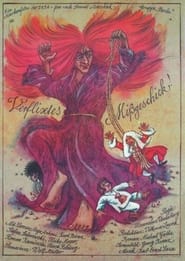
Blessed Misfortune!
A creature bearing the ominous name "Mishap" is hot in pursuit of an unfortunate lumberjack and eventually decides to live with him. It soon gets bored, however, and asks the lumberjack to hand it over to the rich merchant Habermoos. Habermoos manages to sell Mishap to the king, although he is being attacked by robbers. The king is bankrupt and threatened with war by other countries. Young Michael has to go to war for the king. The creature tries to secretly join him. When Michael gets hold of the situation, he manages to get rid of Mishap once and for all. After all, he has more important things to do. At the last moment, he prevents his girlfriend Kathrin from getting married to the pompous merchant Habermoos.

Movie
1978•
6.3
Severino
After a ten-year absence, Severino returns to his tribe, the Manzeneros, who live on the edge of the Argentinian Andes. The reason for his visit is to take his younger brother back with him up north. However, in his home village, Severino finds a tense and troubled situation. His father Raymundo has recently been found dead. He was on the tracks of a gang of white bandits who had stolen cattle from both Indians and settlers. A sheep breeding company is behind these criminal machinations. This company seeks to drive the Indians and settlers off the fertile land so that they can purchase it cheaply.
Movie
1972•
4.7
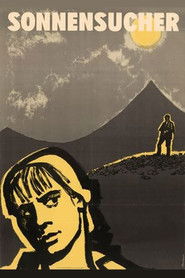
Sun Seekers
A socialist story of "atoms for peace" and compulsory labor in an East German uranium mine under Soviet control.

Movie
1990•
6.8
The Architects
The architect Daniel Brenner is in his late thirties when he receives his first challenging and lucrative commission: to design a cultural center for a satellite town in East-Berlin. He accepts the offer under the condition that he gets to choose who he works with. This way, he reunites with former colleagues and friends - most of them architects or students of architecture who have since chosen a different profession due to personal restraint or economic confinement. Together, they develop a concept which they hope will be more appealing to the public than the conventional and dull constructions common to the German Democratic Republic. However, their ambitious plans are once and again foiled by their conservative supervisors. As frustration grows, Daniel has trouble keeping his career in balance with his family-life: his wife Wanda wants to leave for West-Germany.
Movie
1990•
5.7
Forbidden Love
18-year old Georg and 13-year old Barbara have been playing together as children. Play becomes love later, which leads to a catastrophe , as their parents are hostile leading to file a report to the court, as Barbara is still under age.

Movie
1978•
5.5
Wittstock III
Part 3 of the Wittstock series also shows the surroundings of the textile factory. Older gentlemen in a pub reveal that two factories produced fabrics for the military here during the Second World War. In 1945, only a handful of handlooms remained. The contemporary witness does not say why. It was probably too sensitive to reveal the reason on camera in 1978: The Soviet occupying power dismantled many production facilities in the GDR after the end of the war and transported them to the home of the victorious Red Army.
Movie
1958•
5.5
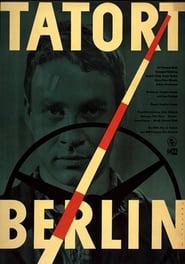
Crime Scene: Berlin
Rudi Prange is released from prison for good behavior. He gets a job in a transport unit but gets involuntarily involved in a smuggling business by a colleague. When two police officers are gun down Rudi becomes the main suspect.
Movie
1979
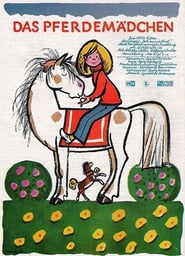
Das Pferdemädchen
Irka and Raya are best friends, one always knows immediately what the other wants. Irka is young, lively and a girl, Raya is old, blind and a proud mare who had great times as a show horse. The two are inseparable. But when Raya has a foal, Irka turns her attention to the small, helpless and cute animal. Her father had actually promised that she could keep both horses. One day, however, he tells her that she has to part with one of the horses. Irka has to decide for herself: The cute foal or the old mare?
TV
1971•
6.2
Polizeiruf 110
Polizeiruf 110 is a long-running German language detective television series. The first episode was broadcast 27 June 1971 in the German Democratic Republic, and after the dissolution of Fernsehen der DDR the series was picked up by ARD. It was originally created as a counterpart to the West German series Tatort, and quickly became a public favorite.
TV
1972•
1.8
Ein Kessel Buntes
The show was meant to compete with those on West German television. To this end it was fairly successful even attracting a following in parts of West Germany which could receive Eastern TV. Its production values were high. Apart from song and dance numbers and appearances from East German celebrities, almost every broadcast featured well-known stars from the west, often after their popularity had peaked in their home countries.

TV
1968•
6.6
The Shield and the Sword
The year is 1940 and Nazi Germany is at the height of its military prowess, having captured most of Europe and eyeing the Soviet Union to the East. The Russian military command suspects hostile intent from Germany and so arranges for its spies to infiltrate ranks of the German military and the SS. Alexander Belov is a Russian spy, who travels from Soviet-held Latvia to Nazi Germany under an alias of Johann Weiss. His mastery of the German language, steel nerves and an ability to manipulate others help him to use his connections in the SS to ascend the ladder of the German intelligence. He uses his position to identify sympathetic Germans, who help him to procure vital intelligence, and to help local resistance movements in their collective fight against Nazism.
TV
1980•
4.3
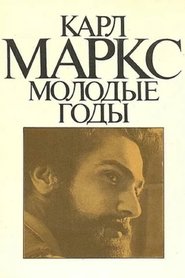
Karl Marx. Early Years
As a student at the University of Berlin, Karl Marx joins the "Doctoral Club," a refuge for young free thinkers. Karl Marx decides to devote himself to philosophy, defends his thesis, becomes a Doctor of Philosophy, but hopes to teach at the University of Bonn. When this plan falls through, Marx accepts an offer to work as editor of a Rhine newspaper...
TV
1989
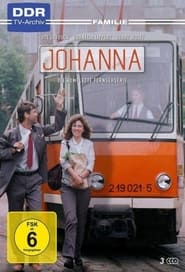
Johanna
Johanna is a German television series.

TV
1977•
9.5
Zur See
This series is about the "adventures" and problems of the crew of the East German cargo ship "MS-Fichte" at sea. In the first part, the main engine had a piston jam during a storm at sea, so that the piston had to be removed. Mutual recriminations ensue between the captain, who ordered a higher speed, and the chief, who is against it out of concern for the high fuel consumption and is also said not to have bothered to maintain the engine...
TV
1974•
7.3
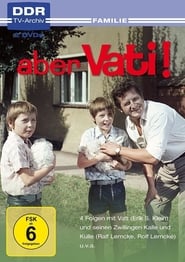
Aber Vati!
TV
1986•
5.0
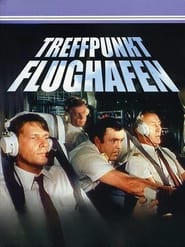
Treffpunkt Flughafen
Treffpunkt Flughafen is an East-German television series produced by the DEFA-Studio für Spielfilme on behalf of Fernsehen der DDR in 1985/86. The show follows the life and adventures of the crew of a IL-62 operated by the East-German airline Interflug. Filming locations were East Germany, Vietnam, Angola and Cuba among others.
TV
1984
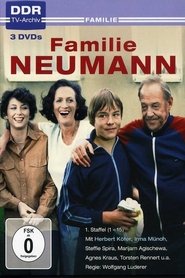
Familie Neumann
Familie Neumann is a German television series.

TV
1959•
7.2
Unser Sandmännchen
The Sandman's everyday life, travels and fantastic adventures. The character often showcased socialist technological achievements, such as the use of awe-inspiring vehicles like futuristic cars and flying devices. Together with his friends, Pittiplatsch, Schnatterinchen, the dog Moppi, Herr Fuchs and Frau Elster. Premiered in DFF on November 22, 1959.
TV
1973•
6.0
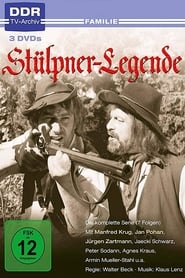
Stülpner-Legende
Stülpner-Legende is a German television series.
TV
1987•
3.3
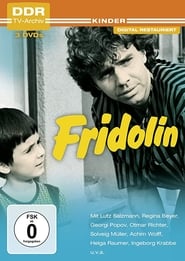
Fridolin
TV
1990
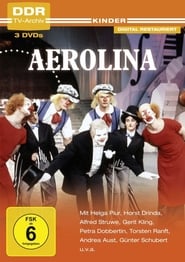
Aerolina
TV
1985
Zahn um Zahn
A man who has just become unemployed kills his closest relatives before he judges himself. Commissioner Schimanski determined.
TV
1984•
6.8
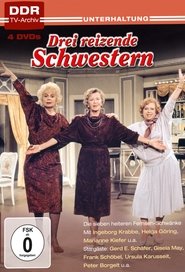
Drei reizende Schwestern
Drei reizende Schwestern is a German television series.
TV
1973
Eva und Adam

TV
1987•
6.0
Sachsens Glanz und Preußens Gloria
Love, intrigue, favouritism and corruption at the Dresdner Hof.
TV
1969
Sankt Urban
TV
1976•
5.0
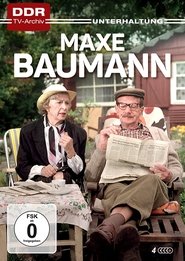
Maxe Baumann
TV
1979
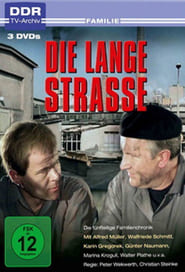
Die Lange Strasse
1949. Grafenberg in Brandenburg shortly before the foundation of the GDR. Here lives Michel Hollmann and works in roadmaking. His purpose in life are his wife Lotte and the two children Gerda and Heinz, for whom he is reconstructing a summerhouse into a “nest”. In Grafenberg, his siblings are living as well: His brother Karl, the mayor, and sister-in-law Edith, who works in a textile factory, with their son Jürgen. Edeltraut, his sister, has married the lamp fabricant Berthold Bennert and leads a well-off life. They as well have a son: Harald. Part of the family are further sister Hanna and brother-in-law Hermann, who is a fisherman on one of the local lakes and conducts a tenacious private war against old Stegewald and his presumptive prince-electoral rights. They are living their lives with their large and small conflicts, with different intentions, and yet remain connected always.