Movies & TV Shows from Soviet Union
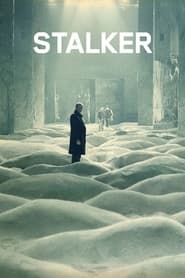
Movie
1979•
8.1
Stalker
Near a gray and unnamed city is the Zone, a place guarded by barbed wire and soldiers, and where the normal laws of physics are victim to frequent anomalies. A stalker guides two men into the Zone, specifically to an area in which deep-seated desires are granted.
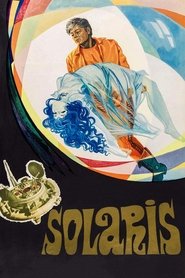
Movie
1972•
7.8
Solaris
A psychologist is sent to a space station orbiting a planet called Solaris to investigate the death of a doctor and the mental problems of cosmonauts on the station. He soon discovers that the water on the planet is a type of brain which brings out repressed memories and obsessions.
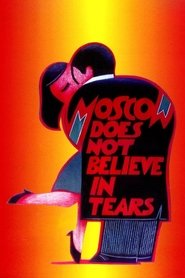
Movie
1980•
7.6
Moscow Does Not Believe in Tears
This is a life story of three girlfriends from youth to autumn ages. Their dreams and wishes, love, disillusions...
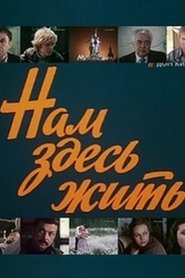
Movie
1982•
7.0
This is Where We Live
Events unfold on the construction of the Baikal-Amur Mainline (BAM), in the survey party and in the village of Kamushki, through which the highway is to pass.

Movie
1964•
7.8
I Am Cuba
Four vignettes on the lives of the Cuban people in the pre-revolutionary era. In Havana, Maria is ashamed when a man she loves discovers how she makes a living. Pedro, an old farmer, discovers that the land he cultivates is being sold to an American company. A student sees his friends attacked by the police while they distribute leaflets supporting Fidel Castro. Finally, a peasant family is threatened by Batista's army.
Movie
1991
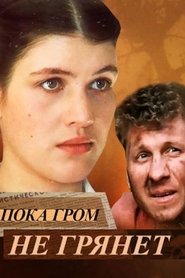
Until the Thunder Strikes
Few months before collapse of USSR. Villages and collective farms are facing with problem: young and working age people leaving countryside for better life in cities. Same problem in collapsing collective farm near Moscow - the only mechanic and harvester driver decides to leave his native village because he feels deeply offended for being severely punished for breakdown harvester. But his countrymen disagree with his decision and try to prevent his escape.
Movie
1975•
7.9
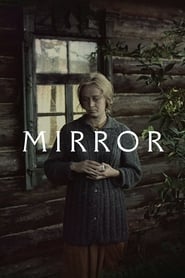
Mirror
A dying man in his forties recalls his childhood, his mother, the war and personal moments that tell of and juxtapose pivotal moments in Soviet history with daily life.
Movie
1936•
5.0
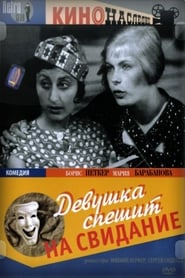
Late for a Date
Arriving on a resort muscovites - circus artist Gurov and professor Fedorov are forget the houses of passport. Girl-dispatch on mail, hurrying on an appointment, mixes up envelopes, that entails the row of the comic misunderstanding.
Movie
1968•
6.4
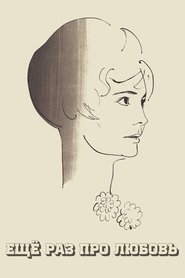
Once More About Love
For the first time, Natasha saw Elektron Yevdokimov at the Polytechnic Museum, where she came with Feliks. Then she really liked the confident speaker. Relations with Feliks didn't work out, and Natasha, leaving home, became a flight attendant — that is what she called her new profession. Once in a cafe, before the next flight, Natasha saw Yevdokimov. They met and began to meet. They experience their feelings for each other in different ways. By the power of her love, Natasha makes Yevdokimov understand what love is.
Movie
1988•
5.5
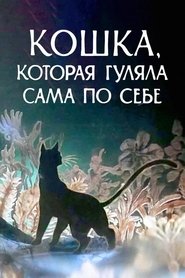
The Cat Who Walked by Herself
Two parents put their child in his crib for the night and leave the room. The child starts crying, and the Cat comes into the room to keep him company. The child grabs her tail, and the Cat angrily reminds him that they agreed a thousand years ago that he would not do that. Upon seeing that the child doesn't remember, the Cat sighs and decides to tell him the story from the beginning. The story starts when the planet was young and life on Earth is starting with dinosaurs.
Movie
1972•
8.0
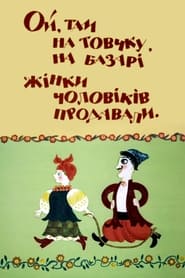
How Wives Sold Husbands
This cartoon is based on a humorous Ukrainian folk song about how wives decided to sell their disgraced husbands. One wife wants to get rid of the reveler, the other - from the drunkard, the young woman is tired of the old man, the worker is lazy, and the tall - the husband is too small in stature.
Movie
1925•
7.6
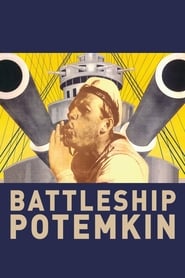
Battleship Potemkin
A dramatized account of a great Russian naval mutiny and a resultant public demonstration, showing support, which brought on a police massacre.
Movie
1975
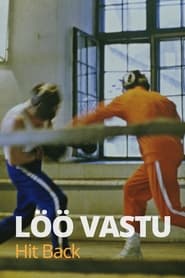
Hit Back
The film invites its viewers to reflect on where modern sports have come to. Does a young, honest and uncompromising athlete have a future in the sport or must he go along with the dishonest tricks and the mean game that comes from it all?
Movie
1988•
3.7
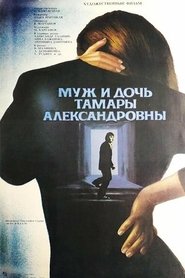
Tamara Aleksandrovna's Husband and Daughter
Daughter and husband of a teacher of the high school live in the old house at different floors of multifamily unit. When the former wife gets to hospital the girl leaves in father’s care who is a weak but kind-hearted man.
Movie
1966•
8.0
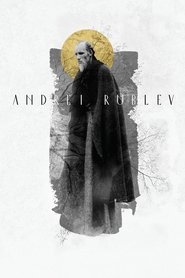
Andrei Rublev
An expansive Russian drama, this film focuses on the life of revered religious icon painter Andrei Rublev. Drifting from place to place in a tumultuous era, the peace-seeking monk eventually gains a reputation for his art. But after Rublev witnesses a brutal battle and unintentionally becomes involved, he takes a vow of silence and spends time away from his work. As he begins to ease his troubled soul, he takes steps towards becoming a painter once again.
Movie
1975•
7.9
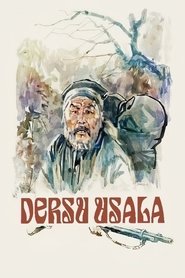
Dersu Uzala
A military explorer meets and befriends a Goldi man in Russia’s unmapped forests. A deep and abiding bond evolves between the two men, one civilized in the usual sense, the other at home in the glacial Siberian woods.
Movie
1970
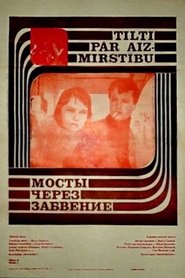
Bridges Over Oblivion
Kirovakan, Armenia, 1968. A street in the town is being renamed, but nobody seems to know whom after. A chance encounter between a student running late to his thesis defense, and a young woman determined to leave the town forever. 25 years earlier, Genrikh Zakaryan, a young resistance fighter, smuggles a secret Nazi operations map through occupied territory. Imaginings and history meld into one, echoes of past and future coalesce: “the fate of Genrikh Zakaryan is intangibly intertwined with the fate of today’s youth.”
Movie
1981•
7.0
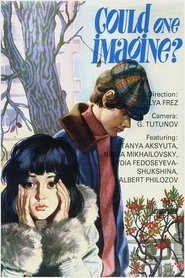
Could One Imagine?
Two high school kids meet in class and fall madly in love with each other. Unfortunately, His father and her mother had a history of their own between them which creates uneasiness in both of them. Also because of that, the boy's mother is very jealous and tries to separate them. The only person that tries to help them is their teacher who has relationship problems of her own.

Movie
1979•
5.3
Live in Joy
A kolkhoz machine-operator is a local inventor who has tensions with his wife over his hobby. He invents a useful appendage for a grain harvester combine and an article about his invention is printed in a local paper. Kolkhoz chairman then entrusts him with a mission to get equipment from a nearby city for building a bridge, but the machine-operator is duped by crooks.
Movie
1975•
7.4
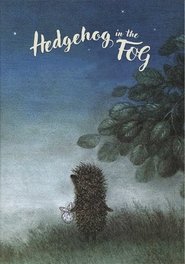
Hedgehog in the Fog
A little hedgehog, on the way to visit his friend the bear, gets lost in thick fog, where horses, dogs and even falling leaves take on a terrifying new aspect...
TV
1962•
7.6
Fuse
Fitil is a popular Soviet/Russian television satirical/comedy short film series which ran for about 500 episodes. Some of the episodes were aimed at children, and were called Фитилёк, Fitilyok, Little Fuse. Each issue contained from the few short segments: documentary, fictional and animated ones. Directed by various artists, including Leonid Gaidai who presented his famous trio of Nikulin, Vitsin and Morgunov into the cast. It was called in USSR as "the anecdotes from the Soviet government".
TV
1974•
6.6
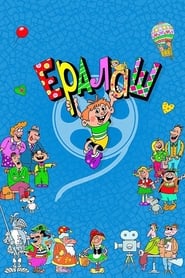
Yeralash
The children's humorous film magazine "Yeralash" is a one-of-a-kind work of cinematography that ironically approaches the solution of everyday problems, focusing on the views and needs of modern society, allowing different generations to achieve mutual understanding.

TV
1961•
6.5
KVN
KVN is a Russian humour TV show and competition where teams compete by giving funny answers to questions and showing prepared sketches. The programme was first aired by the First Soviet Channel on November 8, 1961. Eleven years later, in 1972, when few programmes were being broadcast live, Soviet censors found the students' impromptu jokes offensive and anti-Soviet and banned KVN. The show was revived fourteen years later during the Perestroika era in 1986, with Alexander Maslyakov as its host. It is one of the longest-running TV programmes on Russian Television. It also has its own holiday on November 8, the birthday of the game, which KVN players celebrate every year since it was announced and widely celebrated for the first time in 2001.
TV
1969•
8.0
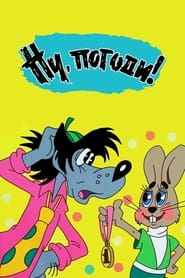
Well, Just You Wait!
Follows the comical adventures of a mischievous yet artistic wolf [Volk], trying to catch a hare [Zayats]. The series has additional characters that usually either help the hare or interfere with the wolf's plans.
TV
1980•
7.8
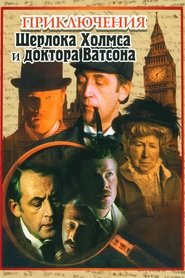
The Adventures of Sherlock Holmes and Dr. Watson
The Adventures of Sherlock Holmes and Dr. Watson is a series of five films produced by Lenfilm for the Soviet Central Television, split into eleven episodes, starring Vasily Livanov as Sherlock Holmes and Vitaly Solomin as Dr. Watson. They were directed by Igor Maslennikov and filmed in Russia (the then Soviet Union) between 1979 and 1986, and the series was one of the most successful in the history of Russian television.
TV
1962•
7.5
Fitil (Film Magazine)
A satirical film magazine produced by various film studios in the USSR from 1962 to 1991 and in the CIS from 1992 to 2003. The magazine's issues consisted of various stories: feature films, documentaries (with dubbed characters), and cartoons.
TV
1987•
9.0
Взгляд
TV
1981•
7.0
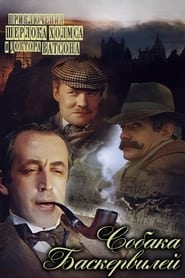
The Adventures of Sherlock Holmes and Dr. Watson: The Hound of the Baskervilles
The third part of the Soviet TV series based on the works of Arthur Conan Doyle about Sherlock Holmes. The events of the film take place in 1889. The country doctor Mortimer comes to Sherlock Holmes and Dr. Watson, who visited the detective's apartment the day before in his absence and forgot his cane there. Mortimer tells the legend of the Hound of the Baskervilles, a hellish hound that has been haunting the Baskerville family from Devonshire for several centuries, and reports the mysterious death of Sir Charles Baskerville, the owner of the Baskerville Hall estate. The newspapers write that Charles Baskerville's death was caused by a heart attack, allegedly he was very unwell, but Mortimer does not believe a single word of them, since he found tracks of a huge dog not far from the body of the deceased.
TV
1971•
1.0
Mozalan
The satirical film magazine Mozalan (The Gadfly) was founded in 1971 at the Azerbaijanfilm film studio named after Jafar Jabbarli. To date, more than 180 issues of the film magazine have been published, each containing 3-4 stories. The stories can be fictional, documentary, and even animated. The aim of the satirical film magazine Mozalan is to combat negative situations and convey the shortcomings of society to the people through the language of satire. The main style of work of the Mozalan film crew was to suddenly appear at manufacturing enterprises, capture shortcomings, and convey them to the people.

TV
1988•
8.5
The Adventures of Sherlock Holmes and Dr. Watson: The twentieth century begins
The fifth and final part of the cycle of Soviet television feature films, filmed by director Igor Maslennikov based on the stories of the English writer Arthur Conan Doyle about the famous detective Sherlock Holmes. In the first part based on the works - "The Adventure of the Engineer's Thumb", "The Adventure of the Second Stain". In the second part based on the works - "The Adventure of the Bruce-Partington Plans", and "His Last Bow".
TV
1971•
7.3
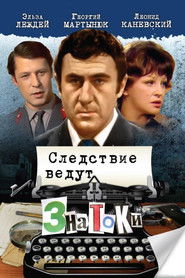
Investigation Held by ZnaToKi
TV
1973•
7.7
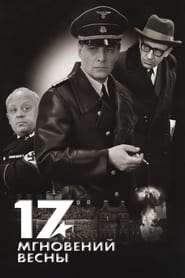
Seventeen Moments of Spring
A Soviet spy is tasked with disrupting the negotiations between Karl Wolff and Allen Dulles taking place in Switzerland, aimed at forging a separate peace between Germany and the Western Allies.
TV
1985•
5.9
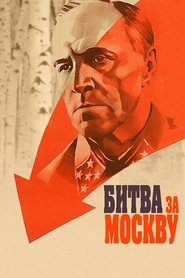
Battle for Moscow
The Battle of Moscow is a 1985 Soviet multi-part war narrative, presenting a dramatized account of the 1941 Battle of Moscow and the events preceding it. The battle was the first major defeat of German Wehrmacht in the Second World War.
TV
1968•
6.6
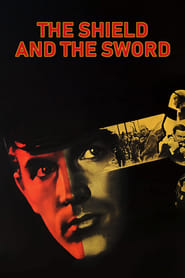
The Shield and the Sword
The year is 1940 and Nazi Germany is at the height of its military prowess, having captured most of Europe and eyeing the Soviet Union to the East. The Russian military command suspects hostile intent from Germany and so arranges for its spies to infiltrate ranks of the German military and the SS. Alexander Belov is a Russian spy, who travels from Soviet-held Latvia to Nazi Germany under an alias of Johann Weiss. His mastery of the German language, steel nerves and an ability to manipulate others help him to use his connections in the SS to ascend the ladder of the German intelligence. He uses his position to identify sympathetic Germans, who help him to procure vital intelligence, and to help local resistance movements in their collective fight against Nazism.
TV
1983•
9.0
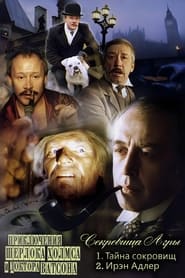
The Adventures of Sherlock Holmes and Dr. Watson: The Treasures of Agra
The fourth part of the Soviet TV series based on Arthur Conan Doyle's stories about Sherlock Holmes. The film was shot based on the story "The Sign of Four" and the story "A Scandal in Bohemia".

TV
1984•
6.9
TASS Is Authorized to Declare...
The struggle of Soviet and American intelligence agencies during the Cold War era
TV
1985•
7.7
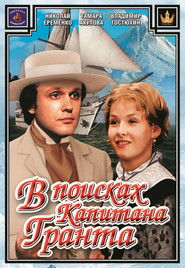
In Search of Captain Grant
Lord and Lady Glenarvan found a bottle in the ocean. This bottle contained a letter from Captain Grant that he and two of his sailors had survived a disaster at sea and need help. Unfortunately, the letter was damaged by water, and the latitude is known (37 degrees), but not the longitude. The Glenarvans decide to find Captain Grant.
TV
1988•
6.7
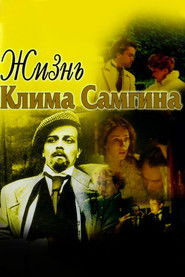
The Life of Klim Samgin
The life of the intellectual Samgin, depicted against the backdrop of the grand panorama of Russian life from 1877 to 1917.
TV
1975•
8.3
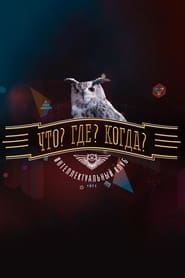
What? Where? When?
What? Where? When? is an intellectual game show well known in Russian-language media and other CIS states since mid-1970s. Today it is produced for television by TV Igra on the Russian Channel One and also exists as a competitive game played in clubs organized by the World Association of Clubs. Over 17 000 teams worldwide play sport version of game, based on the TV show.
TV
1968•
3.5