Movies & TV Shows from Mali

Movie
2023•
6.6
Banel & Adama
Chaos ensues shortly after a young man in a remote village in northern Senegal refuses to accept his role as the new village chief.
Movie
2022
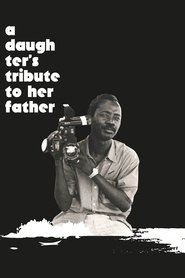
A Daughter's Tribute to Her Father: Souleymane Cissé
Fatou Cissé accompanies her father, malien director Souleymane Cissé, through a trip down his film career, painting an intimate and poetic picture of one of Africa’s most celebrated actors.
Movie
2013•
8.0
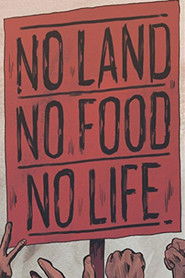
No Land No Food No Life
The plight of small-scale farmers in Africa and Asia forced off their land by an unprecedented corporate land grab. If they refuse they are subject to horrific violence, which has led to women miscarrying and deaths. Exploring the personal stories of those affected, this documentary gives a voice to threatened subsistence farmers throughout the developing world. If your livelihood was ripped away from you, how would you cope?
Movie
2015•
6.2
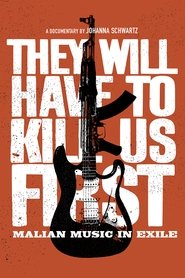
They Will Have to Kill Us First
In 2012, jihadists took control of northern Mali. They imposed one of the strictest interpretations of sharia law in history. On August 12th they banned music - radio stations destroyed, instruments burned and musicians facing torture, even death. Overnight, Mali’s most revered members of society – the musicians – were forced into hiding or exile. This film follows Mali’s musicians as they fight to keep music alive in their country. We witness fierce battles between the army and the jihadists, capture life over borders at refugee camps where money and hope are scarce, follow perilous journeys home to war ravaged cities, and for one band, Songhoy Blues, their path to international stardom.

Movie
2001•
4.0
I'll Sing for You
A profile of Boubacar Traore, "Mali's Elvis Presley", a love story told by a singer whose music takes us on a social, political and geographic voyage of Mali from 1960 to our days.

Movie
2025
So Long a Letter
Ramatoulaye, a 50-year-old teacher, has been married to lawyer Modou Fall for 25 years. The couple is very close and happy. When her husband takes a second wife – her daughter's best friend – a struggle between tradition and modernity begins.

Movie
N/A
The Missing Camel
Shocked by French président Nicolas Sarkozy’s claim that the African man has no history, filmmaker Cheikh N’diaye sets out to prove his royal heritage – tracing his grandfather’s path from Mauritania to Senegal, homeland of his warrior ancestors.
Movie
2016•
5.6
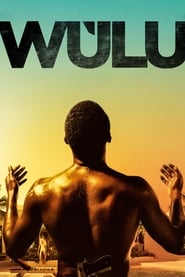
Wùlu
Malian-French director Daouda Coulibaly's auspicious debut is a pulse-pounding political thriller. Wùlu tells the unsettling tale of a man's rise from the bottom rung of the social ladder to the heights of criminal power.
Movie
1969
Postgraduate
Movie
1997•
6.6
Skirt Power
A group of woman in a Malian village find a mystical mask. Using the mask, they reverse gender roles, women act like men, and men act like women.
Movie
1998
Aphrodite: The Garden of Perfumes
The story of Aphrodite from her birth and her relationship with the other gods of Greek mythology.
Movie
1973
Five Days in a Life
"Cinq jours d’une vie" is about a young man, N'Tji, orphaned at an early age, who lives under the supervision of his uncle. He is sent to Koranic school, where he is forced to memorize and recite verses of the Koran; soon, N’Tji escapes and begins to craft his own destiny. Unfortunately, he is found and thrown in prison, and must live with the implications upon release. In this film, Cissé explores the institution of the Koranic school and its detrimental effects on young people’s autonomy and ability to explore their futures.
Movie
2006•
6.9
Bamako
Caught in the stranglehold of debt and structural adjustment, Africa is fighting for its survival. In the face of disaster, representatives of African society bring an action against international financial institutions. The trial takes place in Bamako, in the yard of a house, among its inhabitants.

Movie
1987•
6.6
Yeelen
A young man with magical powers journeys to his uncle to request help in fighting his sorcerer father.
Movie
2013
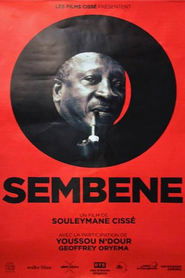
O Sembene!
Meeting of two greats, Cissé's tribute to the dean of African cinema is without discours, without pathos. It is the one returned by his mini camera, which attends the funeral ceremonies that marked the departure of Ousmane Sembene in Dakar, and finds the relatives of Sembene in the house he had built in Yoff, directly on rocks beaten by the ocean. These simple and close images, with a distance from the ceremonial that Sembene would have appreciated, those briefly borrowed from his films and archives, weave a film full of friendship and fraternity.
Movie
1989
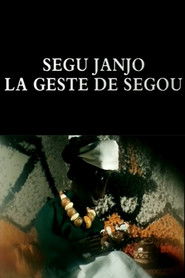
The Legend of Ségou
The wise masters tell the King of Ségou of the birth of a boy constituting a threat to his power. In Macina, not far from Ségou, Fatoumata consults the witch doctor...
Movie
2014•
6.0
Gringo Trails
Are tourists destroying the planet-or saving it? How do travelers change the remote places they visit, and how are they changed? From the Bolivian jungle to the party beaches of Thailand, and from the deserts of Timbuktu, Mali to the breathtaking beauty of Bhutan, GRINGO TRAILS traces stories over 30 years to show the dramatic long-term impact of tourism on cultures, economies, and the environment.
Movie
1994•
10.0
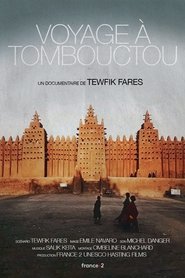
Voyage à Tombouctou
Movie
2025
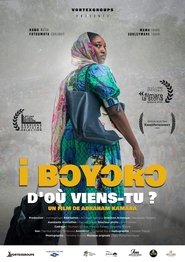
I bɔyɔrɔ, d’où viens-tu ?
The story of a young student, lost in her hometown and alienated from her own traditions. After experiencing situations that made her feel powerless and unable to express herself about her roots, she decides to embark on a journey to rediscover her heritage and reconnect with her origins. This personal quest leads her to meaningful encounters and a profound reevaluation of her identity.

Movie
2019
Balkissa, les démons de minuit

TV
2018