Movies & TV Shows from Congo
Movie
2023•
6.1
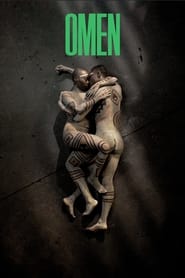
Omen
After spending years in Belgium, a young Congolese man returns to his birthplace of Kinshasa to confront the intricacies of his family and culture.

Movie
2019•
6.1
Zombies
A journey between hope and dystopia in a hallucinated Kinshasa, from the culture of the hair salon to futuristic solitary clubbing, from an urban parade to a dictator's sense of glory to a modern western in the style of Takeshi Kitano.

Movie
1996
Macadam Tribe
Four friends roam the streets, bars and boxing clubs in a bubbling and bewitching big African town.

Movie
2024
Never Look at the Sun
Ancestral patterns combined with modern prejudices and stigma explain skin bleaching.
Movie
2024
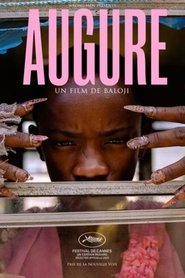
Augure: Infinite Trolling
INFINITE TROLLING toys with the infinite scroll that fuels social media – and this erratic stream of content as a path to desensitization. Oscillating between narratives, the film moves through a series of disjointed yet intertwined vignettes, finding a disquieting sense of the surreal in the art of assemblage.
Movie
2024•
6.0
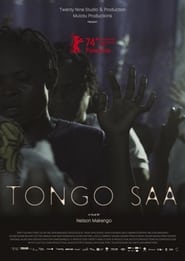
Rising Up at Night
In Kinshasa, despite preparations for the construction of Africa's largest power station, the population often finds itself without electricity. The city's inhabitants, struggling for reliable power access, ingeniously utilize makeshift lights as essential means to survive their daily lives and maintain their ability to celebrate.
Movie
2018•
6.0
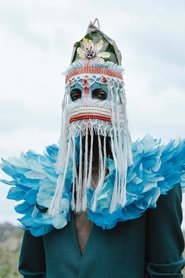
Peau de Chagrin/Bleu de Nuit
The Congolese-Belgian artist Baloji looks at Congolese pygmy wedding traditions.
Movie
2023
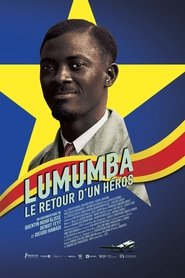
Lumumba, return of a hero
61 years after his assassination, Patrice Lumumba returns to his country. "Congo returns to Congo" as one of his children said. Lumumba was a nationalist leader who intended to use his country's enormous wealth for the benefit of his people. He became the first Prime Minister in the history of Congo on June 30, 1960, when the country gained its independence after 80 years of Belgian colonial rule. Seven months later, he was assassinated in Katanga province with two of his best political allies: Joseph Okito and Maurice Mpolo. Their bodies were dissolved in sulfuric acid and only one of Patrice Lumumba's teeth remained. This "relic" was taken from Lumumba's corpse and kept in secret by a police commissioner until his death in 2000. The assassination of the nationalist and anti-colonialist leader was followed by the advent of the dictator Mobutu, who was able to remain in place until 1997, thanks to Western support.
Movie
2016•
7.3
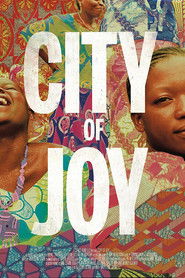
City of Joy
The Democratic Republic of Congo has endured 20 years of devastating violence. Rape has been used as a weapon of war to destroy community and access precious minerals. Congo is often referred to as “the worst place in the world to be a woman.” "City of Joy" tells a different story of the region. The film focuses on Jane, a student at a center where women who have suffered unimaginable abuse join together to become leaders. We also meet the founders of the center: a devout Congolese Doctor, a Congolese activist, and a radical N.Y. playwright. The film weaves between joy and pain as these individuals band together to demand hope in a place so often deemed hopeless.
Movie
2022•
10.0
Tozoom
Tozoom site Africa conceals treasures that ignite the imagination of travellers, but also that of all... Who has not dreamed of this magical continent and of living adventures there, Clover tomas when he was well seated in its sometimes somewhat mischievousness, this work envelops you in a very friendly warmth and manages to conquer it.

Movie
2025
Flash Drive

Movie
2025
Rumba Royale
Rumba Royale is an historical thriller set in the Democratic Republic of Congo.
Movie
2002•
1.0
(Paris: XY)
Max wakes up one morning and discovers that his wife Hélène has left him in his sleep, without a word, taking their two children with her. He doesn't understand. The nights drag on, his demons get involved, he chooses to face them and to anchor himself in reality. He probes his feelings, revisits from top to bottom the artifice of his life. Max ends up rediscovering his love for Hélène and decides to win her back. But isn't it already too late?
Movie
2024
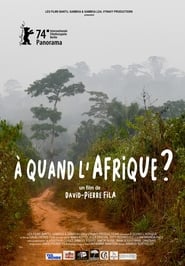
Which Way Africa?
Forest dwellers pound drums upholding rituals while urbanites cry "Progress!" More plunder the land's riches but newly defiant ones shout back.
Movie
2022
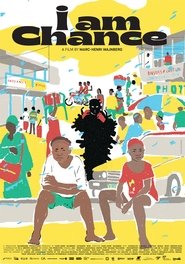
I am Chance
I am Chance follows the microcosm of a group of street savvy girls in the surprisingly bright, pop and artistic megacity of Kinshasa. Astute, sassy and resilient, Chancelvie and her friends take on the world, fighting and nurturing, stealing and sharing, turning tricks and making art. Vibrant and exuberant, Kinshasa itself becomes a character in the film, combining its voice with that of the girls.

Movie
2023
Speech for a Melting Statue
On the soundtrack, poet Marie Paule Mugeni reads a speech prepared for the day on which the colonial statue of King Leopold II will be definitively removed. In the images, the massive anti-racist demonstrations that took place in Brussels almost achieve her dream. A reflection by Collectif Faire-Part on how past, present and future are interwoven in each one of our acts.
Movie
1991
10,000 Years of Cinema
This documentary offers the reflections of filmmakers shot at FESPACO 1991. Djibril Diop Mambéty, David Achkar, Moussa Sene Absa, Mambaye Coulibaly, Idrissa Ouedraogo, Mansour Sora Wade... express their faith in the eternity of African cinema.

Movie
2021
The Cost of Cobalt
In the cobalt mining areas of Katanga in the Democratic Republic of the Congo (DRC), babies are being born with horrific birth defects. Scientists and doctors are finding increasing evidence of environmental pollution from industrial mining which, they believe, may be the cause of a range of malformations from cleft palate to some so serious the baby is stillborn. More than 60% of the world’s reserves of cobalt are in the DRC and this mineral is essential for the production of electric car batteries, which may be the key to reducing carbon emissions and to slowing climate change. In The Cost of Cobalt we meet the doctors treating the children affected and the scientists who are measuring the pollution. Cobalt may be part of the global solution to climate change, but is it right that Congo’s next generation pay the price with their health? Many are hoping that the more the world understands their plight, the more pressure will be put on the industry here to clean up its act.
Movie
N/A
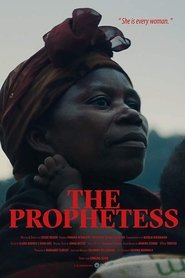
The Prophetess
In the heart of the Democratic Republic of Congo, Furaha and Venantie, forge an unbreakable bond after experiencing unimaginable trauma. Together, they ignite a movement of empowerment that transcends their pain and inspires an entire community to reclaim their future.
Movie
1974
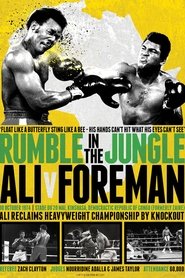
The Rumble in the Jungle: George Foreman vs. Muhammad Ali
George Foreman vs. Muhammad Ali, billed as The Rumble in the Jungle, was a heavyweight championship boxing match on October 30, 1974, at the 20th of May Stadium (now the Stade Tata Raphaël) in Kinshasa, Zaire (now Democratic Republic of the Congo), between undefeated and undisputed heavyweight champion George Foreman and Muhammad Ali. The event had an attendance of 60,000 people and was one of the most watched televised events at the time. Ali won by knockout in the eighth round.

TV
2023