Movies & TV Shows from Bermuda

Movie
2007•
6.0
Faro: Goddess of the Waters
Faro is a real goddess of a real tribe (the Bamana) in the West African country of Mali. In a landlocked country like Mali, covered in part by the Sahara Desert, water is a resource that can never be taken for granted. The Bamana village in Faro: Goddess of the Waters not only sits on a riverbank, but also depends for much of its food on fish from the river. Faro is the dominant character in this film, the unseen force for which all action takes place. (c) Ferdy on Films [Marilyn Ferdinand]

Movie
2001•
5.8
Sia, the Myth of the Python
Kaya Maghan, the despotic king of Wagadou, follows the instructions of his priest by ordering the religious sacrifice to the Python God of Sia Yatabaree, the virgin daughter of a notable family. A gift of gold equivalent to Sia’s weight is given to her family as compensation for surrendering their daughter for the sacrifice. However, Sia runs away and finds shelter in the home of a mad prophet who has railed against the king. The king orders his top general to locate Sia, but the general is conflicted since Sia was engaged to marry his nephew, Mamadi, who is in battle on behalf of the kingdom. Mamadi returns and joins his uncle to do battle against the Python God. - Wikipedia, accessed 31 July 2021

Movie
1977•
6.0
The Deep
A pair of young vacationers are involved in a dangerous conflict with treasure hunters when they discover a way into a deadly wreck in Bermuda waters.
Movie
1993•
5.6
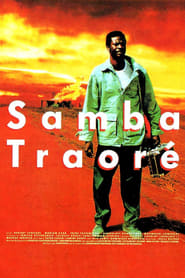
Samba Traoré
During a robbery at a petrol station in town, one of the accomplices is shot dead. The other, Samba Traoré, flees with the loot: a suitcase full of banknotes. After years away, he returns to his native village. Life has gone on as usual, and Saratou is as beautiful as he remembers her. Director Idrissa Ouedraogo paints a portrait of a man haunted by his past, trying to rebuild his life and start afresh. But past mistakes never stay buried for long.

Movie
2018
Exteriores - Mulheres Brasileiras na Diplomacia
In 1918, Maria José Rebello from the state of Bahia applied for the national admission exam for the diplomatic career, a fact that left much of society astonished. Setting a precedent as the first woman to join the Ministry of Foreign Affairs, Maria began a 100-year journey for Brazilian women in diplomacy.
Movie
2004•
7.2
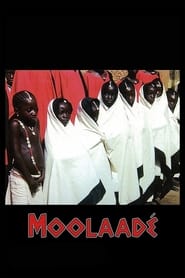
Moolaadé
When a woman shelters a group of girls from suffering female genital mutilation, she starts a conflict that tears her village apart.

Movie
2015•
7.4
When Elephants Fight
The Democratic Republic of Congo has been called a geological scandal due to its mineral rich soil. Unfortunately, those minerals, necessary to sustain today's technology, are funding the deadliest war since WWII.

Movie
2024
Porto de Origem
Movie
2015
Our House
Bamako. Several women are illegally evicted from their home in 2008. Their brother, Souleymane Cissé, takes up his camera to look back at his childhood and family history in a country heading for war despite a tradition of tolerance.
Movie
1995•
5.8
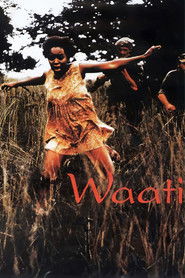
Time
Beginning in South Africa under the apartheid regime, the film follows a young girl who flees the country after a violent confrontation with a local white landowner in which her father is killed. She settles in Abidjan, where, ten years later, she has become a university student. As part of her studies, she visits the Taureg tribe on the edge of the Sahara before at last returning to post-Apartheid South Africa.

Movie
2009
Tell Me Who You Are
A Westernized filmmaker, Issa, is a polygamist whose third wife Mimi is a doctor and high-profile health minister. Accustomed to a certain degree of empowerment and independence from her husband (deciding to stay in her own house instead of moving into his household), Mimi carries on a not-too-subtle affair with the married Abba, a fishmonger who sends her a tell-tale case of fish after each encounter as a token of his affection. Confronted by Issa with his suspicions of infidelity after he finds Abba in the courtyard, Mimi decides to file for divorce, a move that soon brings on a new set of complications, as relatives plead for reconciliation to avoid the shame, Issa's second wife increasingly resents the attention paid to Mimi, and Abba's wife begins to grow suspicious of Mimi's role in her husband's life.

Movie
2025
First Thing Sunday
Jyire holds a motocross race in his hometown, where he must adhere to the park’s restrictions and drown out the public’s concern.

Movie
2024
Top Rider
An in-depth look into the isolated sport of Motocross in the much more isolated island of Bermuda.
Movie
1989•
5.5
A Dance for Heroes
Two women rebel against the traditions of a village society.
Movie
1975•
6.2
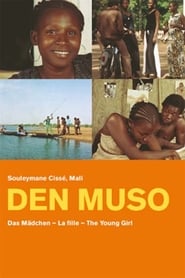
The Young Girl
A young mute woman is raped and becomes pregnant, with disastrous consequences within her family. The film also sketches the social/economic situation in urban Mali in the 1970s, particularly in relation to the treatment of women.
Movie
1983•
5.9
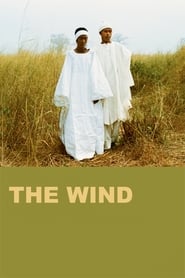
The Wind
Two Malian teenagers, Bah and Batrou, from different backgrounds, meet at secondary school. Bah is the descendent of a great tribal chieftain. Batrous father, a provincial military governor, represents the new ruling power. The two teenagers are part of a generation that rejects the established order and challenges the society in which they live.

Movie
1991•
5.2
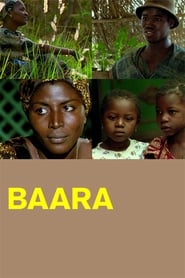
Fire!
Life in the African country of Mali in the 1990s is vividly highlighted in this mild drama. In the story, a young forest ranger who sees that his work holds the key to the future of his country (through reforestation) is disgusted at the short-sighted, money-grubbing ways of his superiors. He has a much better relationship with local villagers than with his agency's bosses. As the movie opens, the villagers are preparing to hold a hunting ceremony but are not sure whether they will do it the old fashioned way, with a bonfire, or will obey a government decree that open fires are too dangerous. There is a lot of sexual teasing between the villagers, including some harmless horseplay. For instance, when a man whispers another woman's name in his sleep, his wife pours water into his ear in revenge.
Movie
1978•
6.4
Work
A young manager of a factory encounters a man walking along a road who says his family traditionally are servants to the manager's family. The manager offers him a job, and as he watches out for the other man's welfare, begins to see how the company mistreats its workers. The manager is challenged between his ethics and the pressure from others to protect his own interests as dire problems surface at the factory

Movie
2021•
7.3
The Last Shelter
Deep in Mali, on the edge of the Sahel Desert, lies the peaceful city of Gao—a quiet way station for passersby with their eyes set on Europe in hopes of opportunity, safety and a better future.
Movie
2006
Walking on a Sea of Glass
Errol Williams' last film is an homage to the Bermuda civil rights activist Kingsley Tweed - carpenter, preacher, and key figure in the desegregation of Bermuda following the boycott of public theatres in 1959. The documentary follows Tweed's return to the island after forty years living abroad. [Darrell Varga]