Movies & TV Shows from Azerbaijan

Movie
2022•
6.8
The Returners
Seven friends decide to play a game at their dinner party, in which each member needs to read aloud all incoming text messages or put phone calls on speaker for all to hear. This causes many revelations to materialize.
Movie
1982
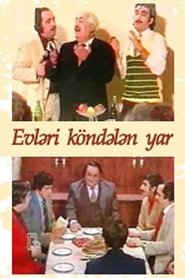
Evləri köndələn yar
In the film-play, events get tangled as a result of the lovers' miscommunication. Although the dramaturgical contradictions of the work are formed by various attitudes towards folk customs such as engagement and wedding, the play focuses on the contradictions of the characters, not the events.
Movie
2006•
8.0
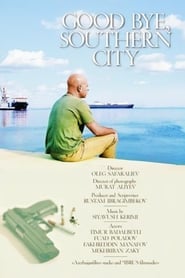
Good Bye, Southern City
The film takes place in the Azerbaijani capital of Baku at the end of the 1980s. At this time, the Soviet Union was starting to fall apart, and with this came the start of a number of ethnic conflicts. Fariz and his family move into a Baku apartment block from war-torn Nagorno-Karabakh. Fariz's relations with his new neighbors are strained by his accusations that it was people like them who failed to support the Azeris in their conflict with ethnic Armenians. The only one who stands up to him is Alik, who acts as peacemaker between him and the older inhabitants of the building. Alik has no reservations about brandishing his gun in order to keep the peace. One day, the apartment managers want to evict a number of musicians who have been squatting in the basement. Alik gets involved, but soon discovers the situation is more complicated that he first believed.
Movie
2016
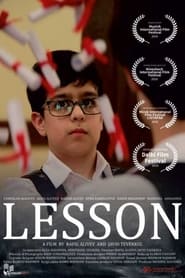
The Lesson
The film tells about school life, the mutual relations of teenage schoolmates, views on friendship and life, and the formation of these views.
Movie
2023•
9.0
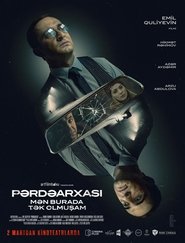
Behind the Scenes: I've Been Here Alone
Hasan (33), who works as a sales manager in a construction company, and his wife Farida (30) have not been able to have children for a long time. After a doctor's examination, Hasan learns that he is infertile. But Hasan, who is afraid of harming his masculinity, hides this information from his wife. At the insistence of Hasan's mother, who thinks that the problem is in Sevda, they go to a midwife who lives in a village for treatment.
Movie
2017
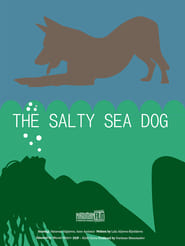
The Dog that Drinks Seawater
The short film tells the story of a woman who was betrayed by the man she loved and lost her unborn child. The depressed woman arrives at a deserted beach, where she becomes a silent witness to the clarification of her life story.
Movie
2007
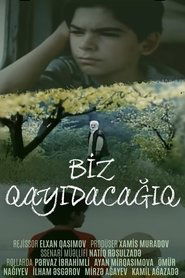
Biz qayıdacağıq
The film depicts the events of a family - a mother and two children - against the backdrop of the consequences of the Khojaly tragedy. Zakir's father was martyred in the Karabakh war. He lives with his mother, and his main ideal is to return to the lands for which his father died. The hero, rejecting the voice given to him by God, chooses military school instead of mugham art. He thinks that on such a difficult day for the homeland, it is necessary to defend it with a weapon in hand.
Movie
2011
Mürafiə vəkillərinin hekayəti
Haji Gafur is a wealthy merchant from Tabriz. In his will, he states that if he dies, his wealth will go to his sister Sakina Khanum. His concubine Zeynab disagrees and files a lawsuit to claim the inherited wealth.
Movie
2015
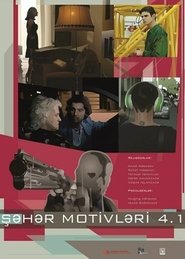
Urban Motives 4.1
“Urban Motives 4.1” is an anthology film consists of 5 short movies by 5 Azerbaijani directors. The first, by Anar Abbasov, is about a relationship between a man and women who live next door; second, by Ru Hasanov, is about a life of a musician who is different from others with his mentality; third, by Teymur Ismayilov, tells a story of a young worker who has his own dreams; fourth, by Jafar Akhundzade, is about traumas caused by war; and the last one, by Vugar Islamzadeh, is a story about a criminal group and an officer who wants to take revenge.
Movie
2024•
7.0
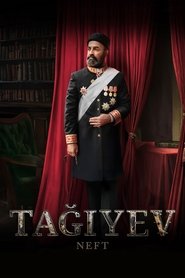
Taghiyev: Oil
August 1922. An American journalist, Jerry Thompson, travels to the Soviet Union and arrives in Azerbaijan. He visits the settlement of Mardakan in Baku. There, he meets an elderly man at a villa. Thompson can hardly believe what he hears. Standing before him is Haji Zeynalabdin Taghiyev, a once-great oil producer, millionaire, and philanthropist who lost all his wealth after the establishment of Soviet rule. Haji recounts his life story to the guest, a journey that saw him rise from a humble mason to an influential oil industrialist.
Movie
2024
Big Red House
The documentary sheds light on the lives of children who suffered physical and psychological trauma due to the terrorist attacks by Armenia on the eve of the Second Karabakh War.
Movie
2015•
4.0
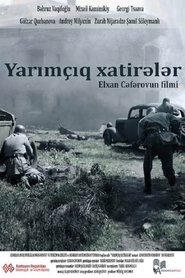
Incomplete Memories
An Azerbaijanian veteran of battle for Brest fortress takes gun again 50 years later - to defend Nagorny Karabakh from Armenians.
Movie
2022
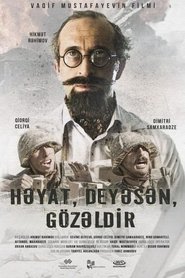
Life Seems to Be Beautiful
Sequel to Fəryad (1993). The film tells the story of Azerbaijani victory in the 44-day Patriotic War for the lands of Karabakh, which the Armenian invaders had occupied for nearly 30 years.
Movie
1999
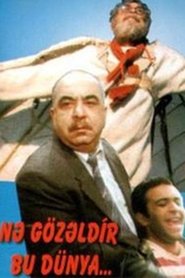
This Wonderful, Wonderful World
After the country transitions to a market economy, the psychiatric hospital is left without funding. The chief doctor (Yaşar Nuri) releases the patients to their homes. However, the outside world turns out to be even more insane than the patients themselves. Seeing the state of society, the patients are forced to return to the hospital. Although this film portrays the lives of people with mental illnesses, it actually uses dark humor to highlight the ugliness and shortcomings in our society and everyday surroundings.
Movie
2007•
2.0
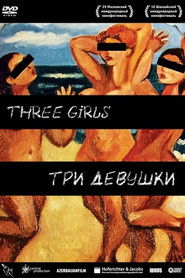
3 Girls
The plot of the film is based on three love stories. The events take place in Moscow, Baku and Africa, but most of them are related to the Azerbaijani capital. The film, shot in the comedy genre, takes place during the Great Patriotic War, when the Germans left the occupied territories.
Movie
2000
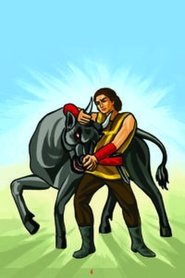
Boghach Khan Son of Dirse Khan
A full-length feature television film based on one of the 12 stories of "Dade Gorgud Dastani".
Movie
2017
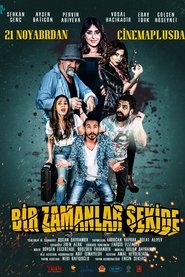
The Game
Russian mobster Yuri's man Nikolai betrays him, steals the map of the famous "Heart of the East" diamond and flees to Istanbul. Yuri sends his men to Istanbul after Nikolay. By chance, the map falls into the hands of 3 wandering Turks Derya, Tayfun and Sedat.

Movie
2017
Kəklikotu
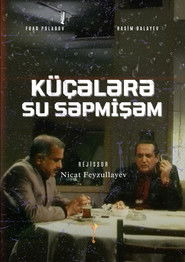
An uncle and his nephew travel to the capital to sell fruits and vegetables. On the way, they sell a sack of “thyme” that was meant for someone else. It turns out the sack didn’t actually contain thyme. Escaping from the owner of this deposit — worth millions — turns out to be a complicated matter.
Movie
2004
There, Where the Rivers Merge
A man goes to prison for years for a crime his cousin committed. After his release he moves to his native village and lives a simple life. But when his cousin comes to visit, his old thoughts of revenge return.
Movie
2003
Kitabi Dada Gorgud. Basat and Tepagoz
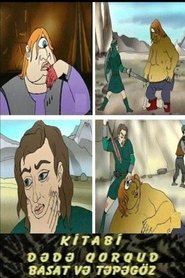
Aruz, who lost his son during migration, one day finds a strange creature with one eye on his head, brings him to the village and raises him as his own cub. Years pass, Aruz finds his missing son, and Grandpa Gorgud names him Basat. Tepegoz, who has already grown up and finished painting, starts eating people one day. When the people found out about this, they kicked Tepagöz out of the village. After Tepagoz's mother, the fairy, bathed him in the lake of Kir, he is no longer affected by weapons, and Tepagoz made a condition in front of the people that they should bring one man and 500 sheep every day. If not, he will raze the whole place to the ground. Seeing that Oban is in such a difficult situation, Dede Gorgud says, "Basat is the only solution." As a result of the dream he saw, Basat, who returned from his trip incomplete, tricks Tepegoz and defeats him and saves the people from trouble.

TV
2017
İmtahan

TV
2021•
8.0
S.Ə.S
In the story of Bakhtiyar and Aysel, there is a piece of every sinner of this city. This time we will go in the direction of the voice. I wonder what is there?
TV
2023•
9.2
The Scorpio Season
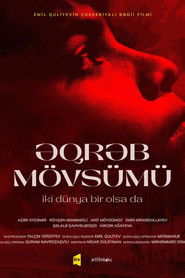
The series is about a mysterious serial killer who keeps the whole city in fear and terror. All attempts to find the killer have failed. As a result, experienced detectives Rauf Eyvazov and Kanan Orujov are assigned to find the killer. Each murder carries a message and makes the crime case more complicated.
TV
2025
Tilov
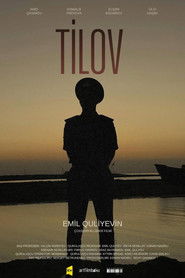
The story takes place on an island where a series of murders occur. The main character is a police officer who fights to uncover the truth behind these crimes.
TV
2011
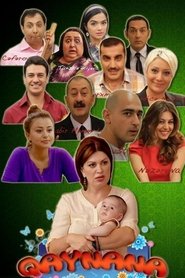
Mother-in-Law
The film depicts the relationship between mother-in-law and daughter-in-law. The funny stories that happen to their close relatives and neighbors also form the plot of the series.
TV
2024
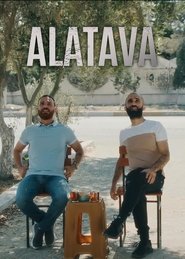
Alatava
Friends who grew up in an orphanage and, after entering adult life, engage in petty fraud and face the problems of this easy way to make money.
TV
2023•
9.0
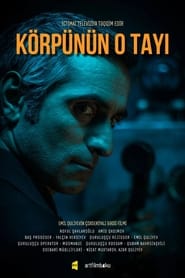
The Other Side of The Bridge
Sequel to ‘The Bridge’.
TV
2022•
8.0
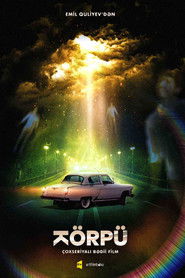
The Bridge
The series begins with the life of Mamed (Nofal Shahlaroglu), who cannot pay his debts and is always in trouble. Mamed's work as an actor was never going well. On the eve of his life going wrong, he meets a spirit named Suleyman (Elnur Huseynov) who can only be seen by those who hold the magical rosary, which no one can see.

TV
2024
Şirin

TV
2020
Фруктовый чай с Саусан
TV
2005
Mashin Show
Game show in which celebrities compete for a car.
TV
2015
The Voice of Azerbaijan
The Voice of Azerbaijan (Azerbaijani: Səs Azərbaycan) is an Azerbaijani television singing competition created by John de Mol. The first season was broadcast on AzTV. The show premiered in late 2015 continuing to 2016. The rules of the show were based on The Voice of Holland. The show received a reboot for the second season that was scheduled to premiere on October 8, 2021.
TV
2003•
5.0
The Truth of the Moment
Based on real events, telling about the murder and investigation of the head of the special department Shamsi Rahimov. The events are presented against the political background of 1994-1995 - these are the October, March rebellions of the Javadov brothers and everything related to the history of Azerbaijan in this period of time.

TV
2023•
8.0
The Masked Singer Azerbaijan
The first edition of the Azerbaijani version of the internationally licensed show "Mask", which is broadcast in more than 50 countries, was shown on Public Television. There are 12 masks in the program and behind each of them some Azerbaijani celebrity is hidden: "Participants come together on the principle of confrontation. Voting determines who stays in the show and who unmasks. The masks are so secret that even the family members do not know about their participation in this show."
TV
2012
The Aghabeyovs
The events revolve around a wealthy and influential family called the Aghabayovs.
TV
2019
Beneath the Ruins
So much misery lies beneath the ruins…

TV
2024•
7.0
İfritə

TV
2024
This City is Empty
Based on Rovshan Abdullaoglu's novel of the same name and "Case No. 999", which has not yet been published. Produced by "KAC Group Media”.

TV
2024•
9.0
Me, Lala and Sherlock Holmes
Murad, a seventh grader who has a rich imagination, is going on summer vacation again and, despite not wanting to, will spend the entire summer with his grandparents in the village. Murad makes friends with Lala and other village children. During his stay with his grandparents, Murad also shows interest in books. He starts reading those books one by one. Murad reads a book in each series and the hero of the book comes to life in his imagination, helping him solve his daily problems. While Murad was worried about spending the summer in the village in the first series, he gradually gets used to the beauties of village life and makes new friends here. In each series, Murad, together with Lala, is busy solving the strange and confusing events that happen in the village.
TV
2012
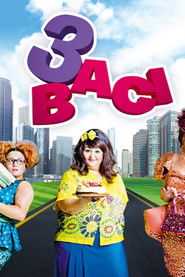
3 Sisters
In the situational comedy series, three completely different sisters with different interests, desires and aspirations - Sevinj, Khoshbakht and Saadat - have moved from the village to the city. Each of them has their own expectations from life. Sevinj is an experimentalist, Khoshbakht runs a confectionery shop, and Saadat intends to become an actress. The comical events that occur around the three sisters form the basis of the series.