Content from Ventura Film
Movie
2006•
7.3
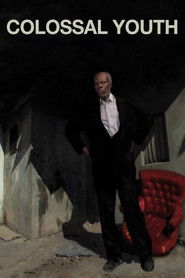
Colossal Youth
After the Portuguese government demolishes his slum and relocates him to a housing project on the outskirts of Lisbon, 75-year-old Cape Verde immigrant Ventura wanders between his new and old homes, reconnecting with people from his past.
Movie
2001•
6.9
In Vanda's Room
An unflinching, fragmentary look at a handful of self-destructive, marginalized people, but taking as main focus the heroin-addicted Vanda Duarte.

Movie
2012•
6.6
Garibaldi's Lovers
A widowed working-class father falls in love with a struggling, poor artist.
Movie
2013•
5.8
Per altri occhi
Impaired vision-friendly documentary about blindness.

Movie
2025•
8.7
Hanami
On a remote volcanic island that everybody wants to leave, little Nana learns to stay. Her mother, Nia, went into exile right after she was born and Nana grows up in the family of her father. One day, the family learns that Nia is ill. Nana begins to develop high fevers and is sent to the foot of a volcano for treatment. There she encounters a world steeped in magical realism, between dreams and reality. Later, when Nana is a teenager, her mother Nia finally returns to the island.
Movie
2003•
3.3
Happiness Costs Nothing
A man in his forties has had enough. He leaves his loveless family, uninspiring job and fake friends and tries to find something more. He meets a young woman he falls for, but she puts him on the test.

Movie
2017•
6.4
Emma
Teo has a good job, a fiancee, a lover, no intention to assume any responsibility in his life. Meeting Emma, a blind woman, will upset his convictions.
Movie
2016•
7.0
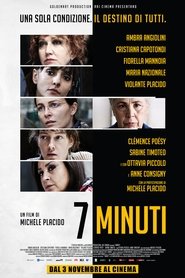
7 Minutes
Women in a failing silk factory, fight to find a way to keep their jobs.
Movie
2019•
4.8
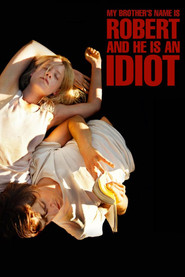
My Brother’s Name Is Robert and He Is an Idiot
For teenage twins Robert and Elena, a weekend can seem endless yet still fly by. Time almost stands still while discussing philosophy, lying in a blissful cornfield near a remote gas station. They are in their own little world, a twin world of twin games and twin love. A confined world where emotions rise, where pressure mounts into rage… The turmoil of adolescence.
Movie
2014•
5.5
They Chased Me Through Arizona
A Polish telephone company closes its gates. One last task remains to be done: The deassembly of the public telephones belonging to the company.
Movie
2016
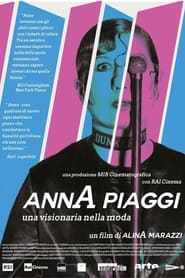
Anna Piaggi: Fashion Visionary
The world of fashion, between the end of the Sixties and the beginning of the Noughties, had a key character that embodied its spirit and told the tale: journalist Anna Piaggi, living witness of that contamination between art, society and culture that changed fashion and sanctioned its success on a global scale. The daughter of a manager for La Rinascente (Milan's iconic high-end shopping mall whose foundation goes back to 1865), Karl Lagerfeld's muse, "a poet with her clothes" in the words of Bill Cunningham, her life is retraced through interviews with designers (Jean-Charles de Castelbajac, Stephen Jones, Manolo Blahnik, and more) together with archival images from four decades of fashion history.
Movie
2013•
6.1
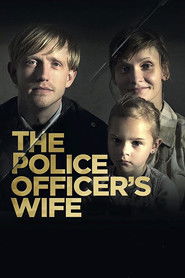
The Policeman's Wife
The story of a young couple who live in a small town with their four-year-old daughter. The husband is so caught up in his work as a policeman that he gradually becomes increasingly alienated from his wife and daughter who become ever closer to one another as they discover the new town. It is only a matter of time before the conflicts within the family manifest themselves.
Movie
1995•
5.0
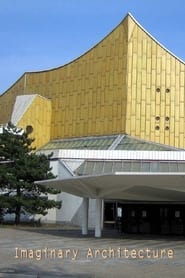
Imaginary Architecture, the architect Hans Scharoun
Hans Scharoun has built houses which show not only structural substance and aesthetic forms but also how human beings should live in buildings. This depiction can only be imaginary - like reading invisible writing on walls. Bitomsky's film looks at several of Scharoun's buildings.
Movie
2018
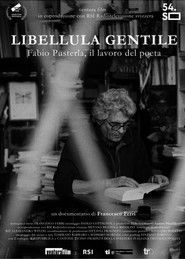
Libellula gentile. Fabio Pusterla, il lavoro del poeta
A film about the Swiss Italian poet Fabio Pusterla and his creative poetic process, his struggle to find an honest language, one which adheres to the personal experience and is able to unfold a hidden truth that creates a strong and profound bond with the other, with his public.
Movie
2020
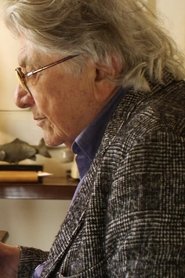
Paul Nizon: Der Nagel im Kopf
The film tells of the radical life-search by the Swiss writer Paul Nizon, born 1929 in Bern, Switzerland, who became what “he was meant to be” in Paris. Now 90-year-old, Paul Nizon grants insights into his life and work in a self-ironic, direct manner. The intimate portrait of a great literary outsider emerges, for whom the risk of life and the risk of writing merge into one and the same work of art.

Movie
2021•
6.1
3/19
Camilla is a successful attorney in her forties who accidentally causes the death of an undocumented migrant. At first, she is only interested in exonerating herself, but soon a feeling of responsibility starts nagging her: the dead body of a young man is lying in the morgue because their destinies fatally crossed. Camilla is used to shielding herself from pain, and she is incapable of really caring, even for her own daughter. In the midst of discovering the victim’s identity, she meets Bruno, the head of the morgue, who seems to be the only one who can truly understand her. The investigation she pursues will take her far from her surroundings until she will be forced to question herself, her unresolved past, and the life she really wants to live.
Movie
2015•
6.2
The Project of the Century
Struggling with the breakdown of a relationship, Leo moves back to a dilapidated 'city of tomorrow' to live with his belligerent grandfather and his father Rafael, a disillusioned engineer who once worked in Cuba's now-abandoned nuclear program.

Movie
2019•
7.8
Moka Noir: No More Coffee in Omegna
Movie
2016•
8.0
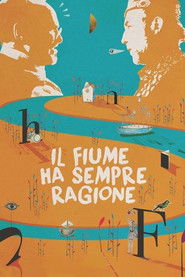
Il fiume ha sempre ragione
Alberto Casiraghy and Josef Weiss are true bibliophile artists. One in Osnago, the other in Mendrisio, they have been dedicating themselves for years to valuable editorial and typographical activities, still printing with mobile characters, preserving the memory of a perfect ingenuity made of manual skills and technique, but also of inventiveness and poetry. Silvio Soldini gives us a realistic and poetical portrait of these two artists-artisans, who chose one of the oldest professions in a modern world, finding great success and approval.

Movie
2020•
6.5
Nha Mila
After fourteen years away from her homeland, Salomé is forced to return to Cape Verde to see her dying brother. During her stopover at Lisbon airport, Águeda, a cleaning lady, recognizes Salomé as "Mila", her childhood friend. Águeda invites Salomé to leave the airport and spend the stopover at her home, with the women of her family. The neighborhood transports her on a spiritual journey, whose destination reveals a painful bond with her homeland.