Content from Universal Production Partners

Movie
2003•
4.3
Národ sobě aneb České moře v 18 přílivech
"Situation of the Street" - An experimental study about Czech life, focusing on Prague's National Street, its businesses and the varied people who frequent it.

Movie
2016•
3.0
The Wolf from Royal Vineyard Street
The film tells the life story of its director, Jan Nemec, one of the most known and important filmmakers of Czech New Wave.
Movie
2009•
5.3
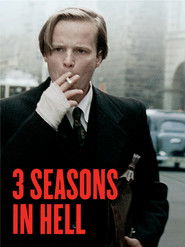
3 Seasons in Hell
A 19 year old nonconformist poet living in 1947 Czechoslovakia is blind to the Communist behemoth looking over him, and instead lives a bohemian life with sexually liberated girls.
Movie
2021•
6.8
Jak si nevzít princeznu
A Christmas comedy-fairy tale in which Prince Leopold and Princess Josephine defy fate by vowing never to marry. When a time-travel adventure to the future goes awry, they must fight for their lives and their kingdom, only to discover, as in all fairy tales, that destiny has other plans.
Movie
2001•
4.0
Devilish Luck 2
Markéta and Honza are a loving and beloved royal couple. The cunning princess Eufrozína beguiles Lucifer with her charm and, with the help of seven-league boots, flees from hell with her father to reunite with King Brambas and deprive Honza of his throne. Honza's evil sister Dora also takes advantage of his absence on a campaign against the enemy and sneaks into the castle, where she almost kills Markýta and her newborn son, just so she can win Honza for herself. This time, however, the lovers are supported by Kujbaba, Hnipírka, Valihrach, the wise godmother, a pair of devils, Lucifer himself, a three-headed dragon with a little dragon, and other characters.

Movie
2020•
5.2
The Christmas Star
The star Svituška, paired with the admired Sirius, is one day cast down to earth by the jealous star Proxima. Svituška falls into a village where she is found and cared for by a teacher named Václav. Svituška has only a few days to return to the sky or she will perish. She relies on Sirius to rescue her, but intrigues by Proxima keep him away. Each evening, Václav watches the princess skating on the frozen lake and harbors a secret love for her. One night, Svituška accompanies him and, upon seeing the princess, rekindles her own light, fueled by the power of Václav’s pure love for the princess. With Václav’s help, Svituška will survive until she can return to the heavens.
Movie
2013•
6.4
Colette
As World War II rages on, Villi and Colette are captured and sent to Auschwitz concentration camp. Imprisoned within separate compounds, the lovers must risk their lives to be together again.
Movie
2008•
6.2
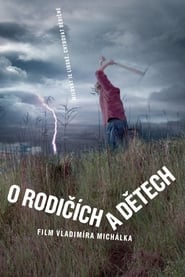
Of Parents and Children
On a walk through Prague, a 40-year-old son's conversations with his septuagenarian father reveal complexities that both strain and sustain their bond.
Movie
2019•
4.0
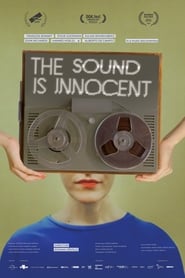
The Sound Is Innocent
As if directing a science-fiction film, Johana Ožvold dissects the story of electronic music. From the pioneer sound engineers working behind the Iron Curtain, through the French avant-garde composers, up to the post-modern creators of digital sonic artefacts, the first-time filmmaker summons an abstract landscape that is haunting and yet achingly beautiful. A voice appears from old television screens forgotten in the maze of some futuristic archive where past and future seem to coexist in a complex and multi-layered way.
Movie
2011•
5.1
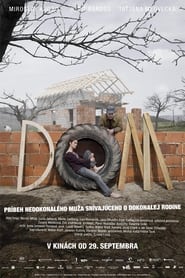
The House
Stone by stone, Imrich is building a small house for his daughter Eva almost entirely on his own. But for Eva, who is about to graduate from school, the prospect of moving into the house is about as appealing as being imprisoned in a jail she herself has helped to build. She has very different plans for her future...
Movie
2013•
8.0
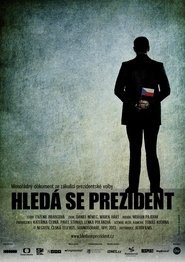
President Wanted
President Wanted (Czech: Hledá se prezident) is a 2013 Czech documentary film about the first direct presidential election in the Czech Republic. It was directed by Tomáš Kudrna. President wanted follows candidates from the summer 2012 to January 2013. The film shows candidates behind scenes. The film also shows the most important moments in the campaign. It also follows candidates that didn't qualify for the election.
Movie
2007•
6.8
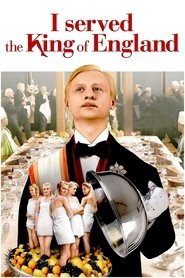
I Served the King of England
Prague, Czechoslovakia, during the inter-war period. Jan Dítě, a young and clever waiter who wants to become a millionaire, comes to the conclusion that to achieve his ambitious goal he must be diligent, listen and observe as much as he can, be always discreet and use what he learns to his own advantage; but the turbulent tides of history will continually stand in his way.
Movie
2012•
6.6
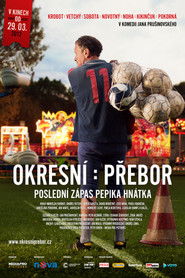
Okresní přebor – Poslední zápas Pepika Hnátka
Based on the popular television series Okresní přebor. As the title suggests, the film features the legendary figure of licensed coach Josef Hnátek. Since this man appeared in the series only as ashes scattered on the Houslice football field, the filmmakers decided to introduce him to viewers in his living form. The story of the feature film is set during his lifetime and explores the dilemma of a man for whom football is his whole life. Even more than life itself. The title role of the Houslice personality will be played by theater director, artistic director of Prague's Dejvické Theater, and occasional actor Miroslav Krobot.
Movie
2002•
6.1
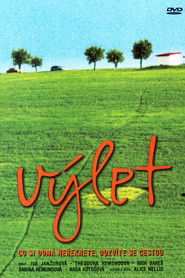
Some Secrets
A dark and absurd road-movie comedy in which the grandmother fulfills a dream, the mother stops treating her daughters like kids, the daughters stop treating their husbands like idiots, and the father's ashes get spread all over the country.
Movie
2010•
6.5
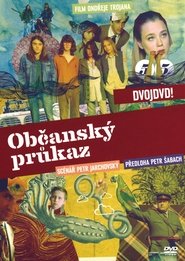
Identity Card
Bittersweet comedy about four teenage boys, their friends, parents, lovers - from the moment when they are 15 to moment when they are 18. Story is set in 1970s, when is Czechoslovakia occupied by Russians.
Movie
2019
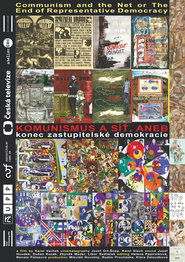
Communism and the Net, or the End of Representative Democracy
The six-hour essay in four parts examines the history of regimes and revolutions, leaders and martyrs, from a philosophical perspective. The collage of personal memories, staged scenes and archives of collective memory compares the Prague Spring to the Velvet Revolution and shows the exposure, conflict, crisis, and catharsis of the post-communist society.

Movie
2020
Viva video, video viva
Today, analogue video is attractive primarily thanks to the distinctive aesthetic quality of its pixelated image and raster errors. But for Czech artists who first explored the possibilities offered by video art in the late 1980s, this medium represented a path towards freedom. Through a portrait of her grandfather Radek Pilař, one of the pioneers of Czech video art, the director explores her own legacy of imperative creative fascination. Her film’s main story, i.e., the process of reconstructing the 1989 exhibition Video Day, contrasts this enchantment with life in the final days of the totalitarian regime, which different sharply with the adventures of those who decided to emigrate – whom the filmmaker also visits in order to discover forgotten works, get to know their creators, and re-establish broken ties.
Movie
2012•
6.3
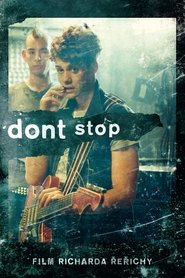
Don't Stop
Prague, 1983. The communist regime, in a suffocating atmosphere ruled over by the secret police, imposes "normalization". Miki and David need some kind of motivation to carry on in the communist wasteland. They discover The Clash's album 'London Calling' and, of course, decide to set up a punk band. But playing punk during normalization in Czechoslovakia isn't the best idea, an opinion shared not only by their horrified parents. Many decisions made under the influence of cheap alcohol and compulsive music could be more fatal than they initially seemed. A story about the revolt of some 18-year-olds against authority, against social norms, against adult duties and responsibility. It is about the search for one's own models and values. Although based on personal experiences from the early 1980s, it could have taken place at any time and anywhere, and is more than likely taking place somewhere right now.
Movie
2013•
4.3
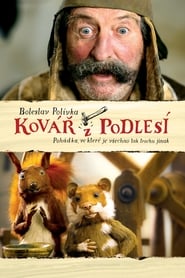
The Blacksmith from Woodham
The story takes place in the small town of Podlesie, which was once invaded by the Turks. The good fairies were - in good faith - asked for help, but it consisted in hurting others. This has not brought happiness to the town, and it needs to be put right... Perhaps the young blacksmith's nephew Tonko will succeed.
Movie
2005•
6.6
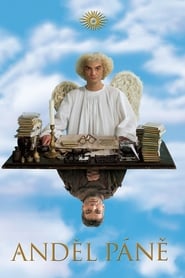
Angel
An angel who ruins everything he touches is sent to Earth to learn about love, forgiveness and selflessness -- and he has just one day to do it.
TV
2010
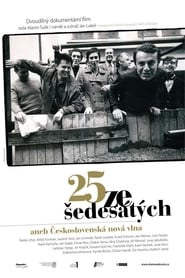
25 from the Sixties, or the Czechoslovak New Wave
Two-part documentary about the Czechoslovak "New Wave" in the '60s, including interviews with directors, actors, and others involved in the industry at the time.
TV
2020