Content from UNAM

Movie
2012•
4.9
Everybody's Got Somebody... Not Me
"Everybody's Got Somebody... Not Me" - Alejandra is sick of her daily life and her past relationships that have not worked out. Then she meets María, an adolescent, with whom she has an affair. At first everything runs smoothly, however Alejandra´s personality and her emotional needs prove increasingly demanding; being around her becomes unbearable. At this point, they ask themselves whether they should continue the oppressive relationship, or go on with their ordinary lives.

Movie
1995•
5.0
En cualquier lugar fuera de este mundo

Movie
2025
Gerry Adams: A Ballymurphy Man
Both vilified and vital to peace, Gerry Adams breaks his silence in this landmark documentary, tracing his journey from teenage activist to key architect of the Good Friday Agreement, and revealing the personal story behind one of modern Ireland’s most controversial and transformative leaders.

Movie
2025
The Lost Arm of God
A priest faces corruption and organized crime as his ethical dilemmas and temptations threaten to break his faith and convictions.

Movie
2021
Rondó por el placer
A place that seems out of time for everyday life, a long line of women waiting. And inside a room, three of them sitting... a cello piece transports them to their own experience of pleasure, body and eroticism. An exploration from a female perspective of the audiovisual and its ability to produce pleasure beyond narrative schemes. Female pleasure, liberation, feminism, gender, appropriation of the body, sexual freedom, women, cello, music, old age.

Movie
2007•
4.3
Todos los días son tuyos
While investigating the terrorist activities of a Basque nationalist group, Mexico City photographer Eliseo (Mario Oliver) becomes obsessed with his neighbor, a gorgeous young separatist named Maria (Bárbara Lennie). But when Maria is murdered, Eliseo is the prime suspect. Pursued by both the police and Maria's killer -- who has slain other Basque separatists -- Eliseo fights to stay alive and clear his name in this fast-paced thriller.

Movie
1981•
6.3
'Ora sí ¡tenemos que ganar!
Subjugated by power, the workers of a mining town organize clandestinely.
Movie
2011•
5.3
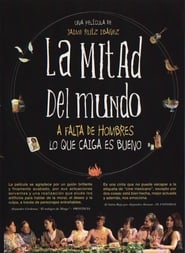
Half of the World
The story is about a young man suffering mental retardation and sexual awakening, poet is charismatic and has the ability to pay attention to those little insignificant details of everyday life. His new status as a lover will bring popularity and with it problems will expose prejudice and false morality of a blinded people to wash their sins charged with the death of the less guilty.
Movie
1968•
6.9
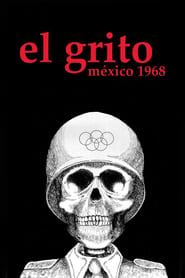
The Shout
In the summer of revolt 1968, student Leobardo López Aretche captured the protests in Mexico City, and the state’s brutal response, up close – and like many of his subjects and fellow comrades, would pay a high price for his audacity. Fifty years later, his movie is no longer a secret.
Movie
1984•
5.0
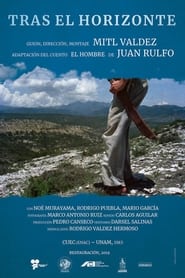
Tras el horizonte
A man is on the run after taking revenge on his brother murder, but someone goes after him too

Movie
1971•
6.5
El Cambio
Two young people leave city life for the simplicity of life in the province. Unfortunately, the beach they are going to live next to is being polluted by a local factory.

Movie
2022
Parece que va a nevar
In an effort to forget his dead wife, an old man drowning in his memories decides, with the help of a young scavenger, to get rid of all the items of the home he formed with her.
Movie
1976•
5.0
Meridiano 100
The task of some guerrillas is to try to foment the conscience among peasants of a town, but their attempts will be tragically restricted.

Movie
2018•
6.6
Olimpia
The film tells the story of Raquel, Rodolfo and Hernán, members of a brigade at the UNAM during the student movement in Mexico in 1968. Through their photographs, films and writings, we will know the history of the day that the army took the university and how their students united, shouted and never forgot.

Movie
2006
Chimera
A man about to be executed asks for a miracle: for time to stop. The miracle happens and he writes a story in which he tries to cheat death. Death overtakes him in reality and fiction.

Movie
2023•
2.0
Wild Chrysanthemums Between the Pages of My Journal I Put a Flower
Miranda is a university student working on a thesis on haiku, with an experimental twist that her advisor doesn't understand. She also bought a painting of the sea that is losing water.

Movie
2008•
4.7
La vida inmune
Mexico City, 1960. Aurelia lives happily with her family. Just before the birth of her third daughter, her husband dies in an accident. Years later, Leonor, the oldest daughter, has quit her studies to help her mother support the household. Beatriz, immersed in her music, lets life slip her by like a strange melody. Adolescent Nadia has only one interest in life: to seek new experiences. Aurelia starts to lose her sensibility to pain, and the family relationships become so alienated that they begin to disintegrate like the house they live in.

Movie
2024•
10.0
Every Moment of You
Gilberto leaves his home on the last day of his father's life, travelling around the city in search of the places that were meaningful to him: his old house, the museum where he worked, and the streets of a very lively city. This escape becomes a reconstruction of the father, a journey through memory and a farewell.
Movie
1983•
4.8
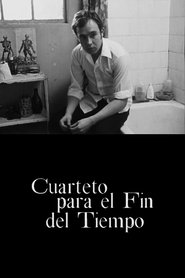
Quartet for the End of Time
The story of a young man who lives alone in his house, and his indifference and solitude with the world around him.
Movie
2020•
2.0
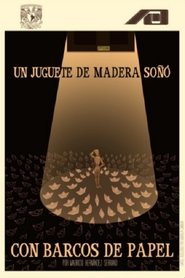
A Wooden Toy Dreamed of Paper Boats
An ancient fleet of paper boats is enslaved by the music of a record player; when it breaks down, the boats see an opportunity to rebel.