Content from Telewizja Polska

Movie
1996•
6.7
Colonel Kwiatkowski
Military doctor Kwiatkowski, serving in a barracks hospital on the Western Territories, is rewarded with a week’s leave after successfully operating on Colonel Kiziora of the UB. He and his friend steal a truck bound for Warsaw, where among the ruins of his former home he meets his prewar neighbor Krysia, instantly falls in love, and, after a brawl with a Russian officer at a dance in the surviving “Polonia” hotel, pretends to be a high-ranking UB colonel to save face.
Movie
2010•
8.0
Kręć! Jak kochasz to kręć!
In this documentary, Andrzej Wajda presents a biography of the famous filmmaker and his long-time collaborator, Edward Klosinski. He was an outstanding cinematographer. Among others, his wife Krystyna Janda and closest friends, as well as the director himself, talk about his extraordinary work. The film also uses excerpts from many major productions that Klosinski took part in creating.
Movie
2014
The Return of Agnieszka H.
Documentary about the famous Polish director Agnieszka Holland and her relationship to Czechoslovakia, based on two storylines: one depicting the life of Agnieszka Holland during her studies in Prague towards the end of the 1960’s, her friends, her participation in a student strike and her arrest for supporting the dissident movement and anti-state tendencies, and the second one - following her return there.
Movie
1993•
3.8
A Bachelor's Life Abroad
The action is set in the early 20th century. The film is made up of six sequences. In the first, Michal, young man who came from Poland to Germany, enrolls in a course on how to behave in social situations and on etiquette. However when he tries to approach girls using the rules which he's been taught... he only makes a fool of himself. Then, he goes to work for a man who owns a carousel and who loves to chase other women. In the next sequence, Michal meets the divorced landlady, Mrs. Luther, and goes through a whole lot of erotic experiences. When he escapes exhausted from his landlady, he starts working in a mine and visits brothels on a regular basis. He looks on women in a totally cynical manner. However, his persistent wandering must finally result in a true love.

Movie
2024•
7.0
The Green Dinosaur
When the world around him is mysteriously erased, a little green dinosaur named Diplodocus must travel through the pages of a comic book and adventure through time to bring color back to his land. Alongside a wizard and two scientists, Diplo’s plans go awry as he learns that there may be a dimension to his world that he never considered.
Movie
2022•
3.8
For Love
Marlena struggles with a serious marital crisis due to the alcohol addiction of her husband, Zbigniew. Via the Internet she meets Bruno, a Senegalese, who brings back Marlena’s self-confidence and sense of womanhood. However, it turns out that the man plans something rather different for her than building a relationship with her…
Movie
2020•
5.6
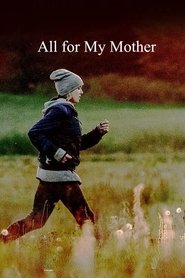
All for My Mother
Olka is seventeen years old. For years, she had been looking for her mother. Her constant escapes from the orphanage landed her in a reformatory. She only wants her mother back.
Movie
2011•
6.0
[email protected]
Tadeusz Kantor was a great artist. Not only in its own - the twentieth century. Not only in the area of his homeland - Poland. A well-known Krakow documentalist and at the same time his longtime collaborator - Krysztof Miklaszewski- he decided to reconstruct Kantor's road through Europe.
Movie
2019•
5.0
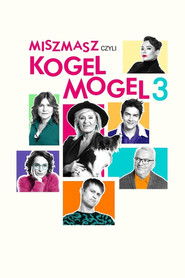
Mishmash, or Egg Nogg 3
Kasia still lives in the village of Brzozki and fights off her unwanted suitor Staszek. Unexpectedly, her son Marcin returns to Poland and immediately runs into trouble. The boy has an idea for an unusual business. At this time, a crisis breaks out in Warsaw in the Wolanski family, Wolanska publishes a controversial book, her husband and daughter Agnieszka - rebel and run away from home. They first decide to visit Piotr, who today leads a comfortable life with his wife Marlena. Then they set off into the unknown, and this trip will become legendary again.
Movie
2014
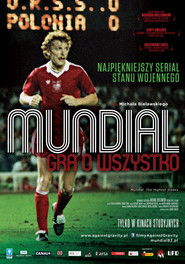
Mundial: The Highest Stakes
A documentary tale about sport and politics under martial law. All of Poland saw the great goals of Boniek and Smolarek during the Espana '82 championships. For a moment, it was forgotten that the background of the sporting performance was martial law, censorship, an army on the streets, prisons filled with oppositionists. The performance of the players was so successful that it was called "the most beautiful series of martial law". The game is watched by interned activists of "Solidarity", sports journalists and censors, cutting out all manifestations of the opposition from television broadcasts. We also get to know the performance in Spain from the perspective of the players, trying to meet not only their ambitions but also to bear the burden of fans' expectations and regime propaganda.
Movie
2018•
5.9
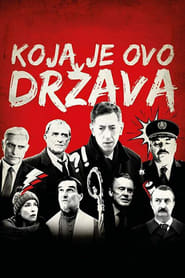
What a Country!
A story about suicidal general, a minister in the Croatian government who voluntarily locks himself inside a prison cell, and 4 pensioners, who steal the coffin with the remains of the late Croatian president.
Movie
2025•
6.8
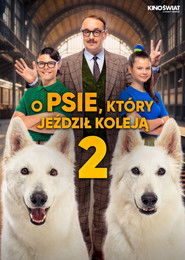
The Travelling Dog 2
In the latest instalment of the adventures of Poland’s favourite four-legged friend, the titular character disappears under mysterious circumstances, and his loved ones, together with a new dog, set off in search of him.
Movie
2024•
10.0
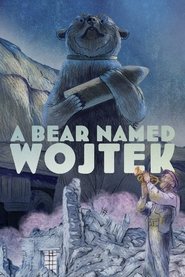
A Bear Named Wojtek
Displaced by the Second World War, a troop of Polish soldiers form an inseparable bond through an orphaned bear they name Wojtek.
Movie
1994•
5.5
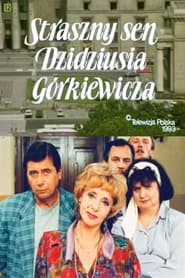
Straszny sen Dzidziusia Górkiewicza
Further fate of Dzidzius Górkiewicz, the protagonist of Andrzej Munk's film "Eroica". After retiring, Górkiewicz moved to a small town near Warsaw. After years filled with doing numerous, not always clean businesses, he leads a quiet, honest life of a provincial. A group of local businessmen see him as an ideal candidate for the new mayor. Gorkiewicz himself is undecided about what to do. Then he dreams of a meeting of the municipal council, where he wants to present his program.
Movie
1994•
2.7
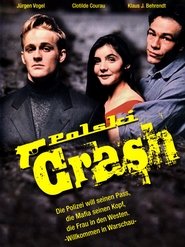
Polski Crash
Early 90's. The political and economic landscape of Poland, Russia and Germany is changing. Both good and bad sides of freedom are revealed. The mafia is becoming more and more bold, operating without obstacles across borders. One of the more lucrative "businesses" is the trade in luxury cars, stolen in Germany and transferred to Russia by Russia.
Movie
1994•
5.0
Conversation with a Cupboard Man
Charles sits for hours in a wardrobe in a rented room on the attic, looking back on his whole life. He was brought up by a single mother who loved his only child with a sick desperate feeling and limited all his world to her own person. Charles' tragedy began with his adolescence. It made his mother aware of her feminity that resulted in her new marriage. Together with a new husband she decided to send the boy to a school for retarded children. Upon leaving the school Charles starts to seek his longing mother who moved out, in a meanwhile, not giving any address.
Movie
2009•
5.0
The Scent of Flowers Does Not Blow Against the Wind
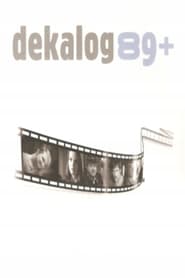
Andrzej (Bartosz Opania), a popular film stunt is a happy husband and father. It appears that the specific work of Andrzej does not disturb his calm family life. So how should be explained the anxiety, which appears in the moment of Andrzej's another risky venture? The film was based on a story by Joanna Kocemba "Rainbow" and refers to the Decalogue First Commandment “You shall have no other gods before me” - as a part of film cycle produced within the project „Dekalog89+”. Leszek Korusiewiecz is one of the ten young directors which has taken the challenge of making new film on the Decalogue Commandment's impact for young generations, due to the project made on 20th anniversary of launching the famous "Decalogue" by Krzysztof Kieślowski.

Movie
2020•
7.3
The Untold Story of the Vatican
What started as a simple tomb became over a 2,000 years history the universal seat of Christendom and is today one of the most visited museum in the world with invaluable collections of Arts, Manuscripts, Maps. Using spectacular 3D modelisation and CGI to give viewers as never before a true understanding of the history of this architectural masterpiece and its extensions, the film will also use animation to tell relevant historical events. This heritage site reveals new untold secrets with the help of historians deciphering the Vatican’s rich archives and manuscripts collection and following the restorations at work (newly discovered frescoes by Raphael) and recent excavations. A story where Religion, Politics, Arts and Science meet to assert religious authority and serve as a spiritual benchmark.
Movie
2001•
5.2
The Hexer
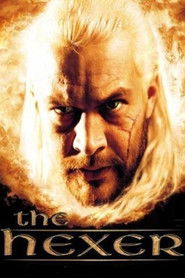
A heroic fantasy based on the famous novels by Polish writer Andrzej Sapkowski, "The Sword of Destiny" and "The Last Wish". This film immerses us in a world inhabited by kings and knights, princesses and sorcerers, priests and magicians, where fire-breathing dragons guard untold treasures, and human greed leads to an endless struggle for power, cruelty, bloodshed, and violence. And this world has its own superheroes - fearless witchers, people with magical powers. Their mission is to protect the human race from any misfortune. The witcher Geralt of Rivia must find the young princess Ciri, kidnapped by enemies. Only her return to the small kingdom of Cintra, which was attacked by aggressors, can restore peace and order there. The brave witcher sets off on a journey, long, distant and deadly.
Movie
2005•
8.5
Still Alive: A Film About Krzysztof Kieslowski
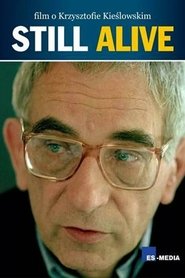
Maria Zmarz-Koczanowicz directed this insightful TV documentary (2005) tracing the Polish filmmaker's career. Former classmates reminisce about Kieslowski's happy beginnings at the Lodz film school and how his dissatisfaction with some of his early documentaries prompted the dramatic work and stylistic experimentation that led to his monumental series of films The Decalogue (1989). Wim Wenders, Agnieszka Holland, and Juliette Binoche are among the many admirers weighing in on his hard-driving work methods and preoccupation with the ephemeral. In Polish, French, and German with subtitles.

TV
2008•
5.3
Ojciec Mateusz

TV
2000•
3.1
L for Love
M jak miłość is a Polish soap opera, revolving around the multiple generations of the Mostowiak family. The series premiered on November 4, 2000 on TVP2, primarily as a weekly drama, and after one season shifting into a new timeslot and extending to two episodes per week. For the last few years the show has been the most watched drama on Polish television. Its popularity led to a Russian adaptation, entitled Lyubov kak Lyubov. The series is also broadcast on the international channel TVP Polonia with English subtitles.
TV
2018•
6.8
The Crown of the Kings
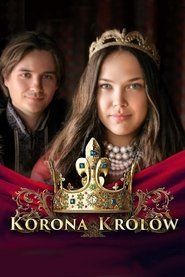
Piasts' reign is coming to end on Casimir the Great, who have no sons. Polish throne comes to Anjous. Thanks to the marriage of Saint Jadwiga of Poland with Lithuanian Grand Duke Jogaila, an alliance is made and a new dynasty - Jagiellons, who rule Poland for next two hundred years

TV
2011•
6.3
A Polish Family
Ludwik and Natalia Boski navigate the chaos of raising three children while also managing their busy careers.
TV
2012•
5.3
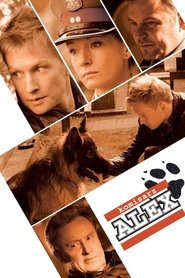
Komisarz Alex
TV
2012
Galeria
TV
1989•
8.5
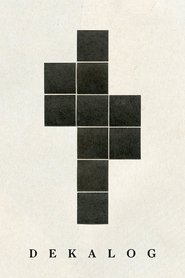
Dekalog
Dekalog (pronounced [dɛˈkalɔk]) is a 1989 Polish drama television miniseries directed by Krzysztof Kieślowski and co-written by Kieślowski with Krzysztof Piesiewicz, with music by Zbigniew Preisner. It consists of ten one-hour films, inspired by the decalogue of the Ten Commandments for thematic inspiration and an overarching structure, grapple deftly with complex moral and existential questions concerning life, death, love, hate, truth, and the passage of time. Each installment explores characters facing one or several moral or ethical dilemmas as they reside in an austere housing project in 1980s Poland, whose lives become subtly intertwined as they face emotional dilemmas that are at once deeply personal and universally human.
TV
2018•
7.0
Leśniczówka
TV
1980•
7.0
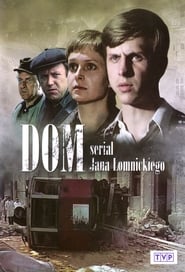
Dom
The story of the residents of a tenement house on Złota Street in Warsaw from 1945 to 1980.

TV
2005•
7.8
Pitbull
The dark world of crime: murders, racketeering, drugs, kidnappings. There are no rules here. Working in this world makes cops cynical and ruthless. There is a fine line between them and criminals - will any of them cross it? The main characters are officers from the Department for Counteracting Criminal Terror and Homicides. The action of the series is an extension of the threads that appear in the feature film. It presents in a realistic way the brutal and dark world of crime that officers encounter on a daily basis. They're not just tracking down murderers. They fight racketeering, kidnapping, drug trafficking while struggling with their own day to day life and problems.
TV
N/A•
9.0
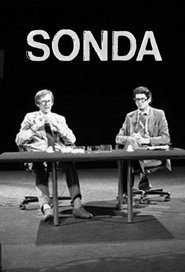
Sonda
Sonda was a Polish television popular science series broadcast between 1977 and 1989. It was presented by Zdzisław Kamiński and Andrzej Kurek. During the period of 12 years of broadcasting, the programme was the most popular and appreciated science TV show in Poland, becoming cult viewing for a generation. The program ended with the death of its hosts in a car accident on September 29, 1989. The programme owes its popularity to its unique formula: In each episode, one particular problem from the field of science or technology was addressed. The show had the form of a “never-ending” discussion between a sceptic and an enthusiast, who carried out hands-on demonstrations and experiments to illustrate their arguments. The discussion contained elements of humour and performance, the hosts were often dressed up in costumes. The show was interspersed with documentary footage presenting a broader view of the issues discussed. A total of 529 episodes were broadcast. Most of the broadcast tapes have been deleted.
TV
2008•
6.8
Days of Honor
Days of honor is a Polish World War II television drama series, broadcast on TVP2 since September 7, 2008.

TV
1995•
7.7
Spellbinder
A group of teenagers go on a school camp in the Blue Mountains in Australia. While at the camp, Paul Reynolds accidentally goes into a parallel universe. This other world is inhabited by a more hierarchic and technologically different society, ruled by a group of people known as Spellbinders.

TV
2024•
8.1
Matilda
A historical story about a young woman, Matilda, who in the politically difficult times of the partitions after the January Uprising becomes a pawn of landed gentry intrigues. Her past, which is also a mystery to herself, is overshadowed by the political decisions of both Polish patriots and traitors plotting with the Russian invaders. In addition to its educational and historical value, the series contains rich thriller and love plots.
TV
2022•
7.6
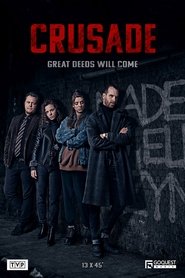
Crusade
TV
2017•
6.5
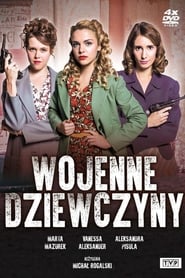
War Girls
TV
1976•
7.4
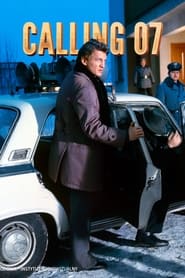
Calling 07
The series centres around the investigations of Police Lieutenant Sławomir Borewicz. Each episode features a different case being solved by Borewicz.
TV
1983•
7.5
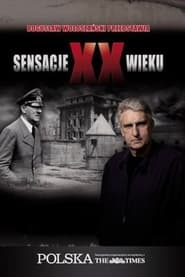
Sensacje XX wieku
TV
1997•
8.0
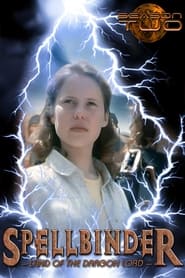
Spellbinder: Land of the Dragon Lord
TV
2024•
6.2