Content from TCF Television Productions
TV
1957•
7.7
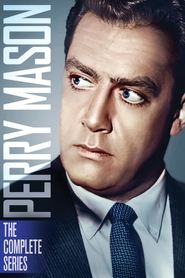
Perry Mason
The cases of master criminal defense attorney Perry Mason and his staff who handled the most difficult of cases in the aid of the innocent.
TV
1955•
5.4
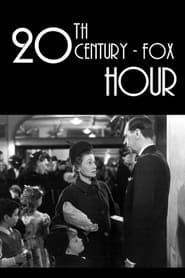
The 20th Century Fox Hour
The 20th Century Fox Hour is an American drama anthology series televised in the United States on CBS from 1955 to 1957. Some of the shows in this series were restored, remastered and shown on the Fox Movie Channel in 2002 under the title Hour of Stars. The season one episode Overnight Haul, starring Richard Conte and Lizabeth Scott, was released in Australia as a feature film.
TV
1956•
5.0
Broken Arrow
Broken Arrow is a Western series which ran on ABC-TV in prime time from 1956 through 1958 on Tuesdays at 9 p.m. Eastern time. Repeat episodes were shown by ABC on Sunday afternoons during the 1959–60 season. Selected repeats were then shown once again in prime time during the summer of 1960.
TV
1957•
6.0
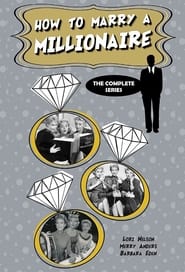
How to Marry a Millionaire
How to Marry a Millionaire is an American sitcom that aired in syndication from September 1957 to August 1959. The series is based on the 1953 film of the same name starring Marilyn Monroe, Betty Grable, and Lauren Bacall. The series stars Lori Nelson, Merry Anders, and Barbara Eden. Lisa Gaye joined the cast in the second season after Lori Nelson left the series. How to Marry a Millionaire was the first series that Barbara Eden was featured in as a regular cast member. Eden would go on to play one of her more notable roles, "Jeannie" in the NBC sitcom I Dream of Jeannie. During the series' first season, Eden was billed third. After Lori Nelson left the series, Eden was billed first.
TV
1955•
5.7
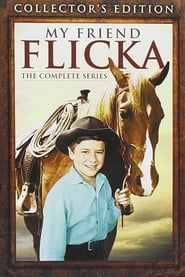
My Friend Flicka
My Friend Flicka is a 39-episode western television series set at the fictitious Goose Bar Ranch in Wyoming at the turn of the 20th century. The program was filmed in color but initially aired in black and white on CBS at 7:30 p.m. Fridays from February 10, 1956, to February 1, 1957. It was a mid-season replacement for Gene Autry's The Adventures of Champion. Both series, however failed in the ratings against ABC's The Adventures of Rin Tin Tin. After the initial Friday airing, viewers could still find the series on CBS Saturdays at 7 p.m. Eastern during March 1957, on Sundays at 6 p.m. from April to May 1957, and on Wednesdays at 7:30 p.m. from June to August 1957. NBC carried the program in color at 6:30 p.m. Sunday from September to December 1957 and at 7 p.m. Sunday from January to May 1958. In subsequent years, the series aired mostly on Saturday mornings on all networks. The Disney Channel ran it on Monday evenings in the mid-1980s. Over the years many viewers were unaware that the series produced episodes for only a single season. My Friend Flicka starred native Canadian Johnny Washbrook as Ken McLaughlin, a boy devoted to his horse Flicka, Swedish for "little girl", but actually an Arabian sorrel named Wahana. Gene Evans played the authoritarian father Rob McLaughlin, a former U.S. Army cavalry officer. Anita Louise was cast as the gentle-spirited mother, Nell. Frank Ferguson portrayed Gus Broeberg, the loyal ranch hand. Flicka is based on a novel by Mary O'Hara, written at the Remount Ranch, located between Laramie and Cheyenne, Wyoming. Some Internet sites say that the series is set in Montana, where some of the filming was done. The majority of the filming, however, was at Fox Movie Ranch. My Friend Flicka holds the distinction of having been the first television series filmed by 20th Century Fox. A 1943 film, My Friend Flicka, starred Roddy McDowall as Ken.
TV
1949•
6.0
Crusade in Europe
TV
1957•
7.5
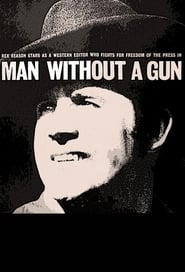
Man Without a Gun
Man Without a Gun, is an American western television series produced by 20th Century Fox television and presented in first-run syndication in the United States from 1957 to 1959. Set in the town of Yellowstone near Yellowstone National Park in the then Dakota Territory during the 1870s, the program starred Rex Reason as newspaper editor Adam MacLean, who brought miscreants to justice without the use of violence or gunplay but through his Yellowstone Sentinel. The co-star was Mort Mills, as Marshal Frank Tallman, who intervened when the "pen" proved not to be "mightier than the sword".Harry Harvey, Sr., was cast in twenty-one episodes as Yellowstone Mayor George Dixon. The program is considered to have been unique because it showcased MacLean's moral ethics and common sense to bring outlaws to justice. The show was also used as a schoolroom to teach the youngsters of the 1950s about decency and the differences between right and wrong.