Content from Suspilne Media

Movie
2020
A Good Year
A year ago, on 29 December 2019, prisoners were exchanged with the self-proclaimed ‘LPR’ and ‘DPR’. Among the Ukrainians who returned home were journalist Stanislav Aseyev, tanker Bohdan Pantiushenko, and human rights activist Andriy Yarovoi. Four months earlier, on 7 September, Crimeans Oleg Sentsov and Oleksandr Kolchenko were released from Russian colonies. We spoke to the former prisoners about their first year of freedom.
Movie
2019
Watch in Ukrainian!
The film tells the story of the development of Ukrainian dubbing. Until 2006, there was almost no Ukrainian dubbing on the big screen. According to the film's screenwriter Alina Stepanets, it is a great achievement that over 90% of films in theatres are now dubbed into Ukrainian. The secrets of working on Ukrainian dubbing are discussed in the film by such well-known film figures as film distributor and owner of the dubbing studio Bohdan Batrukh, dubbing director Olha Fokina, actors Yevhen Malukha, Yurii Kovalenko, Oleh Mykhailiuta (Fahot), translator Oleksa Nehrebetskyi and many others. In addition, the film's characters will recall working on the Ukrainian dubbing of their first films, Cars and Pirates of the Caribbean: Dead Man's Chest.
Movie
2025
Dovzhenko. Full of Compromise
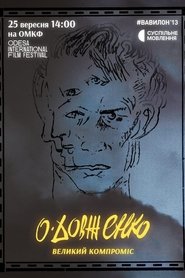
This film, marking the 130th anniversary of Oleksandr Dovzhenko's birth, reveals the artist's controversial path—from his first attempts at cinema to the creation of masterpieces that became symbols of Ukrainian poetic cinema. The authors show his ability to maneuver between creative ambitions and the political demands of the era, remaining a unique figure in cultural history.
Movie
2023
Homeland on the Move
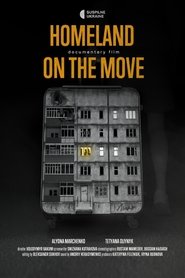
At the outbreak of war, two Ukrainian women find themselves in Europe. Tetiana, 45, lives in Poznan and works in a spaghetti shop while learning the language. Meanwhile, 29-year-old Alyona is settling down in Weidenberg, forcing herself to learn German to distract herself. Her husband is at war in Ukraine. The Ukrainian women do not know each other, but their status binds them as IDPs. After 1,5 years of waiting, it's time to make a choice - to stay abroad or to return to Ukraine, where the war is ongoing. Each woman will make her own choice.
Movie
2021•
10.0
MonoKate
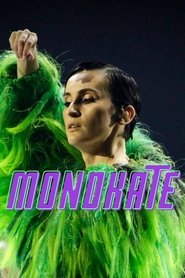
Documentary that follows Go_A’s lead singer Kateryna Pavlenko in the build up to Eurovision 2021.
Movie
2024
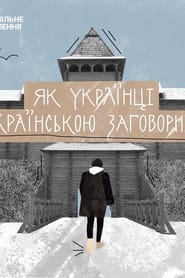
How Ukrainians Started Speaking Ukrainian
An educational film about the birth, development, decline, persecution, and flourishing of the Ukrainian language. It shows how it was formed, changed, filled with borrowed words and formed its own neologisms. The film is divided into five historically important periods: Rus, the Grand Duchy of Lithuania, the Hetmanate, the Russian Empire, and the Soviet Union. Each era “spoke” its own language, and here you will hear for the first time how it sounded in different centuries. The presenter, a famous theater and film actor Oleksii Hnatkovskyi, will guide the viewer through the historical periods. In a simple, accurate, sometimes humorous way, he will tell how our language developed during the periods of creation, development, division, fierce wars and total bans.
Movie
2022
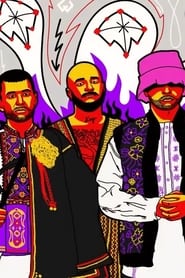
Kalush Orchestra, or How We Stopped Worrying and Won Eurovision During the War
A documentary story about the participation and victory at the Eurovision Song Contest 2022 by the Ukrainian band Kalush Orkestra.
Movie
2025
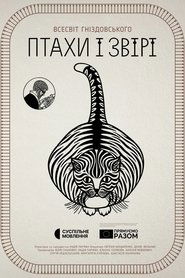
Birds & Beasts. The Universe of Hnizdovsky
A whimsical TV documentary about renowned Ukrainian-American artist Jacques Hnizdovsky, whose journey from displaced persons camps to global fame mirrors the experiences of modern Ukrainian emigrants. Told through the eyes of his beloved cat Jérôme, it explores identity, nature, and overcoming loneliness.
Movie
2024
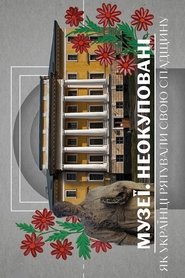
Museums. Unoccupied
The story is not only about Ukrainian museums during a full-scale war, but about the survival of our culture in general. The occupiers are trying to destroy it and steal it, but thanks to museum workers, it is not only being protected, but also multiplied.
Movie
2020
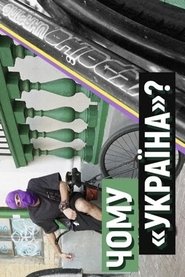
Why ‘Ukraine’?
The film tells three personal stories about the famous bicycle. The film's protagonists are a cultural manager from Kyiv, an engineer from Kharkiv, and a utility worker from the Carpathians. These are very different people, but they are all united by the fact that they ride the Ukraine bicycle.
Movie
2022
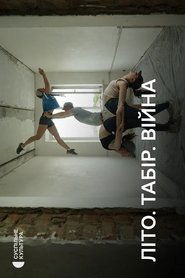
How the fire station in Makariv was restored | Summer. Camp. War
Makariv is a small village near Kyiv. In February and March, there were battles here as the Russian army was on its way to Kyiv. Many buildings were damaged by shelling, including the local fire station. Volunteers from the organisation Building Ukraine Together set up a camp to help the firefighters restore the building. They woke up, did exercises, had breakfast and repairs, and in the evening shared their experiences and their own stories. Artem's friend was killed in Tokmak in the first days of the war, Ira witnessed the death of her family in Irpin, Dasha's father is in the Ukrainian army, Yura left the camp early because he went to the funeral of his friend who died at the front. These stories are much deeper than they seem. Find out more about youth and war, about repairing without experience and a summer camp in a bombed-out village in the documentary story by Suspilne Culture.
Movie
2023
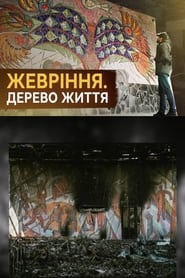
Smoldering. Tree of Life
A story about Ukrainian monumental art of the Soviet period in Mariupol. Photographer Stanislav Ivanov lived in Mariupol all his life. He studied history, streets, houses, monumental art. Some of the mosaics are more than half a century old. The "Tree of Life" panel - created by a team of artists led by Alla Gorska and Viktor Zaretsky - was bricked up after the death of the artist and reopened in 2008. This and other stories were collected by Stanislav Ivanov and art critic Oleksandr Chernov in the album "All Shades of Mariupol Mosaics". After February 24, 2022, the mosaicists, like hundreds of thousands of residents of Mariupol, became hostages of the occupying forces of the Russian Federation. In the film, we are transported to peaceful Mariupol in December 2021 and, together with Stanislav, explore the city and its mosaics, transported to a place where time and the elements seemed to be the greatest threats.
Movie
2023
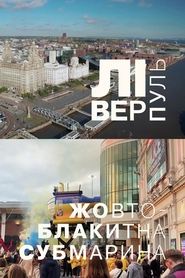
Liverpool. The Blue and Yellow Submarine
A documentary project that shows viewers behind the scenes of this cultural exchange and explores the current processes of integrating Ukrainian culture into the European context. The heroes of the project are the participants and visitors of the festival, who demonstrate with their own stories the unique connection and cultural integration of Ukraine into the plane of Liverpool, one of the cultural capitals of Europe. In particular, Sarah Fisher, director of Liverpool's Open eye gallery, Yuliia Kurinna, a volunteer and displaced person from Nova Kakhovka, and actor and director Yurii Radionov will share their thoughts.
Movie
2024
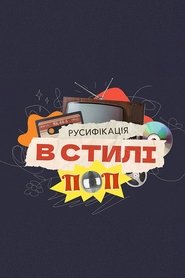
Russification in pop style
A documentary about how Russia has been using popular culture as a weapon against Ukraine for decades. Together with industry participants, the film's narrator, musician Albert Tsukrenko, explores the financial, political and psychological reasons for the vulnerability of Ukrainian artists and reflects on how to break this vicious circle. Unfortunately, our own Ukrainian talents are becoming the ammunition in this weapon. Several generations of original Ukrainian musicians at different times in the 1970s and 1980s, 1990s and 2000s, and 2010s switched from Ukrainian to Russian in their work. Whether willingly or unwittingly, they became tools of Russian show business, which has always sought to blur the cultural border between Russia and Ukraine and worked to promote the imperial myth of "one nation".

Movie
2019
Reconciling with victory
The eighth and ninth of May are dates that only border on each other on the calendar. In reality, they seem to be from different worlds: the meaning of the Day of Remembrance and Reconciliation is understood at best by half of our great country, while the other half celebrates the Soviet-style Victory Day by inertia. We visited different parts of Ukraine and asked the same questions everywhere to find out what the eighth and ninth of May means to each of us.
Movie
2022
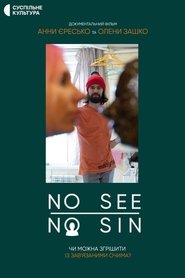
No See / No Sin
Slavik is a young Kharkiv ceramist who often works with naked models while creating his sculptures. He is a Pentecostal believer and faces rejection of his work by the religious community to which he belongs. He decides to find out if his art is a sin. He meets several priests of different confessions, artists and the editor-in-chief of Playboy magazine to find out where the moral line is between temptation and creativity. Furthermore, he decides to create a sculpture of a blind girl being blindfolded himself in order "not to be tempted" by the body of the model.
Movie
2023
Soft power. Move Europe
Director, choreographer, actress, singer – the usual professional roles for the heroines of this film stopped working at the beginning of Russia’s full-scale invasion of Ukraine. Like millions of Ukrainian men and women, who were saving themselves and their loved ones and volunteering. Creative pursuits returned later, but now in a new dimension. Iryna, Olena, Oksana, and Maryna became the voices that tell the world about Ukrainians, their culture and their struggle for freedom. But how can one be heard in a world where Russian propaganda has been spread for centuries?
Movie
2022
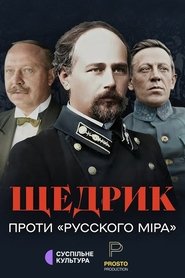
Shchedryk Against the "Russian World"
The story of the world tour of the choir chapel conducted by Oleksandr Koshyts in 1918-1924. By the coincidence of modern history, the plot of the film raises a number of current problems of today - opposition to Russian cultural expansion and propaganda, issues of cultural diplomacy of Ukraine, the place of Ukrainian cultural product in the world and its struggle for itself.
Movie
2020
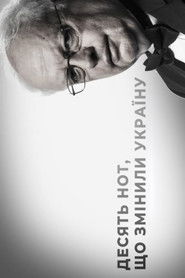
Ten notes that changed Ukraine
The work of the outstanding composer, who passed away on 1 June this year, is known not only in Ukraine but also far beyond its borders, his music is recognisable, and his works are often performed on the Ukrainian stage. However, Myroslav Skoryk's personality, creative temperament, tastes, and life guidelines have largely remained behind the scenes of the concert stage

Movie
2022
Kadyrova's palianytsia
The artists Zhanna Kadyrova and Denys Ruban spent two weeks in the basement of their house, fleeing from the rocket attacks and sabotage groups of the occupiers that were flooding the outskirts of Kyiv at the time, and then decided to evacuate to western Ukraine. Local residents of one of the Zakarpattia villages sheltered them in a picturesque house on a hillside, next to a river. Doing what you know and love for the benefit of Ukraine is the best thing an artist can do in times of war. This is how the Palianytsia project was born - a series of objects made of stones cut by a mountain river. Zhanna sells them to patrons and galleries and uses the proceeds to buy bulletproof vests, radios, thermal imagers and other things our soldiers need. Before she sends her ‘loaves’ to Venice for the Biennale, Zhanna holds an exhibition in the village where she now lives, so that the people who have taken her in can be the first to see her art.

TV
2016•
7.0
Vidbir
Yevrobachennia Natsionalnyi Vidbir (often shortened to Vidbir) has served as Ukraine's national selection for Eurovision since 2016.
TV
2025
Ukrainian Peacekeepers
Three-part documentary chronicling Ukraine’s military peacekeeping missions in the Balkans, the Middle East, and Africa, showing decades of operations in conflict zones and their impact on Ukraine’s international role.