Content from Studio Ostrov
Movie
2019
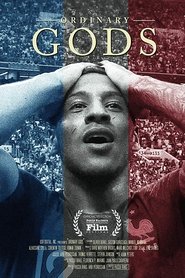
Ordinary Gods
Ordinary Gods is a feature-length documentary exploring the lives and sacrifices of the world's most promising professional soccer players.
Movie
2020•
5.0
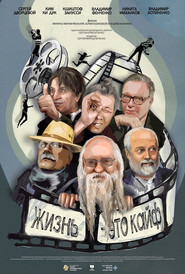
Life is a Thrill
This is a story about an amazing person who devotes his life to his students. Vladimir Fenchenko lit the hearts of hundreds of young filmmakers with love for cinema.
Movie
2008
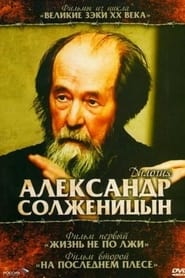
Solzhenitsyn: Trilogy
Documentary about the life and works of Aleksandr Solzhenitsyn in three parts, made for Russian TV in 2001, 2003, and 2008. The author died while the last part was being filmed.
Movie
2000•
7.0
Unknown Putin
The Leningrad period of V. Putin's life.
Movie
1995
A Minute of Silence
Movie
2003
Georgy Zhzhenov. Russian Cross. Part Two - "Fraer of Muddy Water"
In the second part of the cycle, Georgy Zhzhenov talks about himself and about his life in prisons and the zones in which he had to sit. The geography of the sorrowful path is extensive: Leningrad (Kresty prison), Vladivostok, Magadan - from his hometown to the Far East, where the first years of hard labor of Georgy Stepanovich took place.
Movie
2001
Solzhenitsyn. To Live Without Lies
Alexander Solzhenitsyn, a classic of Russian literature, a dissident and a Nobel Prize winner, talks, remembers, reflects. The war, the Stalinist camps, the success of "One Day of Ivan Denisovich". Opal, samizdat, the Nobel Prize, awarded four years after the award. Expulsion from the USSR. Return to the new Russia. The literary patriarch talks about the past, present and future of the country and what it means to be a writer in Russia.
Movie
1996•
4.6
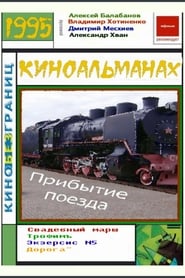
The Arrival of a Train
Almanac of five short stories commissioned by ROSKOMKINO to celebrate the 100th anniversary of cinema.
Movie
1995
The Assassination of the Emperor. Versions
The documentary tells about the Romanov family. It discusses versions about the possible salvation of the imperial family, tells about impostors who consider themselves descendants of Nicholas II, and the film also touches on the fate of the regicides.
Movie
2005
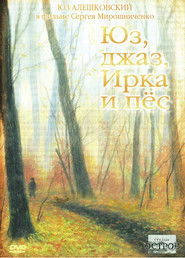
Yuz, Jazz, Irka and the Dog
In Soviet times, the songs "Soviet Easter", "Cigarette Butt", "Comrade Stalin" were sung by the whole country (and, according to rumors, members of the politburo also enjoyed it), but few people knew that these "folk" hits had an author – Yuz Aleshkovsky. Having traveled from East to West, he became a famous writer in a country that is still considered the most reading. The concepts of Freedom and Creativity for him are not so much philosophical categories, but a credo of life. The genre of Sergei Miroshnichenko's new film can be defined as "a lyrical post-Soviet comedy with a dramatic touch."
Movie
2003
Georgy Zhzhenov. Russian Cross. Part Three - "The Last Mohicans"
The central episode of the third film is a meeting between G.S. Zhzhenov and the classic of Russian literature V. P. Astafyev (filming took place shortly before the writer's death), as well as a dialogue with General A. I. Lebedev about the fate of Russia.

Movie
2010
Ilya Glazunov. For Bravery In the Face Of Defeat
This is a film dedicated to the outstanding Folk artist Ilya Glazunov, who turns 80 this year. This is a portrait in motion, a kind of travel-story in which Ilya Sergeevich will take us to his favorite places, which symbolize the main stages of his multifaceted creativity.

Movie
2023
Butyrka Prison Castle
A unique lengthy filmic record of the life of the employees, suspects and convicts in one of the oldest Russian prisons Butyrka Prison Castle, which stores legends and secrets of many inmates including Emelyan Pugachyov, Felix Dzershinsky, Vladimir Mayakovsky, Alexander Solzhenitsyn, Natalia Sats, Vsevolod Meyerkhold, Sergey Korolyov, Andrey Tupolev and many others.

Movie
2020
Kresty
Kresty is one of the oldest and largest prisons in Russia, located in the center of Saint Petersburg. The history of Kresty reflects the history of Russia. Throughout 130-year existence of the prison, thousands of people have passed through these walls: revolutionaries, engineers, generals, writers, poets, scientists, thieves, serial killers. The Kresty prison is society in a nutshell, where human vices as well as fortitude, freedom and dignity reveal themselves to the fullest.
Movie
2017
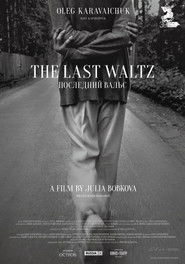
The Last Waltz
This film is about Oleg Karavaichuk, eccentric musical genius and famous St. Petersburg composer, who takes his final stroll through Komarovo, a bay-side summer community just outside St. Petersburg where he spent his whole life and wrote most of his works. His final piece, “The Komarovo Waltz”, unveiled here for the very first time, was written as a tribute to the place. The film is the reclusive composer’s eulogy to the community. It also serves as Karavoichuk’s farewell to audience as well as his last address and reminder of things that are truly important – love for your fellow man and virgin nature.
Movie
2005•
6.5
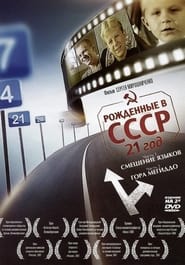
Born in the USSR: 21 Up
Born in the USSR: 21 Up follows the lives of people who grew up in the Soviet Union. They give an insight into Russian life today, aged 21.

Movie
2014•
6.8
The Philosophy of the Soft Path
This is a chronicle of several days in the lives of people who made a huge contribution to the main event of 2014 with their own hands. Ice pouring specialists, Olympic medal makers, builders, engineers, border guards, metallurgists, doctors, volunteers — they will all talk about how the Sochi Olympics came to be a reality.
Movie
2012•
6.4
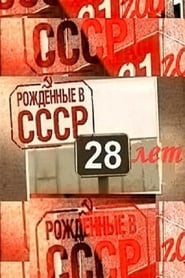
Born in the USSR: 28 Up
Born in the USSR: 28 Up follows the lives of people who grew up in the Soviet Union. They give an insight into Russian life today, aged 28.
Movie
2001
Natural Selection
The exhibition decides the fate of the dogs and their offspring. This is also an important moment in the life of dog owners. A kind of parable about human dignity.
Movie
1998•
7.0
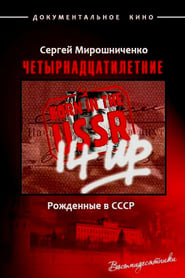
Born in the USSR: 14 Up
Born in the USSR:14 Up follows the lives of people who grew up in the Soviet Union. They give an insight into Russian life.

TV
2016•
6.5
The Island
Four girls and four guys are planted on an uninhabited tropical island for filming a reality show. Their task is by taking organizers' challengers to fight for the love of the audience: at the end of the winner is waiting for a big cash prize. But after the accident happens on the yacht with the film crew, everything will change radically. Heroes come into play without even realizing that no one is shooting them - they are participants of the show, which is not really there. But they will not know about it right away ... Their life on the island and attempts to return home will lead to a lot of funny adventures and romantic stories.