Content from Sovkino
Movie
1929•
6.4
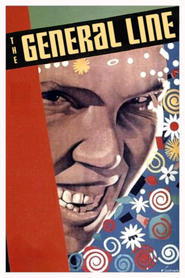
The General Line
Also known as The Old and the New (Staroye i Novoye), The General Line illustrates Lenin’s stated imperative that the nation move from agrarian to industrial culture in an epic ode to farm-collectivization progress.
Movie
1928•
6.9
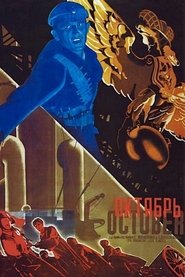
October (Ten Days that Shook the World)
Sergei M. Eisenstein's docu-drama about the 1917 October Revolution in Russia. Made ten years after the events and edited in Eisenstein's 'Soviet Montage' style, it re-enacts in celebratory terms several key scenes from the revolution.

Movie
1929•
5.9
The New Babylon
In the short-lived Commune of Paris, a conscripted soldier falls in love with a Communard saleswoman. As the army cracks down on the revolutionaries, the soldier is forced to fight against the Commune, and the pair's love is put to the test.
Movie
1927•
6.2
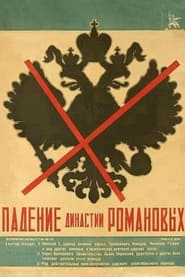
The Fall of the Romanov Dynasty
A compilation of newsreels shot between 1913 and 1917 - the years leading up to the Russian Revolution.
Movie
1929
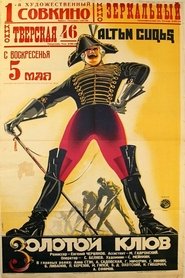
Golden Beak
Directed by Yevgeni Chervyakov.
Movie
1930•
7.0
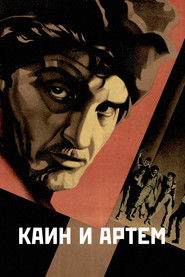
Cain and Artem
The 1890s. One of the cities on the Volga River. The young wife of a merchant falls in love with Artem, a “Volga bogatyr,” a man of enormous strength and violent temper. She dreams of leaving with him for the countryside. Her jealous husband bribes hooligans to kill Artem.
Movie
1926•
6.7
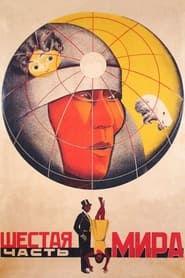
A Sixth Part of the World
Through the travelogue format, it depicts the multitude of Soviet peoples in remote areas of USSR and details the entirety of the wealth of the Soviet land. Focusing on cultural and economic diversity, the film is in fact a call for unification in order to build a "complete socialist society".

Movie
1926
The Wind
During the Civil War following the Bolshevik Revolution, a Red cavalry officer is warned by a staffer from headquarters about his dangerous attraction to the female leader of a band of Cossacks, a violent woman who is aroused by killing.
Movie
1927•
5.2
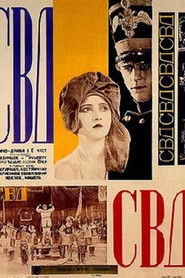
The Club of the Big Deed
The film tells about the Decembrists’ revolt in the south of Russia. Right before the Decembrist Revolt 1825 a chevalier of fortune decides that it's time for a game. But on whom to make a bet? He asks the cards. But he's not the only one who makes the choice.
Movie
1927•
5.8
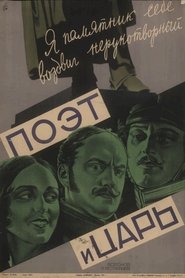
The Poet and the Tsar
Tsar Nicholas I is enamoured by Natalia, the wife of Alexander Pushkin. To cover his tracks, the tsar encourages the suit of Georges d'Anthès, a French officer, with the help of Count Alexander von Benckendorff. Pushkin hears rumours of D’Anthès’s love for his wife and challenges him to a duel. The officer attempts to save his life by marrying Natalia’s sister Ekaterina. Returning from his country estate, Pushkin receives anonymous letters and insists on a duel with D’Anthès.
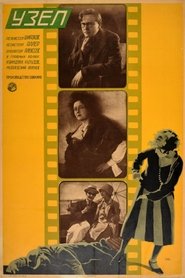
Movie
1927
The Knot
Partially lost.

Movie
1927
Anya
Partially lost adventure film for children based on popular short stories by Sergey Grigoryev.
Movie
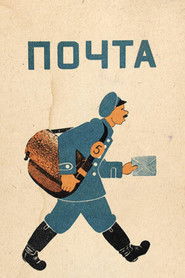
1929•
4.9
The Post
A boy is sitting at a table, writing a letter for Boris Prutkov. The cartoon follows the journey of this letter from Rostov to Leningrad, where its addressee Prutkov has just left for Berlin; when the letter arrives in Berlin, Prutkov has just departed for London; as the letter arrives in London, Prutkov is already on a steamboat to Brazil, and once the letters is delivered by postman Don Basilio, Prutkov is already on his way back to Leningrad– where the letter, having followed Prutkov around the world, finally reaches him. The film sings a song of praise to the global postal services and to the reliability of the postmen, but it also tells the story of a journey around the world, returning once more to the new Soviet capital: Leningrad.
Movie
1929
An Affair of the Clasps
Movie
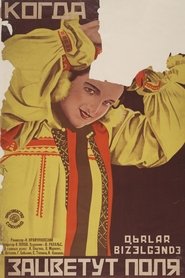
1929
Когда зацветут поля
The village youth organize a collective farm in the place of the monastery garden.
Movie
1930•
5.6
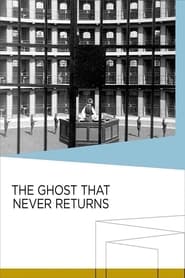
The Ghost That Never Returns
The rebel leader Jose Real is allowed to leave prison for one day to visit his family. But it is a ruse to make him reveal the whereabouts of his rebel gang. This existential drama disguised as a saga about the proletarian struggle presents a lonely and insecure individual who is challenged to act more heroically than he is prepared to, but who constantly questions his confidence and loyalties.
Movie
1929•
5.7
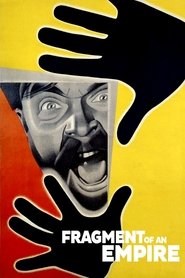
Fragment of an Empire
Director Frederick Ermler’s last silent feature and the last of four collaborations with actor Fiodor Nikitin. Nikitin plays an officer who spends a decade after the Great War as a shell-shocked amnesiac, until a glimpse of a woman through a train window sparks the return of his memory. He makes his way back to St. Petersburg, now Leningrad, a man out of time who struggles to make sense of the new society brought about by the revolution.
Movie
1928•
3.5
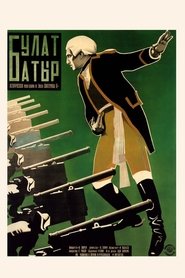
Bulat-Batyr
In a small Tatar village during the traditional holiday of the beginning of plowing, monks appear accompanied by soldiers. Trying to convert the local population to Orthodoxy by force, the monks and soldiers meet a tough rebuff from the locals. The wife of the peasant Bulat dies, and his son Asfan is taken away in an unknown direction.

Movie
1927
Leon Couturier
Adaptation of book by Boris Lavrenyov about the work of the underground fighters in a Ukrainian town occupied by the White army in 1919. Lost.
Movie
1927•
5.6
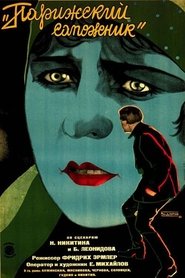
The Parisian Cobbler
Komsomol girl Katya Karnakova (Veronica Buzhinskaya), a darling of the small provincial town Old Lopsha, is seriously smitten with a fellow Komsomol Andrei (Valery Solovtsov) and does not even try to hide this from others. After some time as a result of their affair, she becomes pregnant.