Content from Sender Freies Berlin

Movie
1999
When the Wall Came Tumbling Down: 50 Hours That Changed the World
A detailed reconstruction of the events from Nov. 9th to 11th, 1989, which led to the Berlin wall tumbling down, on a local, national and international level.
Movie
1989•
7.2
Decalogue VIII
Zofia, a professor of ethics, is visited by Elżbieta, an American researching the fate of Jews who survived World War II. A daytime classroom conversation turns into a night of confrontation, and Zofia is forced to answer for a decision she made decades ago that directly affected the course of Elżbieta’s life.
Movie
1978
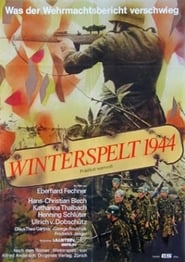
Winterspelt 1944
In the Second World War, spring 1944: shortly before the planned Ardennes offensive, Germans and Americans stand waiting on the German-Belgian border. The small Eifel village of Winterspelt threatens to become the scene of a bloody battle. A German officer comes up with a plan to hand over his battalion to the Americans without a fight. He finds support from three inhabitants of the small village, who help him to present his offer of surrender to the Americans, which they ultimately reject.
Movie
1989•
7.9
Decalogue X
Jerzy and Artur’s father dies, leaving behind a valuable stamp collection, which, they discover, is coveted by dealers of varying degrees of shadiness. The more involved the brothers get in their father’s world, the more dire and comical their situation becomes.
Movie
1965
Seraphine or the Wonderful Story of Aunt Flora
Following the life of the eccentric Aunt Flora, a woman of great imagination and curiosity. When her niece, Seraphine, visits her in a small town, she uncovers a world of peculiar happenings, strange traditions, and unexpected adventures. As Aunt Flora's colorful personality and quirky ways draw Seraphine into a world of wonder and mystery, the two women form an unbreakable bond, navigating love, loss, and the unknown. A heartfelt and magical story about the extraordinary in the ordinary.
Movie
1978
Der Opernball
Television adaptation of Richard Heuberger's operetta of the same name.

Movie
1989•
7.9
Decalogue VI
A teenage postal worker, Tomek, routinely spies on his older neighbor Magda, a sexually liberated artist who lives in the apartment across the courtyard from his. As their private worlds merge, fascination turns to obsession, and the line between love and curiosity becomes violently blurred.
Movie
1989•
8.1
Decalogue I
Krzysztof, a semantics professor and computer hobbyist, is raising his young son, Paweł, to look to science for answers, while Irena, Paweł’s aunt, lives a life rooted in faith. Over the course of one day, both adults are forced to question their belief systems.
Movie
1968
Tramp or the Only and Incomparable Lenny Jacobsen
The drifter has a name - Lenny Jacobsen" - An outsider is chased to his death. The case remains uncertain, while what otherwise interests at best incidentally, the sensitivities of the victims and the perpetrators, to seemingly trivial expressions, gestures, sentences becomes the main thing.
Movie
1989•
7.8
Decalogue IV
A father and daughter, Michał and Anka, have a unique intimacy, which the college-aged Anka is beginning to feel conflicted about. When she finds an unopened letter from her deceased mother, it seems to justify her attraction to Michał, who may not in fact be her father.
Movie
1988•
7.2
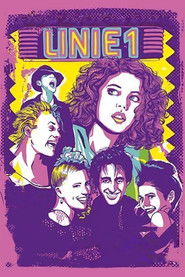
Linie 1
Film version of the musical by the same name: Sunnie, a girl from the province, comes to Berlin to meet rock star Johnnie who had given her his address after a concert. On the subway to Kreuzberg, Sunnie becomes acquainted with a couple of strange people, among them "asphalt cowboy" Bambi. Bambi tells Sunnie that Johnnie’s address in Kreuzberg does not exist. Together, Sunnie and Bambi try to find the rock star in bustling metropolitan Berlin.
Movie
1989•
7.9
Decalogue V
Jacek, an angry drifter, murders a taxi driver, brutally and without motive. His case is assigned to Piotr, an idealistic young lawyer who is morally opposed to the death penalty, and their interactions take on an emotional honesty that throws into stark relief for Piotr the injustice of killing of any kind.
Movie
1973•
5.8
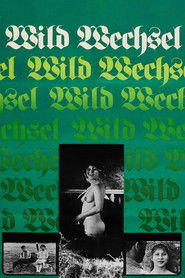
Jail Bait
Based on Franz Xaver Kroetz's play, which is in turn based on a true story, this film by Rainer Werner Fassbinder tells the story of a very young girl who, after persuading a local boy to become her lover, induces the anger of her father, whose incestuous sexual attentions to her have grown unbearable.

Movie
1989•
7.5
Decalogue IX
Roman and Hanka have a loving marriage, but his impotence has led to her having an affair. The unbearable situation drives Roman to extreme measures both physically and mentally, testing their love and his own will to live.
Movie
1989•
7.1
Decalogue III
It’s Christmas Eve, and Ewa has plotted to pass the hours until morning with her former lover Janusz, a family man, by making him believe her husband has gone missing. During this night of recklessness and lies, the pair grapple with choices made when their affair was discovered three years ago, and with the value of their present lives.
Movie
1989•
7.3
Decalogue II
Dorota Geller, a married woman, faces a dilemma involving her sick husband's prognosis. Her husband's doctor, who believes in God, sweared about it in vain.
Movie
1989•
7.4
Decalogue VII
As a high school student, Majka bore a child, Ania, whom Majka’s mother, Ewa, has been raising as her own. Now that Majka is ready for motherhood, Ewa refuses to let go, leading Majka to kidnap her own daughter, with unexpected emotional consequences.
Movie
1969
Waterloo
Movie
1961
Wie einst im Mai
1838: Fritz Jüterbog and Ottilie von Henkeshofen love each other, but the difference in status is too great for Ottilie's parents to give their consent to a marriage. And so, Fritz sets off for America and returns from there 20 years later as a made man to ask for Ottilie's hand in marriage again. In the meantime, however, Ottilie - believing that Fritz had long since forgotten her - is married in a manner befitting her status, but very unhappily. Fritz, who is highly successful as an entrepreneur, is elevated to hereditary nobility because of his great services to the fatherland. It is too late for a union with Ottilie, but despite the years that pass, the two cannot forget their love. 75 years later, Fritz and Ottilie have died in the meantime, their grandchildren Fred and Tilla meet and fall in love.
Movie
1984•
4.6
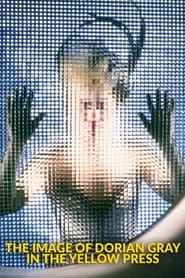
Dorian Gray in the Mirror of the Yellow Press
The final installment in Ulrike Ottinger’s Berlin Trilogy (following TICKET OF NO RETURN and FREAK ORLANDO) casts Delphine Seyrig as the nefarious Fritz Lang supervillain Dr. Mabuse, here the head of a powerful media empire that seeks to create headlines by manufacturing (and then publicly destroying) its own celebrity: the wealthy, handsome playboy Dorian Gray.
TV
1989•
8.5
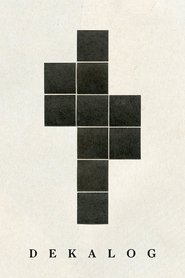
Dekalog
Dekalog (pronounced [dɛˈkalɔk]) is a 1989 Polish drama television miniseries directed by Krzysztof Kieślowski and co-written by Kieślowski with Krzysztof Piesiewicz, with music by Zbigniew Preisner. It consists of ten one-hour films, inspired by the decalogue of the Ten Commandments for thematic inspiration and an overarching structure, grapple deftly with complex moral and existential questions concerning life, death, love, hate, truth, and the passage of time. Each installment explores characters facing one or several moral or ethical dilemmas as they reside in an austere housing project in 1980s Poland, whose lives become subtly intertwined as they face emotional dilemmas that are at once deeply personal and universally human.
TV
1989•
6.0
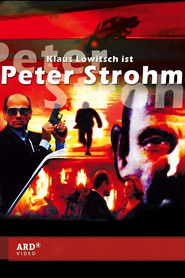
Peter Strohm
Peter Strohm is a private detective with radical methods. His work begins where police work ends; he takes on sensitive cases that require a certain scale, or explosive situations that can lead to international crises.
TV
1975•
9.0
Film Emigration from Nazi Germany
Based on extensive interviews, shot on 16mm in a series of static long takes, Filmemigration aus Nazideutschland, is one of the most fascinating examples of "Film history on film" ever produced. Straschek devoted years to researching the topic and accumulating both film and non-film materials. Apart from some radio features and articles, however, this 290-minute TV programme remains the only published trace of Straschek's lifelong work on the emigration of film personnel. He had intended to publish a three-volume book, encompassing all available data about 3,000 emigrants originating from the centre and peripheries of film production, but the book never materialised.
TV
1962
Das Profil
TV
1987
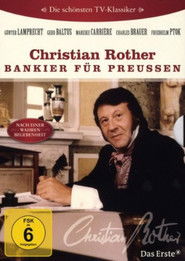
Christian Rother – Bankier für Preußen
Prussia is on the brink of national bankruptcy. King Frederick William III unexpectedly appoints the tax official Christian Rother as President of the Royal Prussian Maritime Trade.
TV
1973
Zu Gast in unserem Land
Series about the guest worker problems in Germany.
TV
2000
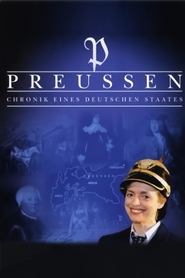
Preußen – Chronik eines deutschen Staates
TV
1959
rbb24 Abendschau
TV
1985