Content from Ronin Films
Movie
1997•
5.3
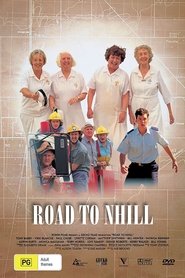
Road to Nhill
Four women bowlers on their way home to Pyramid Hill (population 550) from a tournament roll their car on a deserted road in rural Victoria. They are coping fairly well until the local men and emergency services start trying to help.
Movie
2019
I want to make a film about women
'I want to make a film about women' is a speculative documentary love letter to Russian constructivist women. The new Soviet Union of the 1920s championed equality for women and great innovation in the creative arts. Until it didn't. Looking back at that time, history remembers the men who were celebrated and then shut down. But women were there, too, and they were influential, powerful and brilliant. 'I want to make a film about women' gazes in to a creative communal kitchen and watches these women transform it into a workshop, then a stage set, then a film, all the while juggling noisy men and the wolves of history. It imagines what the revolutionary women artists of the 1920s said, what they did, and what they might have created had it not been for Stalin's suppression.
Movie
1998
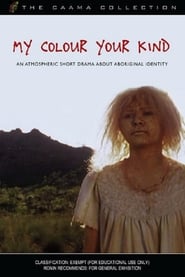
My Colour, Your Kind
A portrait of an albino Aboriginal teenager, her feelings of alienation while at a convent boarding school, and her dreams of escape.

Movie
2009
Intervention: Stories From the Inside
On June 21 2007, the Howard Federal Government launched an intervention into Aboriginal communities in the Northern Territory. It was one of the most dramatic policy shifts in the history of Aboriginal affairs. Relentless media attention focuses on ideological arguments for and against the Intervention, while the voices of those affected by the policy are rarely heard. For this film more than 40 Alice Springs town camp residents were interviewed in depth over the course of eight months to find out the answer to the question - is it working?
Movie
2011
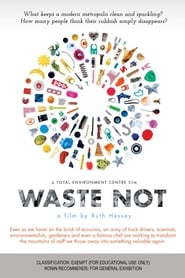
Waste Not
Waste Not is a film about where your garbage goes, who sorts it for you, and what it is worth if it isn't just tossed into landfill. It's easier and cheaper to retrieve gold from old computers for instance, than to dig it up. Organics can be used to create fertiliser and green electricity and yet each Australian sends half a tonne of food waste to landfill each year where it is contaminated with chemicals and e-waste. We recycle only 50% of all our waste. There is an alternative to environmental apocalypse and we don't have to wait for the politicians to make it happen. All we really need to do is be creative and use our imaginations to turn this waste into wealth again. Waste Not talks to scientists, workers at waste depots, environment campaigners, gardeners and even a famous chef about how easy it is to save the planet by simply recycling properly.
Movie
1993•
6.2
Breathing Under Water
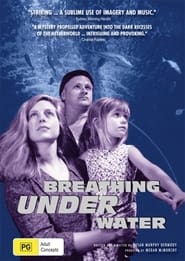
BREATHING UNDER WATER is the story of a woman's journey into an imaginary underworld city. The birth of her daughter into an increasingly perilous world has unsettled everything in Beatrice's (Anne Louise Lambert) life. Her growing unease prompts Beatrice to undertake a journey - an investigation into human nature, a confrontation with the fears of our time, and a search for clues that will ultimately give her an answer to the central riddle of the film: why has humankind set the stage for its own extinction? The director’s preoccupation with humankind’s tendency to self-destruct was one factor that lead to the creation of this complex film.

Movie
2014
Arnav at Six
Follow Arnav, a six year old Southern Indian boy, as he explores his environment.
Movie
2006
Crocodile Dreaming
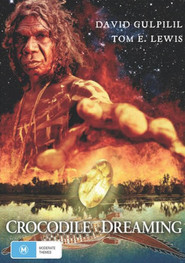
Crocodile Dreaming is a modern day supernatural myth about two estranged brothers, played by iconic Indigenous actors David Gulpill and Tom E. Lewis. Separated at birth, they have different fathers. One is readily accepted as a full-fledged member of the tribe and is looked on to fulfill the duties of jungaiy, an important ceremonial role which obliges him to be caretaker for his mother's dreaming, the crocodile totem. The other, whose father was white, is younger and has had to struggle to fit into the tribe who see him only as a yella fella.
Movie
1992
Terra Nullius
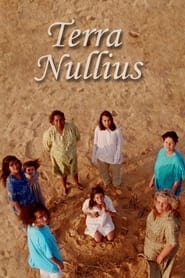
Loosely based on the filmmaker's personal experience, "Terra Nullius" is an impressionistic account of an eight year old Koori girl, Alice, growing up in a white adoptive family which denies her Aboriginality. The film examines how unacknowledged shame and fear passes from one generation to the next, from one culture to another. The last scene depicts a silent meeting between the young Alice and the adult Alice. In order to reclaim her life, Alice decides she must confront the pain and confusion of her childhood.
Movie
2005
Land Mines: A Love Story
Habiba and Shah who, because of the wars fought in Afghanistan over the past 25 years, have experienced immense suffering, but who have survived to show how it is possible to be brave and moral in this world of sanctioned violence and lies. Shah, a former Mujaheddin soldier and land mine victim, works as a cobbler on the pavements of the ruined city of Kabul. One day, he noticed a pretty Tajik girl who had only one leg, and he began to court her. Amidst the chaos and violence, and despite all the obstacles of tradition and religion, Shah and Habiba were able to marry.
Movie
1986
Cambodia: The Prince And The Prophecy
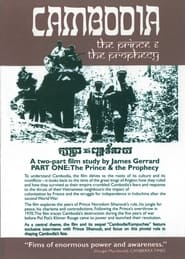
CAMBODIA: THE PRINCE AND THE PROPHECY explores the years of Prince Norodom Sihanouk’s rule, his juggling for peace, his charisma and contradictions. Following the Prince’s overthrow in 1970, the film traces Cambodia’s destruction during the five years of war before Pol Pot’s Khmer Rouge came to power and launched their revolution… As a central theme, the film and its sequel CAMBODIA/KAMPUCHEA feature exclusive interviews with Prince Sihanouk, and focus on his pivotal role in shaping Cambodia’s fate.
Movie
1988
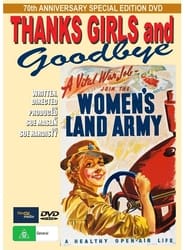
Thanks Girls and Goodbye
Documentary using archival footage, newsreels and contemporary interviews with women of the WW2 Australian Women's Land Army.
Movie
2010
Three Boys Dreaming
THREE BOYS DREAMING follows three Indigenous boys over four years as they chase the dream of becoming professional AFL footballers.

Movie
2012
Big Boss
The story of 95-year-old Aboriginal elder Laurie Baymarrwangga and her work to maintain the language and cultural traditions of the Yan-nhangu people of Murrungga.
Movie
1998•
1.0
Pyongyang Diaries
This documentary records Hoaas' personal encounter with the closed society of North Korea. As with her earlier work, Hoaas approaches her film as a cumulation of fragments encompassing different perspectives that together offer a point of entry into a complex society. Her diary-style narration signals her limited personal perspective into this culture, especially given the brief filming period and her difficulty in breaking through the facade of the showcase version of Korea insisted upon by her official guides. Hoaas' restricted visual access, and her reluctance to present over-familiar images of the hardship and depravation informed her decision to use this narrative device to frame her film within the context of the famine crisis that began in 1997 following the failure of crops caused by two consecutive years of heavy flooding.
Movie
1996
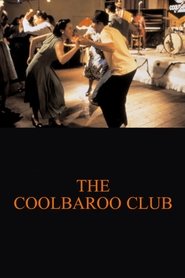
The Coolbaroo Club
Documentary about "The Coolbaroo Club", which was the only Aboriginal-run dance club in a city which practiced unofficial apartheid. During its lifetime, the Club attracted Black musicians and celebrities from all over Australia and occasionally from overseas. Although best-remembered for the hugely popular Coolbaroo dances attended by hundreds of Aborigines and their white supporters, the "Coolbaroo League", founded by Club members, ran a newspaper and became an effective political organization, speaking out on issues of the day affecting Aboriginal people.
Movie
N/A
Ways of Thinking
A docu-drama made with support and assistance from a Warlpiri Community in Central Australia, to highlight the community's effort to control the fate of their heritage and future. Alan Jungarrayi wants to move with his family to the nearest town in the hope of finding work. His wife, Jean Napanangka, wants to remain in the community to fulfil her tribal obligations and to bring up their children in their culture. She fears that if they leave the children will lose their language and grow up 'with too much Western ways and thoughts', and thus lose their Warlpiri identity and their place within the world.
Movie
N/A
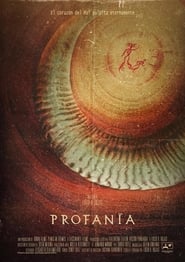
Profanía
Argentina, 2001. The country is in the middle of a state of siege. Bruno leads a rural military patrol of five soldiers into the countryside. They come upon an old farmhouse and inside they find several corpses and two survivors. Unwittingly, they awaken a diabolical entity living in the forest that revives the dead in the house and will torment them all night long. They will have to resist until dawn, or become part of a bloody sacrifice made centuries ago.
Movie
2016
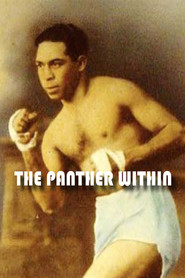
The Panther Within
MARNI is a mesmerising marathon of colour and dot work is intercut with the majestic landscapes of the Pilbara to a journeying soundtrack. As she paints the audience will experience Allery telling them about herself and her art practice in Yindjibarndi language.
Movie
2014•
7.0
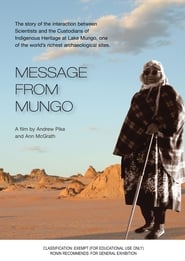
Message from Mungo
Lake Mungo is an ancient Pleistocene lake-bed in south-western New South Wales, and is one of the world’s richest archaeological sites. Message from Mungo focuses on the interface over the last 40 years between the scientists on one hand, and, on the other, the Indigenous communities who identify with the land and with the human remains revealed at the site. This interface has often been deeply troubled and contentious, but within the conflict and its gradual resolution lies a moving story of the progressive empowerment of the traditional custodians of the area.