Content from Roche Productions
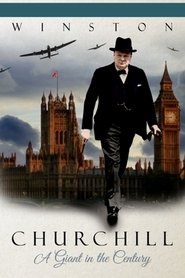
Movie
2014•
8.0
Winston Churchill: A Giant in the Century
A new look at the public and private life of one of the most important statesmen in the history of Europe: Winston Churchill (1874-1965), soldier, politician, writer, painter, leader of his country in the darkest hours, winner of the Nobel Prize in Literature, a myth, a giant of the 20th century.
Movie
1951•
6.1
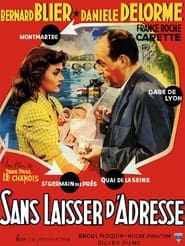
Without Leaving an Address
A woman in Paris hires a taxi driver to locate her ex-lover, father to her newborn child, who left her without leaving an address.
Movie
2011•
8.0
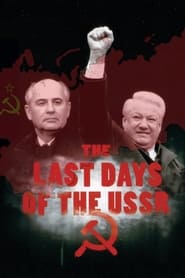
The Last Days of the USSR
From 1989 to 1991 a string of unpredictable events happened that brought to light the rivalry between two men: Gorbachev, hindered by the economic results of his perestroika, and Yeltsin, embodying the hopes of the Russian people. Illustrated with interviews of top protagonists such as Mikhail Gobachev himself, the documentary recounts the critical last two years of the former USSR.
Movie
2017•
6.9
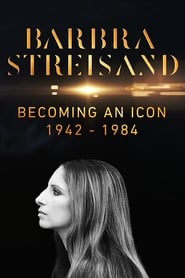
Barbra Streisand: Becoming an Icon 1942–1984
Barbra Streisand grew up in working class Brooklyn, dreaming of escape from her tough childhood. A stellar student, she resisted the pressure to go to college as her sights were firmly set on Broadway. She was determined to become an actress and landed her first role aged 16, but it was two years later, when she started to sing, that her career took off. Subverting stereotypes and breaking glass ceilings, this programme looks at her rise to stardom and the remarkable achievements of her early career.
Movie
2015•
8.5
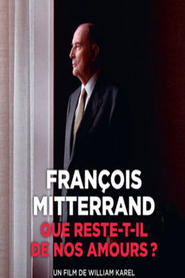
François Mitterrand : que reste-t-il de nos amours ?
He loved power and influence. The socialist left his mark on France and Europe. For 14 years - from 1981 to 1995 - François Mitterrand held the reins of the "Grande Nation" at the Elysée Palace in Paris. What remains of Mitterrand today? What remains of the reign of the first socialist president of the Fifth Republic?
Movie
2014•
7.3
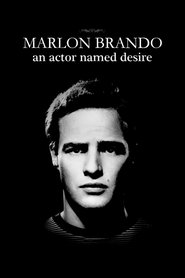
Marlon Brando: An Actor Named Desire
In his early days as an actor, Marlon Brando (1924-2004) was a shy young man with theatrical ambitions, like many others; but his charisma and superb acting skills made him truly unique, so that the doors to the starry sky of Hollywood opened for him. However, his peculiar manners, political commitment and complicated love life always overshadowed his artistic success.
Movie
2020•
7.4
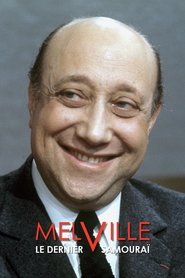
Melville, le dernier samouraï
Like nobody else Jean-Pierre Melville influenced modern filmmaking. This documentary follows his creative process step by step, showing him becoming the father of the Nouvelle Vague and one of the most iconic directors of French cinema.

Movie
2021•
8.0
La Ligne de démarcation, une France coupée en deux (1940-1943)
Between June 1940 and March 1943, the 1,200 kilometer long demarcation line broke France in two. For almost three years she controlled the daily newspaper of 40 million French people. In the north the zone occupied by Hitler's soldiers, in the south the zone administered by Marshal Pétain's Vichy regime. This film lifts the veil in this theater on the shameful mistakes of the collaboration, but also on the most courageous and noble deeds. Archive images and film recordings at places where the border used to be crossed are alternated with interviews with the last witnesses of this time.
Movie
2025•
7.0
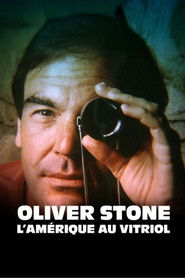
Oliver Stone, l’Amérique au vitriol

Movie
2016•
8.8
Nadia Comăneci: The Gymnast and the Dictator
A documentary portrait of legendary Perfect Ten gymnast Nadia Comaneci after becoming an icon in the 1976 Olympics, during her Romanian period, and her challenging years under the dictatorship of Nicolae Ceausescu.
Movie
2019•
8.0
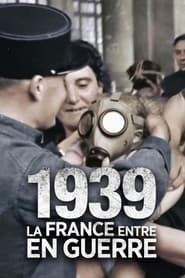
1939, la France entre en guerre
Movie
2021•
9.0
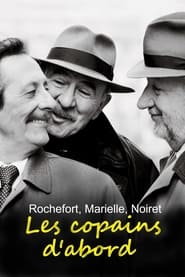
Rochefort, Marielle, Noiret: Les copains d'abord
Jean Rochefort, Jean-Pierre Marielle, Philippe Noiret - This is the story of a bunch of friends. Comedian buddies. Actors who dreamed of the Conservatory and the National Theater of Paris. The theater was their ideal, cinema will be their paradise. Their friend Jean-Paul Belmondo, the relaxed Parisian, who failed the entrance exam, will make sparks fly. Rochefort, Marielle and Noiret, the three provincials, will climb the steps of recognition one by one. From the little cabarets on the Left Bank to the TV shows of the Buttes-Chaumont pioneers. From the second roles to the first and from the B movies to the classics.
Movie
2019•
7.6
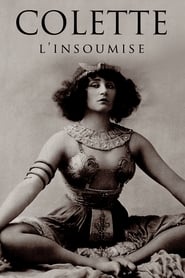
Colette, l'insoumise
The incredible life of novelist, screenwriter, actress and nude dancer Sidonie-Gabrielle Colette (1873-1954), who led her life to the beat, constantly reinventing herself through words, scandals and metamorphoses; a peasant woman who became an icon of the European Belle Époque; an artist who defied religion and social prejudices to live a hedonist existence worthy of her desires; a real woman who turned herself into a fictional character…
Movie
2011•
8.0
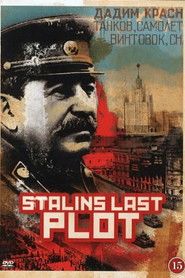
Stalin's Last Plot
January 1953: On the eve of his death Stalin finds himself yet another imaginary enemy: Jewish doctors. He organizes the most violent anti-Semitic campaign ever launched in the USSR, by fabricating the "Doctors' Plot," whereby doctors are charged with conspiring to murder the highest dignitaries of the Soviet Regime. Still unknown and untold, this conspiracy underlines the climax of a political scheme successfully masterminded by Stalin to turn the Jews into the new enemies of the people. It reveals his extreme paranoia and his compulsion to manipulate those around him. The children and friends of the main victims recount for the first time their experience and their distress related to these nightmarish events.
Movie
2020•
8.5
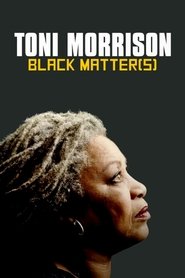
Toni Morrison: Black Matter(s)
Toni Morrison (1931-2019), first black woman writer being awarded the Nobel Prize of Literature, was a critic, a book editor, a college professor, and a creative author of novels, poems and essays. She claimed the invention of a black writing and brought the light on what had kept silenced since the days of the birth of the United States of America as an independent nation: the black people history.
Movie
2015•
6.0
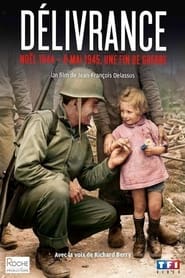
Délivrance
Movie
2017•
8.0
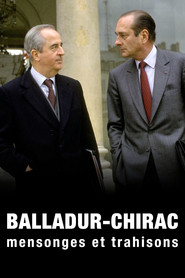
Balladur-Chirac, mensonges et trahisons

Movie
2016•
6.8
Hitler's Games, Berlin 1936
Summer 1936 - The Berlin Olympics, organized by the Nazi regime on the eve of World War II, acted as a grand showcase for a Germany that was athletic, peaceful and rejuvenated. The violence and hate that until then had reigned in the streets of Berlin suddenly vanished. Adolf Hitler became the triumphant host of European countries he would soon try to invade or face in a deadly global conflict.
Movie
2012
Drancy 1941–1944, the Internment Camp Next Door
The untold story of a world-renowned place of remembrance of the Holocaust in France, the internment camp of Drancy, which was the central transit for the near totality of the 76 000 deported Jews of France during World War II.
Movie
2017•
8.6
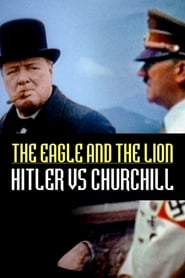
The Eagle and the Lion: Hitler vs Churchill
Winston Churchill, one of the most revered men of the twentieth century. Adolf Hitler, one of the most hated leaders in contemporary history. Between 1940 and 1945, these two enormously contradictory personalities faced each other in both politics and war. A clash of giants whose story begins in the trenches of the World War I and ends with the debacle of the World War II.
TV
2020•
6.6
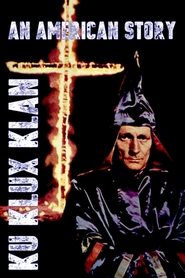
Ku Klux Klan: An American Story
Since its birth in 1865, in the wake of the American Civil War, the history of the Ku Klux Klan has been inseparable from that of the United States. The debates over slavery, the populism in the roaring twenties, the struggle for civil rights in the sixties, the rise of the far-right in the early 21st century; the Klan seems to have always embodied the dark side of the nation, with its gray areas and blind spots.

TV
2024
La Haine : La scène est à nous
TV
2024•
7.0
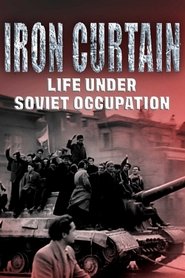
Iron Curtain: Life Under Soviet Occupation
How did the Soviet Union impose its communist ideology on the countries of Central and Eastern Europe after World War II? The story of how, from 1945 until the construction of the Berlin Wall in 1961, these countries were gradually subjected to the totalitarian Soviet yoke.
TV
2017•
7.0
My Life in Hitler's Germany
These are the stories of those who lived through Hitler's Germany. They are the lucky who survived to tell their stories, whether they were persecuted Jews or the Reich's harassed opeposition. Told only with archival documents, this series is a deeply moving account of Germany and the Third Reich through the eyes of the oppressed, as they watched their country as it was crushed by dictatorship.
TV
2018•
7.8
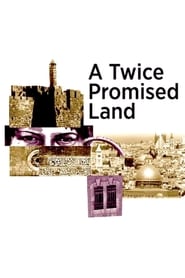
Israel: A Twice Promised Land
November 1947. The United Nations votes the partition plan for Palestine. For some, it is a dream becoming reality; for others, it is the beginning of a catastrophe. Seventy years after this historic vote, the land of Palestine remains an open wound, a battleground for two peoples torn apart by their shared history, a source of inextricable tension in the region and even beyond the borders of the Middle East.
TV
2019•
8.0
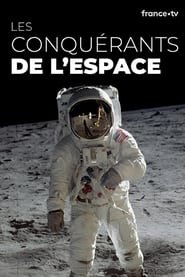
Les conquérants de l'espace

TV
2003•
8.0
CIA : Guerres secrètes
TV
2005