Content from Restart
Movie
2018•
5.2
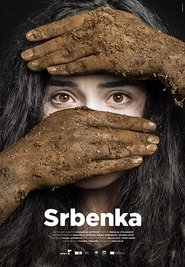
Srbenka
"Srbenka" is a film about peer violence toward children of different nationality in Croatia. It examines how the generation born after the war copes with the dark shadows of history.
Movie
2018•
6.0
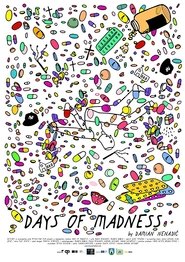
Days of Madness
Days of Madness portray an incredible odyssey of two mentally diverse and unjustly rejected people who are learning to accept it, faced with the blindness of the society and the health system that made them addicts.
Movie
2016•
6.5
Half a Man
Croatia, 1991. Two sisters prepare a special homecoming for their father on the day he’s set to return after three months as a prisoner of war.
Movie
2024•
7.5
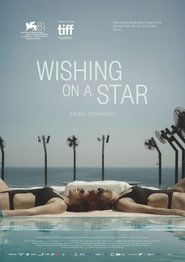
Wishing on a Star
A comedy documentary about the search for happiness. The Italian astrologist Lucciana can alter the destinies of people. On their birthdays they have to travel to whatever location on Earth has the ideal constellation of planets over it. They will be reborn on that day and so be able to change their nature. On the one hand, the film follows the everyday (and unchanging) life of the fortune-teller who changes the lives of people while, on the other hand, it follows five protagonists who set out to various places in the world in order to change their lives.

Movie
2025•
8.5
Wind, Talk to Me
Stefan reunites with his family to celebrate his grandmother's birthday for the first time after his mother's recent passing. This homecoming, driven by his urge to complete a film about his mother and an attempt to make amends by rescuing a stray dog, will ignite an introspective journey for Stefan. Inspired by the director's real-life experiences and starring his actual family members in a mission to complete a lake house and a film, this is an intimate cinematic exploration of the timeless mother-son relationship.
Movie
2025•
8.3
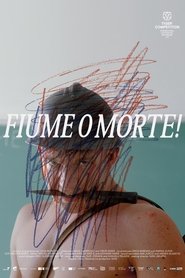
Fiume o morte!
Through dramatic reconstruction and documentary asides, the spirit of Italian poet, playwright, journalist, aristocrat and army officer Gabriele D’Annunzio is captured, presenting the nascent fascism in his attempts to forge a new state in the aftermath of the First World War.
Movie
2012•
4.0
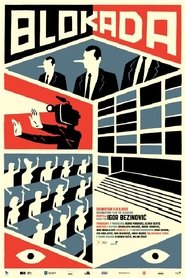
The Blockade
The Blockade is a unique view from within on the most massive, longest, and politically most significant student protest in the country, since 1971, that started in April of 2009 at the Faculty of humanities and Social Sciences in Zagreb. The struggle against the commercialization of education and the blockade of teaching classes lasted for 34 days. The rebellion spread onto more than 20 faculties across the country and the students became an active and relevant political subject. The director followed everything: from the exhilarating preparation meetings and blocking of classes to the first signs of exhaustion, through personal situations and discussions late at night, from the initial support of most faculty members to the moment they turned their back to the movement and the attempt to reach the missing minister of education. This film shows that the blockade was not just physical and that it has a much broader meaning.

Movie
2013•
6.3
Zagreb Stories 2
A sequel to omnibus "Zagreb Stories" tells about love and families in present-day Zagreb.
Movie
2022
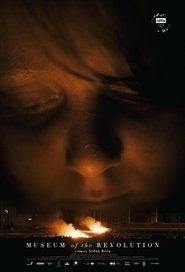
Museum of the Revolution
The Museum of the Revolution in Belgrade is actually a building that remained unfinished for 60 years and 'inhabited' only by the homeless and marginalized. The director observes the precarious (but proud) daily life of a girl and her mother around the symbolic ruins of a utopia.
Movie
2016
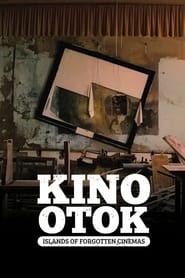
Islands of Forgotten Cinemas
A poetic documentary about the lost film culture in the small villages on the Croatian islands during the SFR of Yugoslavia.
Movie
2014•
5.4
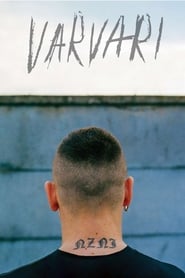
Barbarians
"Barbarians" is a teenage drama about coming of age in a world where there is no opportunity. A portrait of a young generation growing up in a society of lost values.
Movie
2009
An Encounter
Imagine joint demonstrations of students and farmers! Such an improbable encounter happened on the Feast of Corpus Christi in 2009 on Vukovarska street in Zagreb, when students from Faculty of Social Sciences came to support the farmers' demonstrations in front of the building of Ministry of Agriculture. In spite of the fact that this event was present in all the media, this film is the only video recording of this unusual one-day encounter of students and farmers. Euphoric student night and sobering farmers' day; media-conscious activism and heavy machines on the streets; plenary form of organization and quarreling farmers' associations - these are just some of the manifestations of this unexpected alliance.
Movie
2017•
5.4
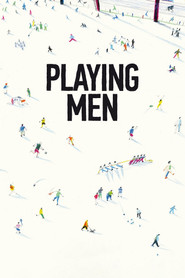
Playing Men
A documentary essay about the relationships among Mediterranean men and their games. The film takes the form of a travelogue across Croatia, Italy, Slovenia and Turkey, and examines men, young and old, who come together like their ancestors did – to play games. During filming, however, the director suddenly faces a serious creative crisis and turns the camera on himself, turning the film into a playful homage to absurdity.
Movie
2017•
7.2
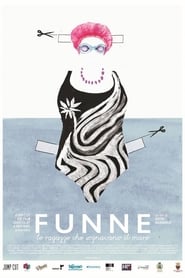
FUNNE: Sea Dreaming Girls
Sea Dreaming Girls is a gorgeous, joyous and funny documentary about discovering new things and living carefree at any age, as it follows a lively group of nonnas who have never seen the sea. In the tiny Italian mountain village of Daone, a group of grandmothers led by the straight-talking Erminia begin planning a trip in honour of their Rododendro club’s 20th anniversary. They quickly agree on a trip to the sea, where many of their members have never ventured. But how will they raise enough money so that everyone can wiggle their toes in the surf? They sell pies and sweets and even boldly pose for a calendar but when this doesn’t get them the money they need, they have one last idea and it is this one that sends them viral, making them famous across Italy.
Movie
2013•
6.7
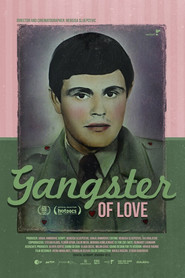
Gangster of Love
Matchmaker Nediljko Babic, also known as "Gangster", helps a Bulgarian single mother find a new husband in Croatia. But a series of comically disastrous dates discloses the true nature of conservative Croatian men: they would rather die alone than marry a foreigner with a child.
Movie
2025
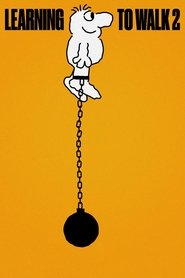
Learning to Walk 2
Learning to Walk 2 offers a portrait of the legendary animator Borivoj Dovniković Bordo through a long period of the artist's life, witnessing challenging social and political upheavals, focusing on those moments in which the artist himself becomes, in a way, his own main character. Through a combination of Bordo's animated works, comics and caricatures, this film seeks to speak about the freedom of creativity and seeks an answer to the eternal question: is there a systematic environment in which we truly and truly walk or do we walk lamely, as Bordo's universal hero does.
Movie
2023•
8.2
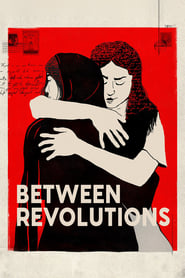
Between Revolutions
A semi-fictional correspondence between two women: one goes to Iran in 1979 to topple the Shah; the other experiences the onerous years of Ceaușescu’s Romania. Their biographies run in parallel via images of everyday life and videograms of revolution.

Movie
2018
Mezostajun
“Mezostajun” is an experimental documentary film, exploring spatiotemporal relations in a Mediterranean city in which the role of city’s public spaces in people’s lives varies greatly, depending on the season of the year. Elements of summer and winter are cinematically interlaced, and create in the viewers’ perception a new existential interspace called ‘’mezostajun’’.
Movie
2012
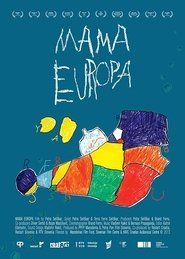
Mother Europe
Road trip through the periphery of the EU shows present-day Europe through the eyes of a much-travelled six-year-old, wise beyond his years. A fresh look at this old continent: shooting from the hip and free from sentimentality, young Terra questions the usefulness and purpose of borders.
Movie
2019
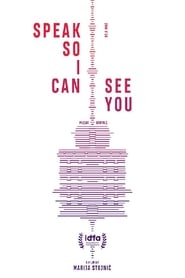
Speak So I Can See You
Conjuring reality and wonder, "Speak so I Can See You" takes us to a seemingly different era, by exploring the world of Radio Belgrade. One of Europe's oldest radio stations and a true institution of the city, the station still broadcasts original programming and helps keep history, culture and critical thought, as well as everrelevant questions about ourselves and the world, from slipping out of memory and mind. Set at the intersection of an observational documentary and a unique sensory experience, the film conjures everyday scenes at the station and immersing interludes exploring the relationship between sound and the space it inhabits. Through a synesthetic blend of sounds, words, notes, echoes and light, we are taken into a unique cinematic soundscape that doubles as a love letter to radiophonic art and its disarming insight into what makes us remember, understand, think, discover, and feel.