Content from Radiodiffusion Télévision Algérienne (RTA)

Movie
1979•
10.0
The Adventures of a Hero
In one of the tribes of the Algerian Sahara, everyone awaits the arrival of the hero who will defend the rights of the poor. A man decides one day to put the mark of the "hero" on his newborn son and the whole tribe celebrates the arrival of this eagerly awaited messiah who came to save them. This false hero then grows up by assuming his role of savior. Filled with cynicism, he crosses the countryside and has a number of adventures.

Movie
1980•
10.0
The Cork
On his return to Algeria, Belkacem Hadjadj, a young graduate of INSAS in Brussels, joined Algerian television and signed "Le Bouchon", his first feature in the register of an Italian comedy, around the misadventures of a tenant experiencing a water leak.

Movie
1968•
10.0
La Souris
In Algiers, the shock duo made up of Inspector Tahar and his sidekick L'Apprenti lead the investigation in the footsteps of a formidable bandit named "La Souris".
Movie
1982•
10.0
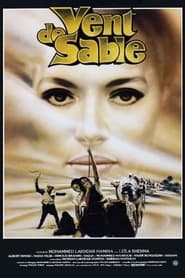
Sandstorm
Seen right through the sandstorms that rack the lives of a tribe living on a desert oasis, is a subtle and not-so-subtle mistreatment of the female members of the tribe - tribal chiefs have the right to be the first to deflower virgins, and single or widowed mothers must walk a narrow line of behavior restrictions that do not apply to their male counterparts. Both genders, however, fight the brunt of the harsh desert winds together.
Movie
1979•
10.0
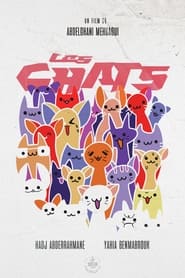
Les Chats
A group of angry women head to the police station, all complaining about the kidnapping of their cats. A full-scale investigation begins, led by Inspector Tahar and his sidekick, the Apprentice...
Movie
1985•
8.5
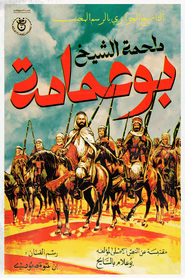
The Epic of Cheikh Bouamama
The story of the film revolves around the epic of Sheikh Bouamama, a leader of the national resistance in Algeria during the French colonial era. The events are taking place in southwestern Algeria. The film also tells about different stages of the resistance, especially about one of the uprisings of the Algerian people, namely "the battle of the sons of Sidi Sheikh Bouamama", in which French General Leuti was appointed to try to suppress and end this resistance.
Movie
1978•
10.0
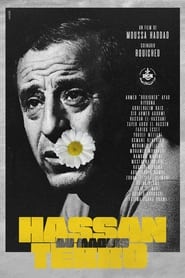
Hassan Terro au Maquis
While trying by all means to stay out of the bloody turmoil caused by the Battle of Algiers, Hassan, an honest and naive family man, is wrongfully accused of terrorism by the French colonial army in "Hassan Terro." After escaping in "The Escape of Hassan Terro," Hassan is forced to join the resistance in "Hassan Terro in the Maquis."
Movie
1980•
10.0
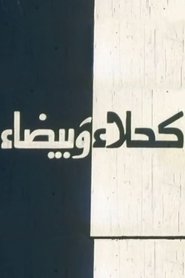
Kahla wa Bayda
Rabie is a kid from Sétif in 1980, trying to collect money to buy a wheelchair for his paralyzid sister Sassia, so she can get out of the house.
Movie
1994•
10.0
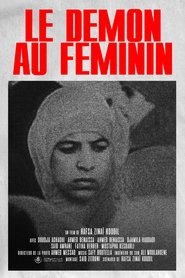
The Female Demon
In Algeria, in 1991, amid the rise of fundamentalism, Ali, a family man, allows himself to be influenced by three extremists and drags his wife into a nightmare. For fundamentalists, "demons" can nestle within women, so they must be exorcised of this "diabolical" presence.

Movie
N/A
المسؤول
Movie
1975•
10.0
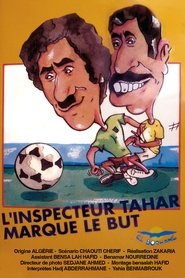
L'inspecteur Tahar Marque Le But
A simple case of a car accident in the city of Oran turns into a real criminal investigation led by Inspector Tahar and his sidekick the apprentice.
Movie
1980•
10.0
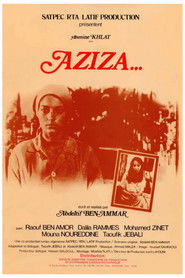
Aziza
Around 1980, in Tunisia, Si Béchir, an old craftsman, sold his house and left the medina of Tunis with his family to settle in a new city on the outskirts of the capital. With his son Ali and his niece Aziza, the old man discovers a new way of life in a Tunisia in full change. Aziza becomes friends with Aïcha, a young actress, while Ali continues to fail in his little businesses. The arrival of a sheikh from the Persian Gulf will fuel all the desires in the city, including those of Ali. But the dream is short-lived.
Movie
1979•
10.0
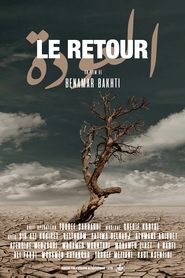
Le Retour
In the early 1970s, Lakhdar, an Algerian peasant, is forced to leave his desert land and his family for France, but immigration weighs on him and he dreams of returning. This day arrives, he walks in Paris, events decide otherwise.
Movie
1975•
10.0
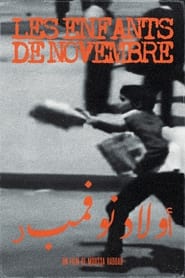
Les Enfants de Novembre
In the streets of the Casbah of Algiers, an FLN fighter pursued by the colonial police hands over confidential documents to Mourad, an Algerian child shouting newspapers who must at all costs pass them on to the resistance. But the police are on their trail and will do anything to get them back.
Movie
1967•
10.0
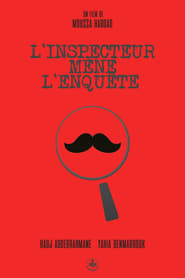
L'Inspecteur mène l'enquête
Movie
1993•
10.0
The Casbah of Algiers
The daily life and tribulations of colorful residents in the millennial popular district of the Casbah of Algiers.
Movie
1978•
10.0
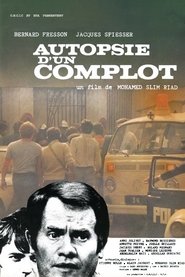
Autopsie d’un complot
Terrorists blow up the consulate of an Arab country, before a journalist uncovers a larger conspiracy. The film is based on "Scorpion, autopsie d'un complot" by Etienne Bolo and Alain Jaubert (Balland, 1978), which tells the story of a plot targeting Algeria after the nationalization of hydrocarbons during Valéry Giscard d'Estaing's seven-year term.
Movie
1980•
10.0
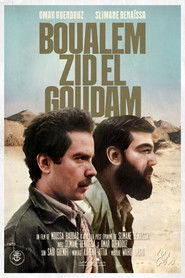
Boualem Zid El Goudam
Two travelers, Boualem and Sekfali, cross the hostile and endless desert. Boualem pulls a cart on which old books, pictures, relics and memories of Sekfali are piled up. Two men, two attitudes towards life, two visions of the world. Where do they come from, where are they going? The journey would be completely calm and happy if each of them were not inhabited by their pasts, determining their different visions of the future. Boualem's childhood was marked by the Algerian war of liberation. His dream is to achieve a socialist society, which is for him the only path to salvation. Sekfali, who tries to dissuade Boualem from continuing the journey, has the attitude of an aristocrat. For him, socialism is a heresy and people do not like responsibility, they only act if a leader gives them the injunction.
Movie
1963•
10.0
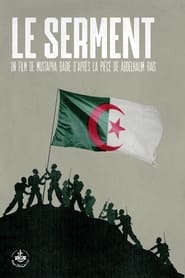
Le Serment
The Oath, a TV film produced by Algerian television in 1963 following the end of the war of independence, tells the story of young Algerians who joined the resistance after the bloody repressions of May 1945 in Constantinois by the French colonial army .
Movie
1971•
10.0
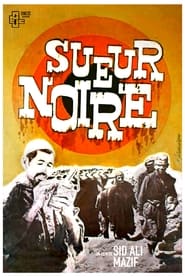
Black Sweat
During French colonization, a young Algerian boy is expelled from the French high school where he is able to study thanks to his father's position in the village. For his father, whose dream is to see his son climb the social ladder, this is a disaster, and the young man decides to go to work in the mines. A general strike that is severely repressed makes him aware of the class struggle, and he joins the resistance against discrimination and colonial oppression.
TV
1974•
10.0
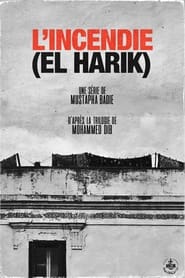
L’Incendie (El Harik)
In 1939 in eastern Algeria, Omar, a young boy of ten, lives with his family in a room in Dar Sbitar, a house shared by several families who overcome the trials they go through every day to ensure their subsistence. Her deceased father is Aïni, the mother, who bleeds herself from all four veins to keep her children and their grandmother alive. The families of Dar Sbitar share their intimacy and their daily life, this life animates the big house, which itself becomes a character in its own right. "El Harik" (The Fire), is an Algerian drama series in 10 episodes adapted from Mohamed Dib's trilogy "The Big House", "The Fire" and "The Loom".
TV
1969•
10.0