Content from Praesens-Film
Movie
1956
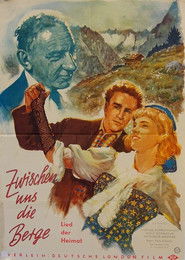
The Mountains Between Us
After the death of his parents, Beat Matter grows up with the Escher family. Their son Dominik is his best friend. As a young man, Beat enlists for two years of service with the Papal Swiss Guard in Rome. Shortly before starting his service, he meets Dominik's fiancée Jacqueline at an Alpine festival. He falls in love, even though he knows that Jacqueline is already promised to someone else.

Movie
1960•
5.5
Anne Bäbi Jowäger I. Part - How Jakobli comes to a woman
The trials of the wealthy Emmentaler farming family Jowäger, adapted from the 19th century novel of the same name by Jeremias Gotthelf (pen-name of Albert Bitzius), which was also published in two parts.

Movie
1961•
5.0
The Shadows Grow Longer
Christa Andres runs a home for troubled girls. With great dedication, she tries to help girls who have gone astray return to a normal life. She takes special care of Erika, who works as a prostitute and one day runs away from the home. Christa sets out to search for the girl in the red-light district. In doing so, she is haunted by the shadows of her own past. The educator herself used to work as a prostitute. When she meets her former pimp, he tries to exploit his knowledge in a perfidious way and blackmail Christa...

Movie
1945•
5.9
The Last Chance
Escaping a Nazi prison train in war-torn Italy, an American and a British soldier set out for the Swiss border and find themselves leading a multi-national party of refugees for the Italian underground.

Movie
1953•
7.0
The Village
At the end of the Second World War, orphans of various nationalities come together at the Pestalozzi Children's Village in Trogen. When the order arrives from Poland that the Polish children must return to their country, it comes as a shock to 13-year-old Andrzey: he doesn't want to leave Anja, for whom he has developed a strong affection. The two children decide to flee and go into hiding...
Movie
1949•
8.0
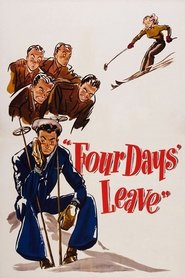
Swiss Tour
A sailor on leave meets a beautiful girl on the ski slopes of Switzerland.
Movie
1961•
4.8
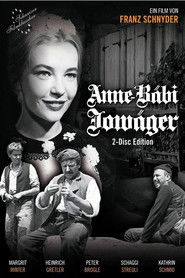
Anne Bäbi Jowager, Part 2 - Jakobli and Meyeli
The further trials of the wealthy Emmentaler farming family Jowäger and their neighbors, adapted from the second volume of the 19th century novel by Jeremias Gotthelf (pen-name of Albert Bitzius).

Movie
1932•
6.9
Kuhle Wampe or Who Owns the World?
Kuhle Wampe takes place in early-1930s Berlin. The film begins with a montage of newspaper headlines describing steadily-rising unemployment figures. This is followed by scenes of a young man looking for work in the city and the family discussing the unpaid back rent. The young man, brother of the protagonist Anni, removes his wristwatch and throws himself from a window out of despair. Shortly thereafter his family is evicted from their apartment. Now homeless, the family moves into a garden colony of sorts with the name “Kuhle Wampe.”

Movie
1947
Lebendige Demokratie - Der Souverän
Movie
1961•
5.0
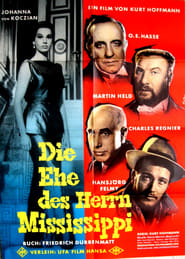
The Marriage of Mr. Mississippi
Florestan Mississippi, a public prosecutor by profession, visits a lady named Anastasia and, while drinking coffee with her, convicts her of poisoning her husband. At the same time, he asks for her hand in marriage, as he too has killed his wife with poison; the marriage is to be the "atonement" of the two poisoners. The four allegorical personifications in this comedy are, in addition to the loveless, absolute justice in the form of the prosecutor Mississippi, perfect equality, represented by the world revolutionary Saint-Claude, Christian love, embodied in the down-and-out, alcoholic tropical doctor Count Uebelohe-Zabernsee, and finally the "Frau Welt" of the old mystery play – Anastasia, who falls for everyone and betrays everyone, loves nothing but the moment, and dies with an invoked untruth on her lips.

Movie
1942
Der Schuss von der Kanzel
The story takes place in Mythikon, a small village on Lake Zurich in the 17th century. The pastor of a rural Zurich community is so obsessed with hunting that his passion threatens to cost him his office and dignity. Now, help is sought from the famous general and cousin of the pastor, who is supposed to set things right with a clever plan.

Movie
1930•
6.5
Misery and Fortune of Woman
This film shows contrasting views of women with problematic pregnancies and the outcomes resulting when they seek out a back-alley abortionist, a trained and licensed abortion provider in a clinic, or an obstetrician capable of performing a Caesarian Section. The full film appears to be lost, but shortened versions, including one with dialogue scenes added in Germany in 1935, can be found on the internet. Additionally, Eisenstein's role in making the picture remains unclear: did he direct some or all of it, just edit it, or merely leave it to Alexandrov and Tisse to make? Released in the USA 1930 in a 65 minute (5800 ft.) version with English intertitles and a music track under the title BIRTH.

Movie
1955•
6.0
Uli the Tenant
Uli has been the tenant of the "Glunggen-farm" for two years. His wife Vreneli gave him two children and the couple is happy. But this year, the harvest looks bad and his landlord calls in the rent, as the old man urgently needs money to satisfy the demands of his son and stepson. Desperate to make ends meet, Uli fraudulently sells a cow knowing that she does not produce any milk. He is pursued in court but is acquitted. But then, the buyer curses him... and disaster promptly strikes.
Movie
1940•
6.6
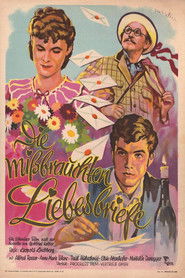
The Abused Love Letters
While on a longer business trip, a wannabe poet urges his beautiful but more simple wife to answer his overly swollen love letters. With no idea how to respond she forwards the letters to a new young school teacher to use his answers instead...
Movie
1978•
4.2
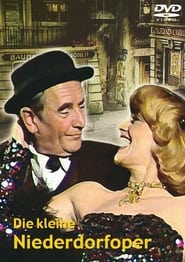
Die kleine Niederdorfoper
Farmer Heiri has sold his calf and celebrates his temporary wealth in the big city. But in doing so he is confronted with many temptations and dangers: pickpockets, second-rate artists and prostitutes who all try to grab the money of this naive man from Hausen. A 1978 recording of the well-known Zurich boulevard theatre piece.
Movie
1951•
5.4
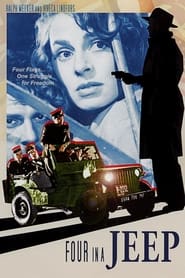
Four in a Jeep
Soviet, British, French and American allies patrol post-war Vienna.
Movie
1962
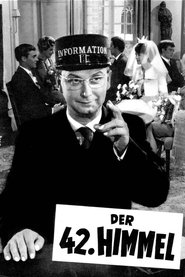
The 42nd Heaven
Musical comedy about a marriage registrar.
Movie
1933
Wie d'Warret würkt
The story revolves around the confusion that arises when a supposed gold discovery in Valais divides the village community. The plot combines elements of a cultural film about old customs in the Lötschental valley with a naive storyline that achieves a strangely powerful effect through its simple realism.
Movie
1989•
6.3
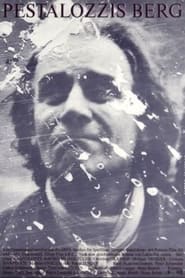
Pestalozzi's Mountain
In the 1770s, Swiss farmer Johann Heinrich Pestalozzi established a school for poor orphaned children in the Aargau. Up to total exhaustion he sacrificed himself for his pedagogical theories. Five years later, the project of the idealistic educator failed after bloody attacks of the French. In retrospect, the disappointed Pestalozzi experiences the last few months with "his" children.
Movie
1939•
6.6
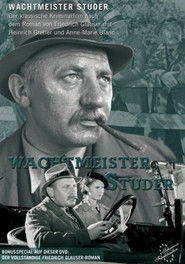
Sergeant Studer
A policeman is not convinced that the prime suspect in a murder case is realty guilty and so decides to reinvestigate the case, despite the lack of co-operation from locals.