Content from ORTF
Movie
1970•
4.0
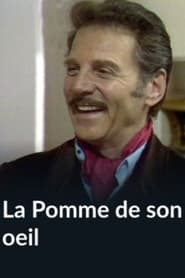
La Pomme de son œil
What father doesn't care for his daughter unconditionally? It's a real question for Roland de Mailly, a divorced father who, in spite of himself, is subjected to the extravagances of his beloved daughter. By turns religious, hippy, extra-lucid, circus performer, will she overcome her father's love?
Movie
1966•
7.1
The Taking of Power by Louis XIV
Cardinal Mazarin dies, leaving a power vacuum in which the young Louis asserts his intention to govern as well as rule. Mazarin's fiscal advisor, Colbert, warns against Fouquet, the Superintendant who has been systematically looting the treasury and wants to be prime minister. Fouquet believes Louis will soon tire of exercizing power and overplays his hand by offering a bribe to Louis' mistress to be his ally. She reports this to the king who arrests Fouquet. Louis and Colbert design a brilliant strategy to keep merchants making money, nobles in debt, the urban poor working and fed, and peasants untaxed.
Movie
1967
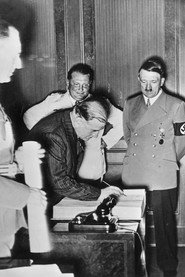
Munich, or Peace in Our Time
September 28, 1938, war is about to break out. Tension was mounting, as Chamberlain and Daladier on one side, and Hitler and Mussolini on the other, met in Munich. This conference marked the culmination of the weakness of European democracies in the face of the rise of fascism. Through period documents and interviews, author Marcel Ophüls recounts this meeting and recreates the European climate of 1938.
Movie
1966
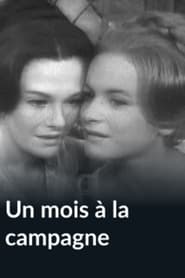
Un mois à la campagne
1840. The arrival of a young tutor in a wealthy Russian family will stir the hearts of two women. The mother, Natalia Petrovna, and her 17-year-old ward, Vera, fall in love with the frustrated boy... Adaptation of Ivan Tourgueniev's most famous play, starring Delphine Seyrig as Natalia Petrovna.
Movie
1967•
6.0
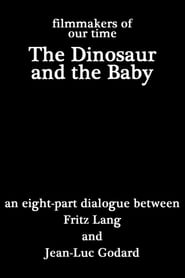
The Dinosaur and the Baby
An hour-long discussion between Fritz Lang and Jean-Luc Godard in which they discuss a variety of art forms, the role of the cinema, their collaboration together, and much more. (Filmed in 1964 but released for TV in 1967.)
Movie
1969•
7.1
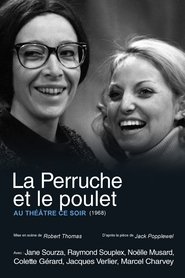
La Perruche et le Poulet
Movie
1970
Le chien qui a vu Dieu
In a small Italian village live a group of men, each as miscreant as the next. Among them is the baker, violent and miserly. One day, to benefit from an inheritance, he has to distribute fifty kilos of bread a day to the poor for five years. At the moment of distribution, a dog comes along and takes a loaf of bread in its mouth, to take to an old hermit whom the villagers are convinced "has seen God".
Movie
1964•
6.8
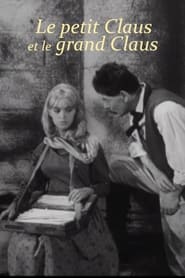
Little Claus and Big Claus
Once upon a time there lived in the same village two men bearing the very same name. One of them chanced to possess four horses, the other had only one horse, so, by way of distinguishing them from each other, the proprietor of four horses was called "Great Claus," and he who owned but one horse was known as "Little Claus"...
Movie
1968•
5.4
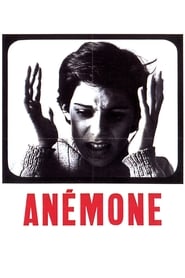
Anemone
The portrait of a young girl from the Parisian bourgeoisie. As a brief shot indicates us, it could have been called "Portrait of the artist as a young girl." though probably "young girl" is just a previous title, but the style and the presence of the Father leaves no doubt about who paints and who's hiding behind the young girl.
Movie
1975•
8.5
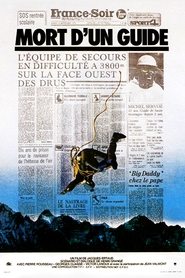
Death of a Guide
Movie
2011
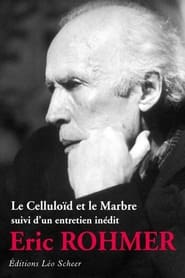
Celluloid and Marble
Celluloid and Marble is based on Rohmer's own articles published in "Cahiers du cinéma", discussing film in relation to the other arts, maintaining that, in an age of cultural self-consciousness, cinema was “the last refuge of poetry” - the only contemporary art form from which metaphor could still spring naturally and spontaneously.
Movie
1974
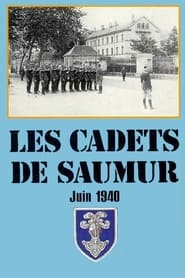
One Morning in June 1940
18 June 1940: German troops sweep through France. The cavalry school at Saumer is ordered to withdraw, but the director resolves to stop the enemy on a 25km front with his students.
Movie
1975•
4.9
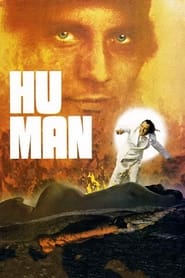
Hu-Man
An actor is placed in dangerous situations and his fear will be broadcast to the television audience. The audience's emotions will determine whether he is sent into the future or the past.
Movie
1967•
5.7
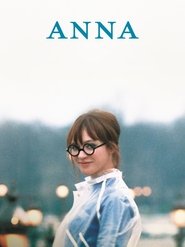
Anna
Anna is working at a Parisian advertising agency. The director has fallen in love with a young woman he only knows through a photograph — of Anna.
Movie
1968•
7.7
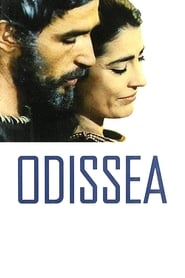
Odissea
Odysseus' journey told in Homer's Iliad and Odyssey. After fighting in the Trojan War, Odysseus spends years trying to return home to Itaka.
Movie
1967
Bouton Rouge
Pop films by Garrel.
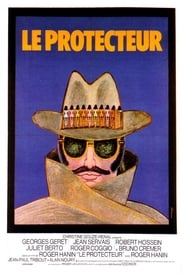
Movie
1974•
2.7
The Protector
Recently released from prison, Samuel Malakian, a wealthy architect, investigates the disappearance of his daughter, Nathalie, kidnapped by thugs linked to the underworld. When he discovers that she is a prostitute, he will descend into the slums of the city and rub shoulders with these dangerous environments. For him, from now on, all means will be good in order to find the fruit of his entrails.
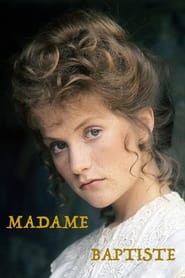
Movie
1974•
5.5
Madame Baptiste
Blanche was raped in her adolescence by a servant, a cowherd named Baptiste. Her family, anxious to hide the shame that this scandal has cast on their reputation, locks the young girl in their manor, thinking that four walls are enough to silence the mockery. One day, Blanche, whom the whole country nicknames "Madame Baptiste", tries to commit suicide, consumed by the painful memory she carries within her. A man saves her and, charmed by the woman who now owes him her life, he asks her to marry him, thus defying the moral barriers set by public opinion. Life now seems happy for Blanche, but one day, at the agricultural show, the insult comes again: "Madame Baptiste!"...
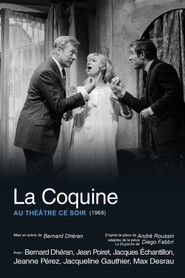
Movie
1968•
8.0
La Coquine
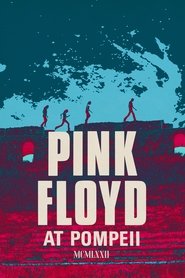
Movie
1972•
8.1
Pink Floyd: Live at Pompeii
British progressive rock band Pink Floyd perform at the ancient Roman Amphitheater in the ruins of Pompeii, Italy in 1971. Although the band perform a typical live set from the era, there is no audience beyond the basic film crew.
TV
1976•
7.1
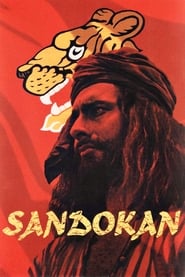
Sandokan
In this mini-series in six parts from 1976 the Indian actor Kabir Bedi plays the lead role. Carol Andre plays Lady Marianna Guillonk and as Sandokans best friend Yanez de Gomera we see Phillipe Leroy. The noble prince Sandokan is a fighter of the first rank who are cruel to their enemies, but always loyal to his friends.
TV
1968•
7.0
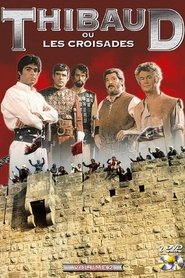
Thibaud ou les Croisades
This series features the adventures of Thibaud, nicknamed the White Knight, son of a Christian baron and an Arab mother, in Israel during the Crusades.
TV
1954•
2.0
Reflets de Cannes
TV
1966•
6.7
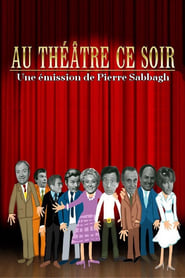
At Theatre Tonight
At Theater tonight is a TV show broadcasted from 25th August 1966 to 21st September 1985. The show is broadcast plays recorded in two or three days, during public performances at the Théâtre Marigny on the Champs-Élysées, or sometimes Edouard VII theater.
TV
1968•
8.0
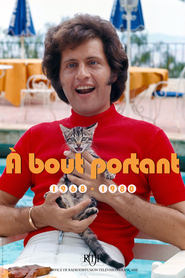
À bout portant
TV
1967•
8.7
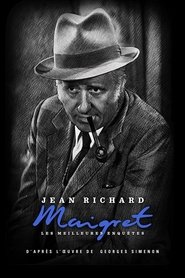
The Investigations of Commissioner Maigret
TV
1952
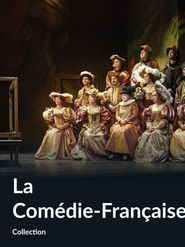
La Comédie-Française
TV
1968•
7.0
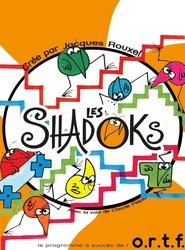
Les Shadoks
Les Shadoks is an animated television series created by French cartoonist Jacques Rouxel which caused a sensation in France when it was first broadcast in 1968-1974. The Shadoks were bird-like in appearance, were characterised by ruthlessness and stupidity and inhabited a two dimensional planet. Another set of creatures in the Shadok canon are the Gibis, who are the opposite to the Shadoks in that they are intelligent but vulnerable and also inhabit a two-dimensional planet. Rouxel claims that the term Shadok obtains some derivation from Captain Haddock of Hergé's The Adventures of Tintin and the Gibis are essentially GBs. The Shadoks were a significant literary, cultural and philosophical phenomenon in France. Even today, the French occasionally use satirical comparisons with the Shadoks for policies and attitudes that they consider absurd. The Shadoks were noted for mottos such as: ⁕"Why do it the easy way when you can do it the hard way?" ⁕"When one tries continuously, one ends up succeeding. Thus, the more one fails, the greater the chance that it will work."
TV
1967•
6.1
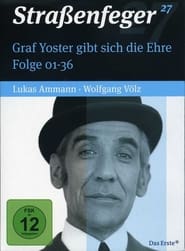
Graf Yoster gibt sich die Ehre
Graf Yoster gibt sich die Ehre [French title: Le comte Yoster a bien l'honneur] is a TV series which followed the adventures of the title’s amateur gentleman detective. It was a success in particular in Germany and in France. Originally the show was a German production in black-and-white but it evolved into a European co-production in colour.
TV
1967
D'Iberville
D'Iberville is a Canadian dramatic adventure television series which aired on Radio-Canada in 1967 and 1968, and on CBC Television's English network from 1968 to 1969.
TV
1974•
6.0
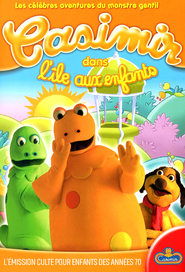
L'Île Aux Enfants
French children's television series inspired by Sesame Street featuring Casimir, an anthropomorphic orange dinosaur with yellow and red spots.
TV
1963•
7.0
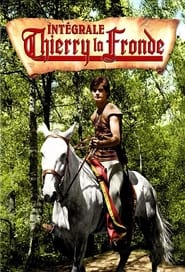
Thierry la Fronde
Thierry la Fronde was a French television series that aired in 1963–66 on the television station, ORTF original script by Jean-Claude Deret. Dubbed into English, it was shown internationally in the 1960s, including in Canada, where it was referred to under the original name, and also as The King's Outlaw. It was shown as well in Poland as Thierry Śmiałek. On ABC in Australia, it was called The King's Outlaw. In the Netherlands, 32 of the 52 episodes were shown in 1967 as Thierry de Slingeraar, as a Netherlands Television Service programme.
TV
1968•
7.0
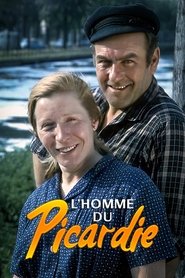
L'Homme du Picardie
TV
1971
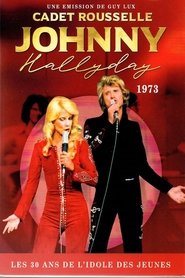
Cadet Rousselle
TV
1973•
6.1
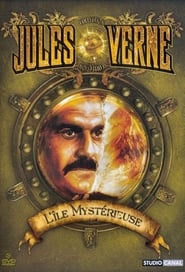
Mysterious Island
During the American Civil War, five prisoners of war manage to escape in a balloon. They are driven far across the sea to an unknown island, far from civilization. The legendary captain Nemo (world star Omar Sharif), who is trapped in a huge underground cave with his submarine Nautilus, watches the group. When the stranded people are discovered by pirates, Nemo helps them with a host of his super technology...
TV
1969•
9.0
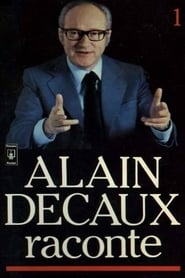
Alain Decaux raconte
TV
1968•
10.0
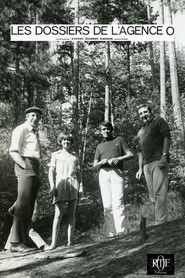
Les Dossiers de l'Agence O
L’Agence O is a famous Parisian private detective firm. Its premises are located in the Passage Choiseul. In front, Torrence leads the shop. In fact, the agency's team is complemented by Émilie le Roux, Mademoiselle Berthe and Barbet, who scrutinize clients through a one-way mirror located behind the desk. Getting hold of a man disguised as an old lady, solving the mystery of the Prisoner of Lagny or discovering who is blackmailing the painter Tigrane Alban does not worry the experts at the O Agency. Les Dossiers de l’Agence O is a French-Canadian television series in thirteen episodes of approximately 55 minutes created by Marc Simenon and broadcast first in Quebec from December 14, 1967 to March 13, 1968 on Télévision de Radio-Canada, then in France from March 11 to June 3, 1968 on the first channel of the ORTF.
TV
1965•
6.9
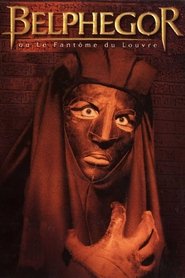
Belphegor, or The Phantom of the Louvre
Four episodes chronicle a mysterious phantom who appears in the Musée du Louvre in Paris at night. Neither guards nor police are able to make an arrest. But a curious young man tries to break the ice and discover what drives the creature and its activities.
TV
1974•
5.0
Un curé de choc
TV
1974•
7.5