Content from NET
Movie
1969
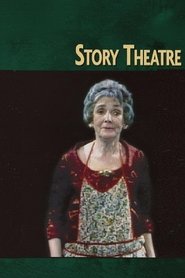
Story Theatre
Fairy tales by the Brothers Grimm come to vivid life in this innovative production. Taking classic narrative stories — such as "The Golden Goose," "The Clever Gretel," "The Goose Girl," and "The Bremen Town Musicians" — Paul Sills eliminated the customary use of elaborate sets and costumes and relied instead on the transforming talents of his gifted actors. Utilizing gestures, mime, music, and the actors' own imaginations, he has created a fresh and unique theater piece to present these timeless tales.
Movie
1958•
4.9
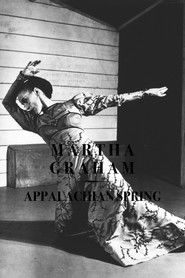
Appalachian Spring
A filmed version of Aaron Copland's most famous ballet, with its original star, who also choreographed.
Movie
1966•
6.2
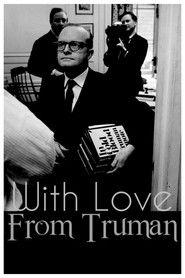
With Love from Truman
At his Long Island beach house, and on the occasion of the publication of his masterful nonfiction novel In Cold Blood, reporter Karen Dennison interviews celebrated writer Truman Capote, who displays his exuberant personality, makes witty jokes, shares his thoughts on writing, reflects on various aspects of the book and, in a sweet and endearing voice, reads and explains some of its highlights.

Movie
1969
This Way to Sesame Street
A commercial television preview of the new children's educational series, Sesame Street.
Movie
1972•
8.0
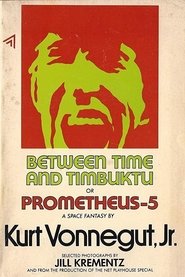
Between Time and Timbuktu
A poet-astronaut is shot through an area of space called the Chronosynclastic Infundibulum. He is duplicated into infinite copies of himself, each of whom finds himself in a bizarre situations on a different world.
Movie
1971
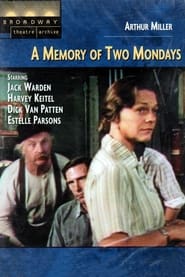
A Memory of Two Mondays
Workers in an auto parts warehouse in 1933 New York City inhabit a bleak, dead-end world in the depths of the Depression where, at least, they have jobs. Introduced by its playwright, Arthur Miller, it was the first in a series of NET Playhouse programs concerning life in America during the Depression years.
Movie
1967
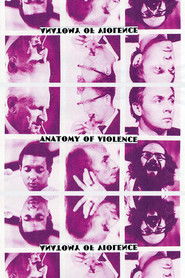
Anatomy of Violence
Documentary of the Symposium on the Dialectics of Liberation and the Demystification of Violence, held in London, July 1967, organized by R.D.Laing, with Stokely Carmichael, Allen Ginsberg, Paul Goodman, Herbert Marcuse, John Gerassi, and many others. An important record of the spectrum of left-wing politics and personalities during the turbulent Sixties.

Movie
1958
The Constitution and Employment Standards
Reconstructs the case of United States vs. Darby Lumber Company, which, in 1941, resolved long struggles over the question of whether Congress had the right to set minimum wages, limit child labor, and in other respects legislate employment standards.
Movie
1966
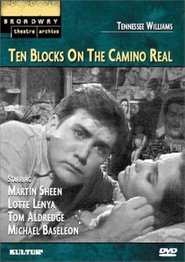
Ten Blocks on the Camino Real
A collection of ten vignettes by Tennessee Williams offering various viewpoints on life, love, and death.
Movie
1959
The Constitution and the Right to Vote
Follows the efforts to gain the right to vote for Negroes through a succession of legal decision and social changes. Dramatizes the case of Smith vs. Allwright et al. Reviews the long conflict to extend voting rights to a large electorate beginning with the Constitutional Convention's compromise over dropping property requirements through and including the enactment of the 15th and 19th Amendments to the Constitution. Cites legal precedents established by the U.S. Supreme Court through their decisions concerning the control of state primaries in 1918 and 1935 and the later reversals in 1941 and 1944. Points to the issues involved in Federal encroachment upon state's rights.
Movie
1967
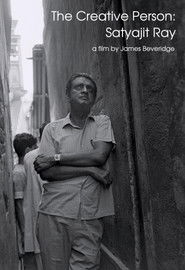
The Creative Person: Satyajit Ray
In 1967, Canadian documentarian James Beveridge traveled to Kolkata to film director Satyajit Ray at work. The resulting program, produced for the American public television series “The Creative Person,” features interviews with Ray, several of his actors and crew members, and film critic Chidananda Das Gupta.
Movie
1968•
10.0
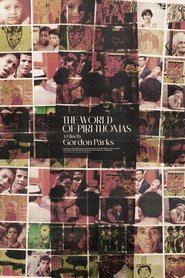
The World of Piri Thomas
Piri Thomas, a painter, poet, author, ex-con, and ex-junkie, describes the life of a Puerto Rican in the Spanish Harlem ghetto in New York City.
Movie
1970•
5.0
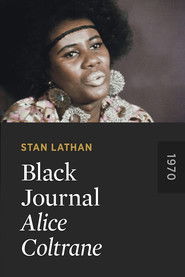
Black Journal: 26; Alice Coltrane
In this intimate portrait—produced for a segment of National Education Television's "Black Journal" television program—legendary jazz musician Alice Coltrane plays the harp and discusses her thoughts on music, spirituality, family, and the legacy of her late husband, John Coltrane.
Movie
1957
The Constitution and Censorship
Shows the relationship of the Constitution to the issue of prior restraint on freedom of expression. Presents the case of Burstyn v. Wilson challenging the constitutionality of New York State's film censorship system and Cantwell v. Connecticut involving questions of freedom of speech and religion. Discusses the questions pertaining to freedom of speech when multiplied via recordings or film, and how the claims of free expression can be weighed against claims for local, state, or federal protection.
Movie
1957
The Constitution and the Labor Union
Shows the relationship of the Constitution to organized labor. Presents the case of Whitaker et al. v. North Carolina, in which a group of unions challenged the constitutionality of a state ban on the closed shop, the union shop, and other union security provisions. Traces the role of the fourteenth amendment in labor struggles.
Movie
1970
Black Journal: 23; New-Ark
A short documentary subject made for National Educational Television's Black Journal television program documenting a political rally in Newark, the 1970 mayoral campaign of Ken Gibson, and an African-American voter registration drive with special musical performance by Stevie Wonder.
Movie
1967
Duke Ellington: Love You Madly
Profile of Duke Ellington featuring performances and interviews with the legendary bandleader. The performance footage was recorded in a number of places from The Basin St. West Jazz Club, the 1965 Monterey Jazz Festival, and his first Concert of Sacred Music at Grace Cathedral. This program was described by Ellington in his autobiography as the best film about Duke Ellington ever made...

Movie
1968
From Protest to Resistance
Documentary film about three veterans of the Civil Rights movement who have become peace spokesman for the new opposition activist. It traces their thought and action over the past year, as they see themselves moving from demonstration to political organizing.
Movie
1967•
8.7
A Tribute to Malcolm X
A commemoration of the four-year anniversary of the assassination of Malcolm X, featuring an intimate interview with his wife, Betty Shabazz.

Movie
1990
Krishnamurti: With a Silent Mind
An historical perspective on the life and teachings of Jiddu Krishnamurti.
TV
1966
NET Journal
NET Journal is an anthology series that focuses on news and public affairs topics. The episodes come from many producers, and some aired as individual programs before airing on NET Journal.
TV
1960
Virus
From KQED in San Francisco and the Virus Laboratory of the University of California, Berkeley, comes a distinguished series of eight half-hour programs on the nature of the virus. Prepared using a National Science Foundation grant, the series is designed to explain to the viewer some of the basic facts about viruses, those structures so essential to life and health, facts which for the most part have only been discovered in the past twenty-five years. Drawing on advanced scientific techniques such as microcinematography, electron microscopy and freeze drying, as well as on animation, large-scale models and drawings, the programs combine lectures with demonstrations to give the viewer an extremely vivid picture of this complicated topic. Particularly emphasized are facts about the virus' relation to bacterial disease, to polio, and to cancer, and new information about viruses which may not yet be generally known to students of biology or to the non-scientific public.
TV
2025•
1.5
HairCog TV Series
HairCog follows the lives of young creatives in Pakistan, exploring struggles, friendship, and innovation as they navigate personal and professional challenges.
TV
1962
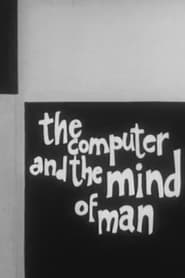
The Computer and the Mind of Man
In the 1940s a different kind of tool was invented a tool for extending certain powers of mans mind, the electronic computer. It is the fast, reliable, and tireless performance of a variety of arithmetic and logical operatic is which gives the computer its great utility and power. What this exciting invention means to mankind now and in the future is the subject of this provocative series.
TV
1959
The Secret of Flight
A lecture series about the basic problems of flight, explained by visual presentation of flow experiments. As the material of the lectures should be understood by every interested listener, no mathematical or other theoretical knowledge is used for explanation. Every problem is demonstrated by a true-life experiment and purely scientific language is avoided. Each of the lectures deals with a basic problem of flight. The experiments are mostly shown as flow picture but at certain points scale models and flying models are used to ensure easier understanding.