Content from Leningrad Documentary Film Studio
Movie
1981•
5.3
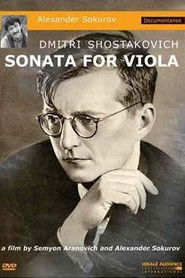
Dmitri Shostakovich. Sonata for Viola
The life and work of the great Russian composer Dmitriy Shostakovich is presented in this documentary through rare images and audios from many archives, at one time censored by the Soviet government. A brief take on his life, from his transition as an early prodigy to a first rate artist, his celebrated compositions and the final years with a declining health.
Movie
1987•
6.2
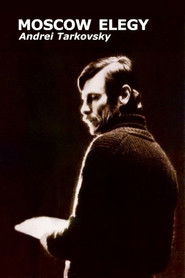
Moscow Elegy
A 1988 documentary film directed by Alexander Sokurov, about the later life and death of Soviet Russian filmmaker Andrei Tarkovsky. The film was originally intended to mark the 50th birthday of Tarkovsky in 1982, which would have been before his death. Controversy with Soviet authorities about the film's style and content led to significant delays in the production.
Movie
1988•
5.6
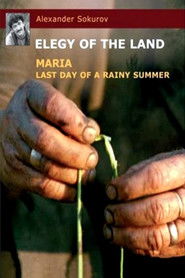
Maria
A requiem for a Russian peasant woman, Maria Semionovna Voinova. The film is in two chapters. The first chapter consists of an impression of Maria Semionovna, scenes of the colours of summer time: hay–making, bathing in a river, work in the flax fields and a holiday in the Crimea. The second chapter, set nine years later, is in black and white and deals with how Maria Semionovna's life ended. The mood is one of a sad and elegiac narration.
Movie
1987•
3.9
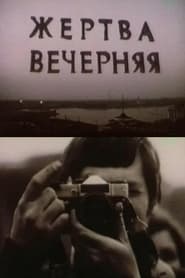
The Evening Sacrifice
The manifestation and fireworks on the 1st of May, one of the ritual celebrations of Soviet times, as a gathering of tired participants of a mass scene falling into pieces without the director's orders and without any aims.
Movie
1973
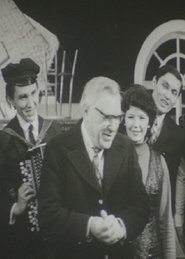
Our Friend Maxim
The film Our Friend Maxim is devoted to the life and work of actor and National Artist of the USSR Boris Petrovich Chirkov. This film includes excerpts from his Maxim trilogy, and significant focus is placed on Chirkov’s role as a pedagogue and mentor to young actors.
Movie
1990•
4.0
Leningrad Retrospective
A montage of Leningrad newsreel becomes a composite collage made up of documents-shots, divided in 16 parts, presenting the author's point of view on Russia and modern times. In the title, Sokurov appears as 'compiler' and the selection of the documents is just like an artistic process.
Movie
1987•
4.5
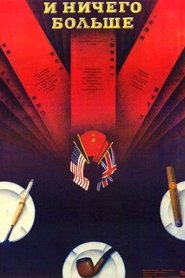
And Nothing More
The picture is about the anti-Hitler coalition of the USSR, England and America, which developed as a counterweight to the aggressive policy of Nazi Germany during the Second World War. The unique newsreel footage of these years, shot by operators of different warring countries, is connected with today's thoughts of the author about the fate of the post-war world, about the humanitarian losses of both sides and about gaining unstable hopes for the unity of the world in countering evil.
Movie
1990
To the Events in Transcaucasia
Made up of footage of a protest manifestation of mothers whose children had been summoned to serve in Soviet military forces and sent to the zones of Transcaucasian conflicts.
Movie
1991
Case of Joseph Brodsky
A 23-year-old man was tried for choosing poetry as his life's work. His poems and translations were professional. Many people thought so, but not literary officials. It was published sparingly. But in his place could be any talented or simply capable young man who chose the difficult path of serving the muses. Not only then, but now the young have a hard time. Who will take on the role of an arbitrator passing sentence: a poet is not a poet, an artist is not an artist? Maybe the artist has looked into the future, is incomprehensible to contemporaries, is not recognized by them, so what is to judge him?
Movie
1975
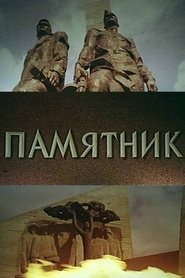
The Monument
The film is about the monument erected with the participation of M. Anikushin in honor of the heroic 900-day defense of Leningrad.
Movie
1980
Karpov Plays with Karpov
The film tells about the social activities of the world chess champion Anatoliy Karpov, his scientific work and hobbies, about the preparation for the 1981 World Cup. A dream of any chess spectator and greetings from 1980 to modern attempts to introduce elements of the show into the organization of super tournaments.
Movie
1990
Fire Angel
A film about the composer Sergei Prokofiev. Outwardly, the happy fate of the actor in the film seems deeply tragic in essence. By means of fiction and documentary films, the author of the film tries to penetrate into the inner world of the artist, to show the contradiction and tragedy of the creative and human personality. The style of the picture is original, the pictorial range is exquisite.
Movie
1938
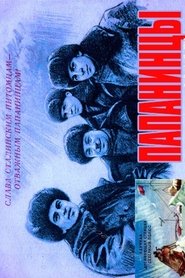
Papanin Squad
About how the operation to rescue the members of the expedition 'North Pole-1' under the leadership of Ivan Papanin took place.
Movie
1988•
5.8
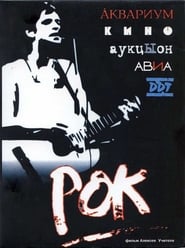
Rock
Documentary — featuring both interviews and live footage — about underground rock music in Russia, during the last years of the Perestroika.
Movie
1944•
6.0
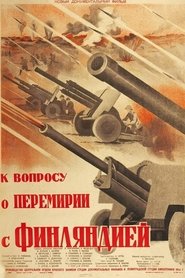
A Propos of the Truce with Finland
A rare documentary that shows how Soviet war propaganda presented the events of the Finnish front in 1941–1944. The main emphasis is on the resolution of the war. The film contains plenty of unique footage of the final stages of the Continuation War.
Movie
1989
Message to Man
In January 1989 the first Message to Man International Film Festival took place in Leningrad. This film, made during the festival, is a record of its events, guests and participants, such as the American director Leo Hurwitz, the Latvian director Ivars Seleckis, and the ballerina Natalya Makarova, among others. It also shows the “engine room” of the festival: the work of the main office and the PROKKa professional cinematographers’ club, guests being greeted and seen off. A charity evening with Natalya Makarova, a memorial service to commemorate the victims of the war and excerpts of documentary films presented at the festival are also featured.

Movie
1990
Red On Red
A documentary about the Soviet Union history, "Aquarium" music sounds behind the scenes.
Movie
1972
Express Moscow – Leningrad
In the compartment of the express train, worker, Hero of Socialist Labor E.I.Lebedev, director of the Zvezda plant V.G.Pershin and Doctor of Philosophy O.K.Shkaratan, to the songs of students, argue about the hierarchy and value of professions.
Movie
1986•
4.0
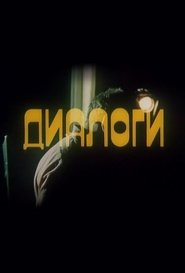
Dialogues
The film is based on the concert of "Pop Mechanics" under the direction of Sergey Kuryokhin.
Movie
1971
All Abakumov Steel
Yuri Abakumov, a steelworker at the Centrolit plant in Tikhvin, talks about the profession of a steelworker.