Content from Istituto Luce Cinecittà
Movie
2016
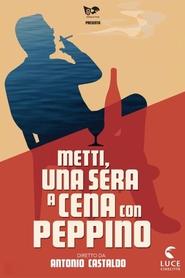
Metti, una sera a cena con Peppino
Movie
2023
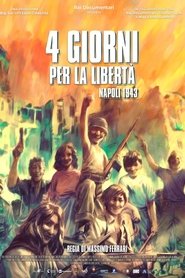
FOUR DAYS FOR FREEDOM: NAPLES 1943
Documentary with rich archive of films and photos along with footage from the 1962 film Le quattro giornate di Napoli depicting the uprising in Naples against Nazi occupation during World War II.
Movie
2019•
7.6
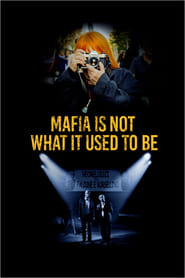
Mafia Is Not What It Used to Be
Palermo, Sicily, Italy, 2017. Twenty-five years after the murders of anti-mafia judges Giovanni Falcone, on May 23, 1992, and Paolo Borsellino, on July 19, 1992; and on the occasion of the tributes held in memory of both heroes, skeptical photographer Letizia Battaglia, chronicler of their titanic combat, criticizes the opportunism of shady characters who, like businessman Ciccio Mira, profit from the commemoration of both tragedies.
Movie
2021•
7.3
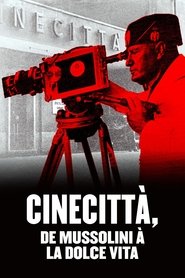
Cinecittà, de Mussolini à la Dolce Vita
Cinecitta is today known as the center of the Italian film industry. But there is a dark past. The film city was solemnly inaugurated in 1937 by Mussolini. Here, propaganda films would be produced to strengthen the dictator's position.
Movie
2023
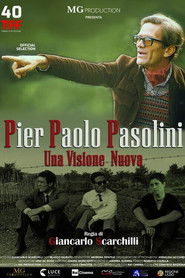
Pier Paolo Pasolini - Una visione nuova
The documentary focuses on some decisive encounters for Pasolini's intellectual parable with the great Oscars of Italian cinema: from Bernardo Bertolucci to Dante Ferretti, from Ennio Morricone to Danilo Donati.
Movie
2007•
10.0
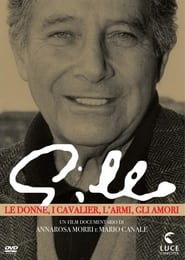
Gillo of Ladies and Knights, of Loves and Arms
Pontecorvo is one of those Italian filmmakers marked for life by neorealism. He declares that he decided to do cinema after leaving a screening of "Paisa" by Roberto Rossellini. The future filmmaker was then in Paris, a year after a war during which he became one of the main figures of the Italian resistance and one of the founders of the Youth Front. Leaving his status as a war hero behind him, Pontecorvo made his directorial debut with "Giovanna", a short film heralding a cinematic career dedicated to what he himself calls the "dictatorship of truth."
Movie
2004•
6.7
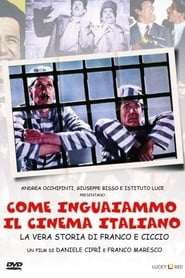
How We Got the Italian Movie Business Into Trouble: The True Story of Franco and Ciccio
Movie
2021•
6.0
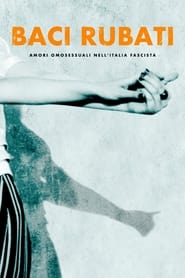
Stolen Kisses: Homosexual Love in Fascist Italy
Through letters, diaries and personal testimonies, an account of the complexity and variety of experiences of LGBT Italians during the Fascist dictatorship of Benito Mussolini (1922-43); intimate words that contrast with the lyrics of popular songs and the propaganda of the time, obsessed with extolling the myths of virility, femininity and motherhood and constrained by sexual repression.
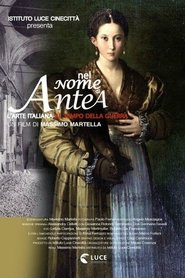
Movie
2018
Nel nome di Antea - L’Arte italiana al tempo della guerra
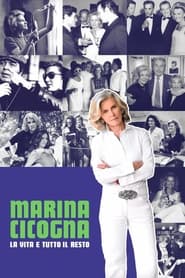
Movie
2021
Marina Cicogna - La vita e tutto il resto
A documentary about the historic film producer, the first woman to make her mark in a predominantly male environment. A key figure in the great season of Italian auteur cinema between the late 1960s and the 1970s, Marina Cicogna worked with great directors and actors, winning an Oscar with "Investigation of a Citizen Above Suspicion" by Elio Petri and a Golden Lion with "Belle de Jour" by Luis Buñuel in Venice.
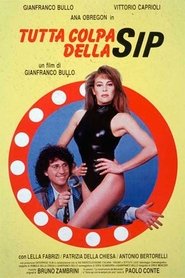
Movie
1988•
5.0
Tutta colpa della SIP

Movie
1997•
7.7
Marcello Mastroianni: I Remember
In 1996, Marcello Mastroianni talks about life as an actor. It's an anecdotal and philosophical memoir, moving from topic to topic, fully conscious of a man "of a certain age" looking back. He tells stories about Fellini and De Sica's direction, of using irony in performances, of constantly working (an actor tries to find himself in characters). He's diffident about prizes, celebrates Rome and Paris, salutes Naples and its people. He answers the question, why make bad films; recalls his father and grandfather, carpenters, his mother, deaf in her old age, and his brother, a film editor; he's modest about his looks. In repose, time's swift passage holds Mastroianni inward gaze.
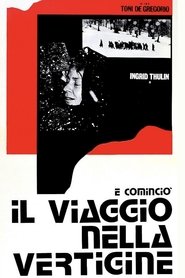
Movie
1974
The Voyage Into the Whirlpool Has Begun
A war film based on the novel "Journey into the Vertigo" by Evgenija Solomonovna Ginzburg
Movie
2024
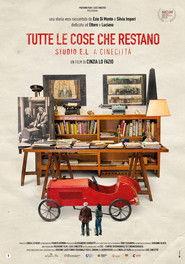
All the things that remain
In a hidden corner of Cinecittà there is a magical place that no one knows about and that was about to disappear. It is STUDIO EL founded in 1983 by Ettore Scola and Luciano Ricceri. A creative space, a sort of Renaissance workshop, a factory. A place where the two great friends prepared their great films in Cinecittà, but where they gave the opportunity to many young people to grow and improve their professionalism. After the passing of Ettore Scola and Luciano Ricceri, time at Studio E.L stopped along with many objects that are the memory of almost 40 years of history of our cinema. Before Studio EL closes forever, becoming a museum space inside Cinecittà, we would like to give the objects it contains the value they deserve and tell their stories.
Movie
1991
The Myth of Cinecittà
Documentary telling the history of Cinecittà, and how it contributed to Italian cinema development.
Movie
2008•
7.5
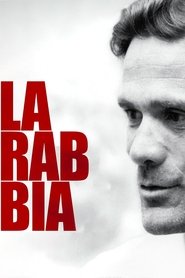
La Rabbia di Pasolini
An attempt to reconstruct the complete version of Pier Paolo Pasolini's segment of La rabbia.
Movie
1973
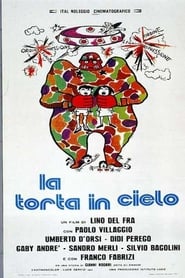
Cake in the Sky
This movie is an adaptation of a book by Rodari, a famous Italian poet and writer of children literature. A group of children in the outskirts of Rome bump into a spaceship that landed nearby. Soon the event draws the attention of the media, the military and rich entrepreneurs. The spaceship is pointed as the evil to fight against by the authorities, and nobody trusts the kids, who on the other hand try to preserve the spaceship (which is actually a harmless space-cake).
Movie
2017•
6.5
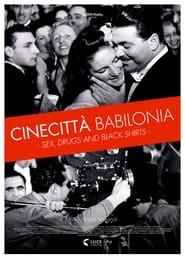
Cinecittà Babilonia: Sex, Drugs and Black Shirts
The story of Italian cinema under Fascism, a sophisticated film industry built around the founding of the Cinecittà studios and the successful birth of a domestic star system, populated by very peculiar artists among whom stood out several beautiful, magnetic, special actresses; a dark story of war, drugs, sex, censorship and tragedy.
Movie
2019•
7.6
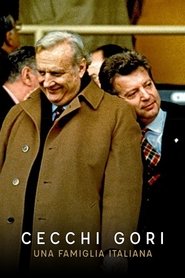
Cecchi Gori - Una famiglia italiana
Movie
2006
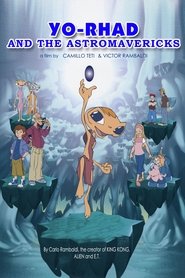
Yo-Rhad - Un amico dallo spazio
TV
1971•
8.4
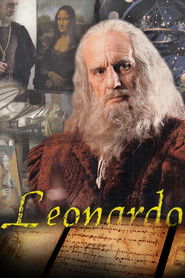
The Life of Leonardo da Vinci
La vita di Leonardo da Vinci — in English, The Life of Leonardo da Vinci — is a 1971 Italian television miniseries dramatizing the life of the Italian Renaissance polymath Leonardo da Vinci. The Golden Globe-winning miniseries was directed by Renato Castellani, and produced by RAI and distributed in the United States by CBS, which aired it from August 13, 1972 to September 10, 1972. Castellani wrote the screenplay. It was filmed entirely on location in Italy and France. The total runtime of the five episodes is nearly five hours.
TV
2005
Delitti
TV
2003
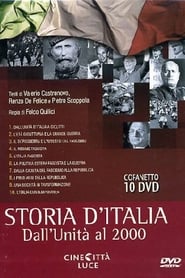
History of Italy
A multi-volume, detailed history of Italy since its unification in the 19th century.