Content from ICAIC
Movie
1964•
7.8
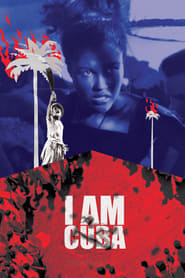
I Am Cuba
Four vignettes on the lives of the Cuban people in the pre-revolutionary era. In Havana, Maria is ashamed when a man she loves discovers how she makes a living. Pedro, an old farmer, discovers that the land he cultivates is being sold to an American company. A student sees his friends attacked by the police while they distribute leaflets supporting Fidel Castro. Finally, a peasant family is threatened by Batista's army.

Movie
2008•
2.0
Titón: From Havana to Guantanamera, 1928-1996
A look at the life and work of Cuban filmmaker Tomas Gutierrez Alea.
Movie
1988•
6.1
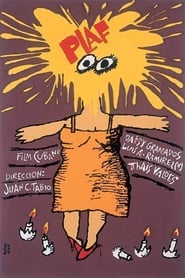
Too Afraid of Life or Splat
A superstitious middle-aged woman falls in love with a taxi driver, while trying to learn the identity of the unseen person tossing eggs at her.
Movie
1978
Woman, Man, City
By director Manuel Octavio Gómez
Movie
2006•
6.3
The Isle of Death
Cuba, 1958. Rodolfo is 20 years old and dreams of becoming a movie director. His father is a persecuted member of the revolutionary movement and the family is obliged to flee Havana, taking refuge in a boring village.
Movie
1982•
5.2
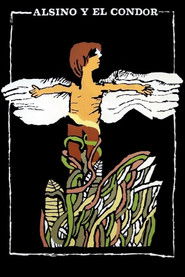
Alsino and the Condor
Alsino, a boy of 10 or 12, lives with his grandmother in a remote area of Nicaragua. He's engulfed in the war between rebels and government troops when a US advisor orders the army to open a staging area by the boy's hamlet. Alsino tries to be a child, climbing trees with a girl, looking through his grandfather's trunk of mementos and trying to fly; he goes to town to sell a saddle, has his first drink and is taken to a brothel. But the war surrounds him. The US advisor takes Alsino on a chopper flight, but he's unimpressed. The soldiers' cruelties awake rebel sympathies in Alsino, and after an army assault backfires, the lad is fully baptized into the conflict.
Movie
1995
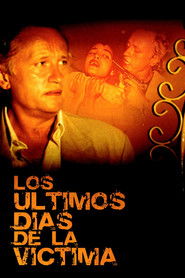
Les Derniers Jours de la victime
Mendizábal, a reputed hitman, is commissioned to eliminate Rodolfo Kulpe, a small-time criminal.

Movie
2006•
4.5
Virgin Rose
Simón transports illegal immigrants to New York, leaving them to their fate. When he is discovered by the coastguard, a young sailor, named Andrés saves his life. But when Andrés falls for Marie—a young protegée of Simón's—conflict erupts.
Movie
1978•
6.2
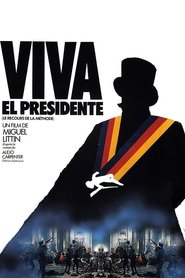
The Recourse to the Method
Set in the early 1900s, this film charts the rule of a Latin American dictator as he moves from being a charming despot to a tyrannical ruler before he is finally ousted, only to die in obscurity in Paris. Early in his regime, the resources and agricultural products his country sells command high prices, and he is a reasonably confident, even gentle, ruler who likes to take long vacations with his daughter in Paris. After World War I, with falling prices and a number of coup attempts behind him, his rule becomes quite cruel.
Movie
2003•
3.3
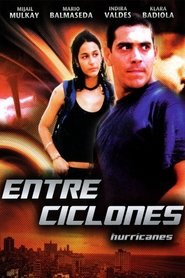
Hurricanes
A story of survival and triumph of the human spirit.
Movie
2023•
6.0
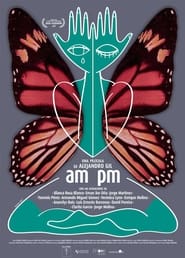
AM-PM
A choral story where characters of different statuses and generations cross paths in an attempt to find happiness and alleviate the loneliness that crushes some of them. In a 12-storey building, neighbors and newcomers intersect, and in these encounters the destiny of some will be twisted and that of others will take better paths. A few blocks away, in another building, two septuagenarians struggle to get the company of a couple who are in a fight against the clock for a few square meters.
Movie
1983•
4.1
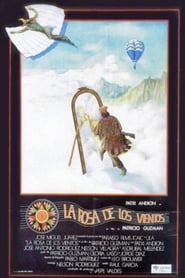
The Compass Rose
Exiled Chilean director Patricio Guzmán filmed in Cuba and in Venezuela to create this controversial statement on the creation and survival of Latin American culture from the late-15th century to the present. For some viewers, the film will be superficially symbolic and rhetorical, for others, it will be a strong and personal vision of several centuries of history.

Movie
1997•
4.3
Matusalem II: le dernier des Beauchesne
A year had passed since the last aventure of Olivier and his friends. The day before his birthday, the door through space and time re-opened. This time, Olivier and his friends would have to face El Diablo, who became captain since the last time, and his mens, lost in the middle on the jungle and being hunt down by the spanish army.
Movie
1989
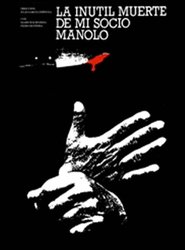
The Useless Death of My Pal, Manolo
Cheo visits his friend, Manolo, who he hasn't seen for many years. They drink to celebrate their reunion and fondly recall the times they spent together in years past. As they reminisce, the two friends confront the revolution, evaluate their lives, and bare their souls.
Movie
1988•
5.0
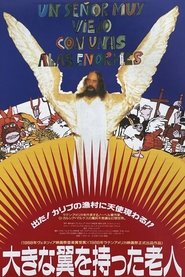
A Very Old Man with Enormous Wings
An elderly man with wings is blown off course during a tropical storm in this symbolic fantasy. The Old Man lands near a Caribbean island where a poor family gives him shelter in a chicken coop. Father Gonzaga is the skeptical priest who rushes to damn the creature. Soon the Old Man is the subject of curiosity seekers as Elisinda and Pelayo start charging admission. A traveling carnival of human oddities camps near the Old Man as people flock to see the show. The Old Man is reduced to being an unwanted pet, and after six years, he mends his wings and flies away. Nudity, simulated sex with a spider woman, and the ugliness of human exploitation definitely put this fantasy in a category not for children.
Movie
2008•
5.7
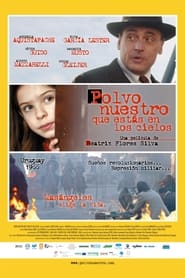
Polvo nuestro que estas en los cielos
Aurelio Saravia is a powerful politician who holds office in Uruguay in the mid-1960's. When Aurelio's mistress kills herself, he adopts their illegitimate daughter Masangeles despite the stern objections of his wife Aurora. Masangeles finds herself growing up in a home ruled by a corrupt and self-centered tyrant and his manic colleagues while Uruguay teeters on the brink of civil war as bands of revolutionaries battle government militias. When she turns fourteen, Masangeles discovers a secret passageway in their home that leads to sanctuary in a nearby church which also serves as a storehouse for guns and ill-gotten cash. Teenage Masangeles falls in love with Santiago, her stepbrother who has joined the rebels fighting against the state, and she persuades him to take her virginity.
Movie
1975•
6.3
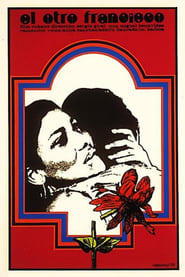
The Other Francisco
Based on the novel Francisco by Anselmo Suárez y Romero, "The Other Francisco" is a socio-economic analysis of slavery and class struggle through the retelling of the original novel. The film contrasts the romantic conceptions of plantation life found in Suárez Romero's novel with a realistic expose of the actual historical conditions of slavery throughout the Americas. It offers a critical analysis of the novel, showing how the author's social background led to his use of particular dramatic structures to convey his liberal, humanitarian viewpoint.
Movie
2008•
5.0
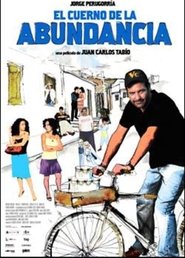
Horn of Plenty
An unclaimed fortune, grown for centuries in a British bank account, becomes a potential windfall for Bernadito Castiñeiras and the residents of the tiny village of Yaragüey, Cuba. To receive his massive inheritance check, Bernadito must prove his lineage to the Castiñeiras nuns who first populated the region. In an isolated and impoverished town where many residents share the same surname, a feud breaks out between the "Castiñeiras" and "Castiñeyras" families.
Movie
1969•
6.8
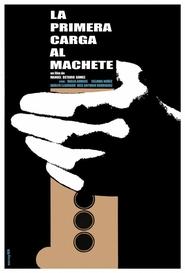
The First Charge of the Machete
Cuban peasants wield machetes in a violent uprising against Spanish authorities in the late 19th century.
Movie
1994•
6.2
The Elephant and The Bicycle
After two years in jail, El Isleño returns to the island of La Fe, ruled by the dictator Francisco Gavilán. He arrives with a cinematograph and exhibits "Robin Hood" to the people. The next day the bridge that communicates La Fe to the mainland has been destroyed, and the people plan to overthrow Gavilán.
TV
1995•
10.0
Más se perdió en Cuba
TV
1992
The Marked Woman
Paris, 1931. A beautiful young French woman suddenly gives up her career as a model after she discovers she has leprosy. She then quits her luxury life with her husband and her little boy and leaves for the Fiji Islands in an attempt to get healed in a special place where leprous people like her are taken care of. There, she is soon called 'the white goddess' as she makes a strong impression on many persons around her, especially men. The film describes her life experience because of the secret she holds about her sickness...