Content from Goskino USSR
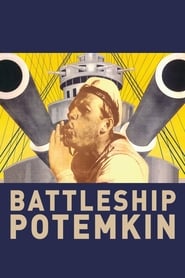
Movie
1925•
7.6
Battleship Potemkin
A dramatized account of a great Russian naval mutiny and a resultant public demonstration, showing support, which brought on a police massacre.

Movie
1925•
7.3
Strike
Workers in a factory in pre-revolutionary Russia go on strike and are met by violent suppression.
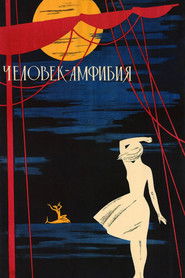
Movie
1961•
6.8
Amphibian Man
People living at a seashore town are frightened by reports of an unknown creature called "the sea devil". Nobody knows what it is, but it's really the son of doctor Salvator. The doctor performed surgery on his son and now young Ichtiander can live under water. This gives him certain advantages, but also creates a lot of problems.
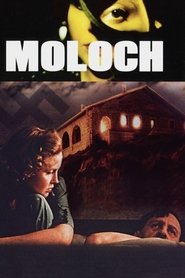
Movie
1999•
6.2
Moloch
In 1942 Bavaria, Eva is alone, when Adolf arrives with Josef, his wife Magda, and Martin to spend a couple of days without politics.
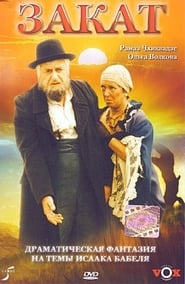
Movie
1990•
2.0
Sunset
Old, rich Jew Mendel Krik falls in love with the beautiful Marusya. But their sons Levka and Bena don't share their dreams... Revolution has come.
Movie
1990•
5.0
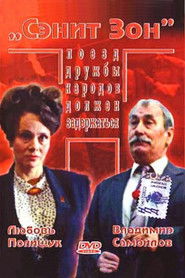
Sanit Zone
The action of the film takes place in one of the provincial towns, where on the occasion of the relocation of the defense plant and, as a result, the opening of the city for foreigners, they meet the "Caravan of Peace". They make a whole performance out of an ordinary event: ten loaves are baked and they are going to hand them over to the guests according to the old Russian custom, but suddenly they discover that the eleventh bread has appeared..
Movie
1923•
5.0
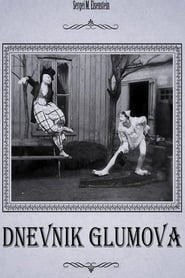
Glumov's Diary
Filmic insert to Eisenstein's modernized, free adaptation of Ostrovskiy's 19th-century Russian stage play, "The Wise Man" ("Na vsyakogo mudretsa dovolno prostoty"). The anti-hero Glumov tries to escape exposure in the midst of acrobatics, derring-do, and farcical clowning. Several members of Eisenstein's troupe at the legendary "Proletkult" stage theatre in Moscow briefly appear in this little film.
Movie
1989
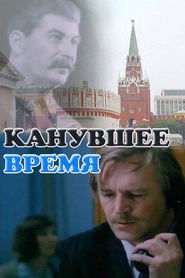
The Time That Has Passed
The 1950s. The head of the steel industry was removed from his position and appointed ambassador to one of the northern countries of Europe. He had enough time to reflect on his life and understand the true reason for his dismissal.
Movie
1989•
8.0
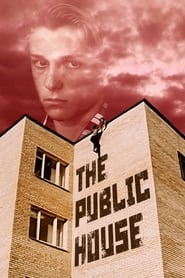
The Public House
"Horror" film about the harsh lives of the children living in an outwardly prosperous orphanage. When a young boy dies during a clandestine mutual drug-taking session, his accomplices unsuccessfully try to hide his corpse to evade punishment, and then the orphanage management tries to hush up the whole affair to keep up appearances.
Movie
1925•
5.4
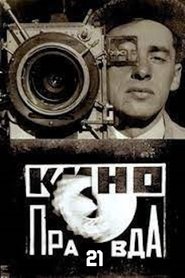
Kino-Pravda No. 21: Lenin Kino-Pravda. A Film Poem About Lenin
Dziga Vertov-directed Soviet newsreel made to commemorate the first anniversary of the death of Vladimir Ilich Lenin (21st January 1924 - 1925) drawn from 'The Final Journey', a Pravda feuilleton written on the occasion of Lenin's funeral by the man who had introduced Vertov to cinema, Mikhail Koltsov. Contains: First anniversary of Lenin's death: 1. Assassination attempt on Lenin and Soviet Russia's progress under his leadership / 2. Lenin's illness, death and funeral / 3. The year after Lenin's death
Movie
1991
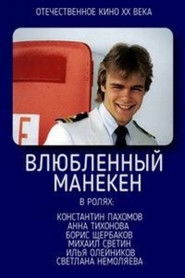
Mannequin in Love
The beginning of numerous comic misunderstandings and adventures in this film was a telegram about the visit of a beauty contest finalist to the city.
Movie
1990•
6.5
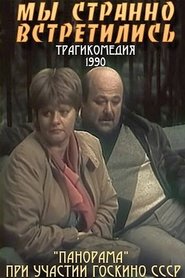
We Strangely Met
A year ago they met on the same bench, he introduced himself as Yura. At night, Yura left Vera, promising that he would return soon. Now, a year later, he did not recognize her, he said that her name was Nikolai, then Alexei. But Vera still hopes for something...
Movie
1926•
6.5
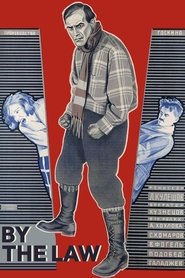
By the Law
After a man kills two members of his Yukon gold prospecting team, the other two surviving members struggle to keep him subdued for the next several months until they can turn him over to the law.

Movie
2000
Belief, Hope and Blood
About the love of Lenin and the Finnish girl Mariot, from whom he had a child, who subsequently disappeared without a trace.
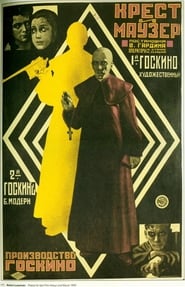
Movie
1925•
1.0
Cross and Mauser
The film takes place during the pre-revolutionary years and the initial period of the Soviet regime. At a monastery shelter in one of Russia's western towns, orphan Yulka gives birth to a son from the shepherd Jerome. Matron of the shelter Pavlikha as directed by the father kills the newborn baby and disposes of the corpse in the Jewish Quarter. The Black Hundreds are spreading the rumor that the murder was committed by the Jews for ritual purposes. Mayhem arises which is supported by the authorities of the city. The church refuses to shelter Jews fleeing from the violent thugs.
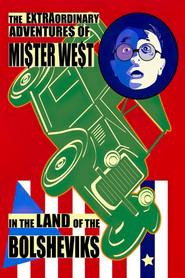
Movie
1924•
5.9
The Extraordinary Adventures of Mr. West in the Land of the Bolsheviks
An ignorant and prejudiced American’s visit of Soviet Russia goes off the rails after his luggage is stolen and he is separated from his bodyguard.
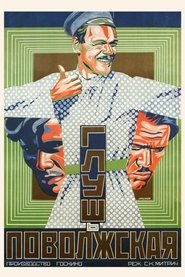
Movie
1926
Глушь поволжская
Partially lost.
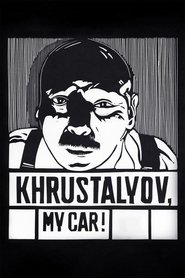
Movie
1999•
5.9
Khrustalyov, My Car!
Military doctor General Klenski is arrested in Stalin's Russia in 1953 during an anti-Semitic political campaign accused of being a participant in so-called "doctors' plot".
Movie
1925•
4.9
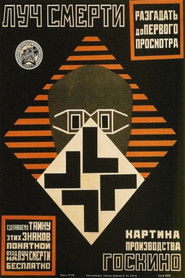
The Death Ray
In a capitalist country, workers are heavily repressed but manage to get a "death ray" to fight back. (A part of the movie is lost.)

Movie
1990•
4.2
Ladies' Man
A not-so-young man who likes women tries to organize a girl to his son.
TV
2005•
7.3
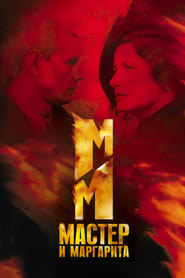
The Master and Margarita
The Master and Margarita is a Russian television production of Telekanal Rossiya, based on the novel The Master and Margarita, written by Soviet writer Mikhail Bulgakov between 1928 and 1940. Vladimir Bortko directed this adaptation and was also its screenwriter.