Content from Fresh Wave
Movie
2014
Shades of Rogue
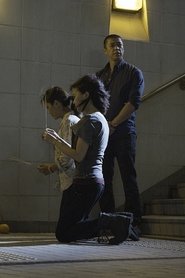
Mable, the daughter of HK's infamous rogue cop is at a loss when her father's old debts lead to the murder of her mother. With the help of Inspector Lok and the sage guidance of her God Grandfather, she uncovers a truth she never could have imagined.

Movie
2023•
2.0
Al Niente
Leaving music school, the happy-go-lucky Ling returns to Hong Kong to her dementia-stricken father, on whom she tries to conduct music therapy. Her demurer older sister Munn, the caretaker and sole supporter of the family, watches with disapproval. Playing the piano piece her father once taught her, Ling seems to register some change in her father’s condition, a glimmer of hope amidst the abyss of oblivion. However, secret animosity and rivalry eventually leads to open conflict between the two sisters, bringing out long-time family traumas. Will music save them?

Movie
2017•
6.0
Liu Yang He
Liu Yang He, a landmark in Hunan province, is not only the film’s original title but also a well-known Communist folk song in China. It was written during the Agrarian Reform that precedes the Cultural Revolution. Youngsters were sent to farmlands and factories to experience intense labour. They sang to praise Chairman Mao. Kah-kah (Rain Lau) was permanently injured in an industrial accident during that time. When Kah-kah meets this amputated client (Ko Hon-man), they feel sympathy with each other and turn this sympathy into a possibility of love as if they were flowing into a river of no return. Here, Rain Lau’s sophisticated performance resembles her award-winning role in Queen of Temple Street (1990).
Movie
2013•
7.0
The Killers
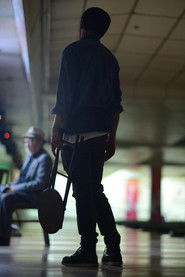
“Every man has his own destiny: the only imperative is to follow it, to accept it, no matter where it leads him.” Inside an after-hours bowling alley, a counselling session is underway with the attendances discussing the various merits and drawbacks of execution strategies and the prevention of occupational hazards. A man offers to play the flute and all hell breaks loose from there. The weapon is a folded chair, the victims his fellow professionals and the crime is predestined by karma. As the camera lingers on the gory actions, set to offbeat music and at times muted and occurring out-of-frame, a foreboding, dark and somewhat sinister overtone hangs heavy in the air. In a profession such as his, life is predestined by karma and choice is not an option.
Movie
2018•
6.0
The Bridge
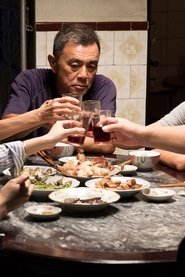
Lai-sing, full of aspirations as a journalist, lives in Hong Kong with his sister Kei-mei. Their parents live in Hainan since retirement while Uncle Guoyou lives in Shenzhen. The family is separated until the third anniversary of the death of Lai-sing's grandmother. According to tradition, a monument has to be erected on this occasion, which brings the family members to meet up. The reunion slowly unveils the indiscernible distances and intimacies built over time. It is only through understanding and acceptance that they would cast aside their differences and show genuine care for each other.
Movie
2018
To the Final Nirvana
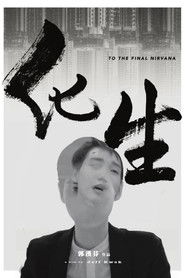
For Sang-yu, to be rich in Hong Kong means you get to make choices instead of someone making them for you. Hired by giant property developers to buyout ownership of tenement buildings, she earns considerable income and lives the kind of life lauded by mainstream society. During one of the buyouts, she starts to realize the harm her work inflicts upon others. She falls further into a moral dilemma when her boss assigns her a difficult buyout task, a profitable opportunity for her. In Hong Kong where real estate is considered above all else, the grassroots are left to fight for survival in desperation.
Movie
2022•
4.0
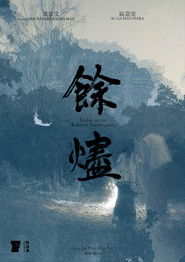
Ember in the Land of Nothingness
At first glance, Grandma Mui and Uncle Cheung look just like another ordinary elderly couple loitering outside a school wall. Grandma Mui is suffering from Alzheimer’s disease and her conditions deteriorate notably after the death of her granddaughter Ka-ching from a fall off the school building, with the school officials suspected of negligence and being dishonest in their testimony. Stricken by grief, Grandma Mui’s mind falls into complete chaos as memories, delusions and reality mesh together. Uncle Cheung, indirectly connected to Ka-ching’s death, lacks the courage to tell the truth. As an act of atonement, he takes care of Grandma Mui even when the future looks bleak.
Movie
2025
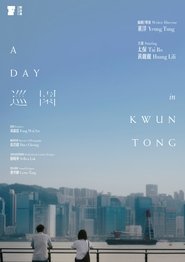
A Day in Kwun Tong
A Hong Kong father and Chinese daughter live in different regions and speak different languages. With their identity and lifestyle antithetical to each other, family members who are supposed to be the closest are actually the most unfamiliar. CHAN Wing-keung, an elderly man who lives alone, is a security guard at a Kwun Tong park. One day, he accompanies his daughter Tsz-shan, who comes from Chinese Mainland, to renew her ID card and open a bank account in Hong Kong. They return home and go for a walk at the park where Wing-keung works. Faced with the gap between them, they are hesitant to speak and can only beat around the bush without making a move. The film gazes at the Hong Kong’s cityscape while ruminating sea changes between father and daughter with its shifting aspect ratio. Once again, Hong Kong Film Award-winning actor Tai Bo acts out the loneliness of elderly in a surehanded performance.

Movie
2015
Au Revoir
It all begins with an affair staged at a traditional Chinese funeral offerings store with the leading actress being the boss’s wife. Witnessed by an unidentified pair of eyes, the affair is followed by the sudden death of the boss caused by a bowl of soybean pudding. He is desperate to know the truth about the affair in his afterlife. Eventually he is brought back to the piece of memory that entangles among two boys and a girl, on fighting for their pride through a slingshot battle against the boss of students.
Movie
2021
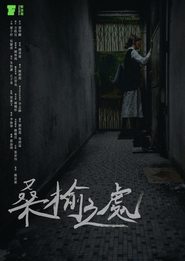
A Place of Dusk
Ms Chan, a social worker who has just returned to work, receives her first case. She pays a visit to Jia, a single elderly who seems to have accidentally dialled the Care-on-Call Service. Jia has suspicious bruises on his face and Ms. Chan senses a possible family abuse situation. However, Jia’s attitude is unwelcoming and he sends her off right away. Since then, a series of peculiar events make Ms. Chan question her own sense of reality and sanity.
Movie
2017
Memory in The Ashes
The average person’s head has up to 100,000 hairs. Each strand may be unique in length and texture but they are said to bear our memories of sorrow and worry. Neighbors come to the old shop “Barber’s Time” to part with both their hair and bad memories. Although Cantonese style haircutting is on the slippery slope to extinction, barber shop owner Hoi-chuen wishes for his son Cheung-fat to manage the shop. Aspiring to be a writer like J. D. Salinger instead, Cheung-fat takes over “Barber’s Time” when his father had an accident. Just like his father, Cheung-fat develops rapport with the customers and provides guidance. His own life also turns around when a runaway girl comes to the shop. A magical heartwarming tale of community support and kindness, the short features Kaki Shum from the film “Weeds of Fire”.
Movie
2022
Arrow Sworn
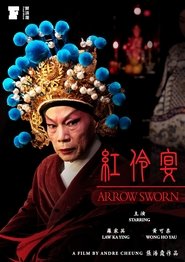
Brilliantly played by LAW Ka-ying, the revered Skyblade hails from a prestigious family of Cantonese opera singers. Pressured into performing opposite the sponsor’s child at the celebrated Red Banquet in return for financial support, the reluctant Skyblade is further taken aback when he realises that Jade is a girl slated to play a male lead role in a predominantly masculine cast. However, as Jade’s talent becomes apparent to Skyblade, a bond is formed between the two during rehearsals, and a mutual understanding that both have been sacrificing their dreams and passions out of duty towards the family. When Jade reveals a shocking resolution to take control of her life, it is up to Skyblade to decide their fate on stage.
Movie
2011
Remains
For years, he has neglected his family in Hong Kong to tend his business in Mainland China. Back in Hong Kong after his father's death, the man discovers his son's childhood diary. As he reads about his son's life with his father, the man realizes that he has let his son's childhood pass by him. Filled with regret for both his father and his son, the man decides to make an effort to mend his relationship with his son. However, is it already too little, too late?

Movie
2019•
6.0
Old Man and A Dog
When Chan is diagnosed with terminal cancer, he decides to end his own life, but his grandson unexpectedly brings him an abandoned old dog. The encounter cannot change their destinies but allow them to accept changes that inevitably happen.
Movie
2018•
6.0
Bright Spring Days
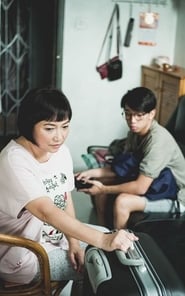
Kuen is a lounge singer on Temple Street. Her son Kakei, now a university student, returns to Hong Kong for just a few days after emigrating to Canada with his father. Kuen's colleague Kit has to work overnight and enlists Kuen’s help to take care of her young son. During the sleepless night, Kuen and Ka-kei relive their past and envisage their future through another pair of mother and son. Under the bright sun, the cycle of life and family relationships continue, made all the more touching by the nuanced moments of care and concern between each other. SHAM Ka-ki of Weeds On Fire plays the son and renders a tender and layered performance full of subtlety.
Movie
2021•
8.0
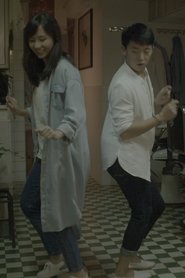
Like a Marriage
Gay partners Chan Yui and Ka Wing are happily in love, until Chan Yui enters a marriage of convenience with his lesbian friend Fung Ming to appease his parents. Under great pressure, Ka Wing is forced to accept this sham marriage but can things ever go back to normal?
Movie
2013
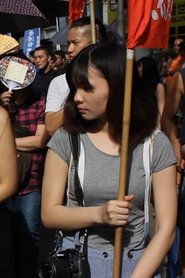
Guilty
What’s the price one will pay for one’s beliefs? Chan Siu-yau’s life is forced to a halt after being charged, somewhat belatedly, with unlawful assembly and assaulting a police officer during a demonstration in support of striking dock workers over a year ago. In the eyes of fellow activists, she’s no radical, just a concerned citizen singled out for punishment amid an escalating tug-of-war between law enforcement authorities and rights advocates. While Yau is working her shift in a restaurant, busy taking orders and sorting out dirty dishes, the annual June 4 candlelight vigil takes place in the pelting rain, bodies soaked but high spirits undamped. Having missed her university admission exams with two criminal charges looming over her head, what does the future hold for her? Is she guilty as charged?
Movie
2019
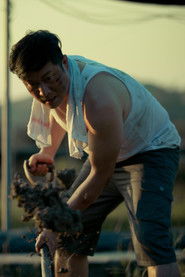
Taste Of Tomato
Four farmer-cum-robbers live together in a dilapidated house with a withered field. They discover a human finger inside a newly-harvested tomato one day. The gang leader decides to freeze it in the hope of selling it for a good price. Someone tells a story about a finger in a pub, so implausible that the listeners can hardly believe it. There are no fingers inside the other tomatoes and the gang remains poor. Tensions mount as the gang leader suspects a young member of hiding the secret of growing the finger-yielding tomato for his own benefit, leading to a big fight. The young man renounces his life of crime, but pays a hefty price…...
Movie
2021
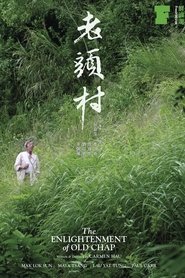
The Enlightenment of Old Chap
Ageing is not all doom and gloom but can be super-duper fun. In a village far, far away from the city live a zany group of elderlies. Old Chap is a Chinese medicine doctor without a single patient, lascivious Old Ben is wheelchair-bound and confined in the village, while Moses the spiritual “flower child” always tries to connect with Mother Nature. When Chiara, Old Chap's granddaughter, appears suddenly as she decides to take a gap year from studying and turns Old Chap’s life upside down by putting on a pole dance show in his clinic, how will Old Chap reconcile with the shock of the new?
Movie
2023
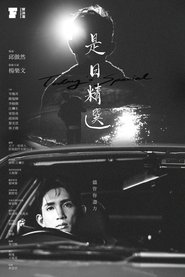
Today's Special
A driver who has ties with criminals follows certain principles and distinguishes himself from the “bad guys”. But just as the unanticipated carrots found in the usual “Today’s Special”, this night’s mission is made special when a young woman is seemingly in grave danger. Trying his best to avert the crisis through a night’s battle of car chases and fist fights, he arrives at the totally unexpected destination of futility. Appropriating the most popular elements of Hong Kong genre cinema: triads, street fights and car chases, Tiger YAU’s first drama short cooks up a visually rich bowl of “Today’s Special”.