Content from Fondo Nacional de las Artes
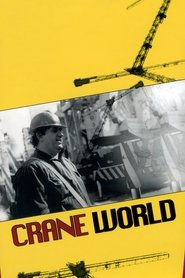
Movie
1999•
6.1
Crane World
The portrait of a man and his attempts to make things up with life after losing his job.
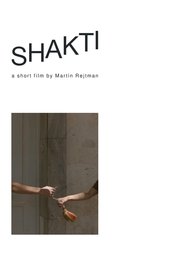
Movie
2019•
5.7
Shakti
Federico, in his mid-20s, lives alone in Buenos Aires. The day his grandmother dies, he decides to part with his girlfriend. He fears hurting her. However, she is laid-back, feisty and not even close to feeling hurt. He begins obsessing over her unexpected reaction—but then he meets someone else.

Movie
2018•
7.2
Theatre of War
Theatre of War is an essay on how to represent war, performed by former enemies. British and Argentinian veterans of the Falklands war come together to discuss, rehearse and re-enact their memories 35 years after the conflict.

Movie
2013•
5.6
The Queen
Lost in a world of grown-ups, young Memi is torn between the glamour of the carnival pageant and the social pressure to become a winner.

Movie
2020
El caníbal
In 1936, in Cayastá, Aparicio Garay, a strange inhabitant of the islands, brutally murders an 11-year-old boy, and commits an act of cannibalism following the orders of his God, “El Hora”.
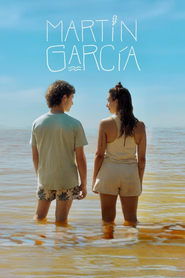
Movie
2024
Martín García
A young artist must move with his mother to an island, where there are only one hundred inhabitants. Your imagination, harmony with nature and love will be the keys to finding your identity on this path to adulthood that you have to go through.
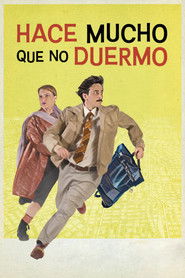
Movie
2022•
5.1
Long Time No Sleep
A sunny morning in Buenos Aires. All seems quiet, but then an odd race begins: a variety of people are after a backpack. A little army of seekers surprises us at every corner. Suddenly, a lonely bureaucrat (Mapache) is involved in this adventure, and new, mysterious and unknown people start to populate his life, all running around the popular Argentinian city to obtain the backpack which seems to be crucial to his own fate, according to the words of his new accomplice, magician and tarot reader Luminitsia.
Movie
2022
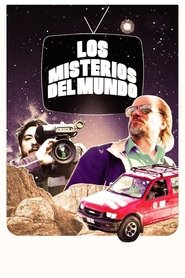
Mysteries of the World
Early 2000s. The economy at crisis, the final years of TV's reign, the public was still gullible. A presenter and a cameraman travel to the mountains to film a documentary piece, convinced that fiction is the best way to get in contact with the world.
Movie
2025
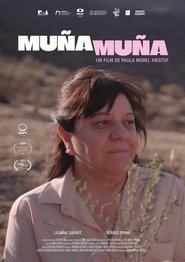
Blooming
In a remote valley in northern Argentina, the local herb of love, Muña Muña, is in bloom. Olga, a 60-year-old nurse, is preparing to say goodbye to her only son, who is about to leave the country, when she meets Stefano, a young French tourist. Their unexpected connection stirs a desire she thought was long lost.
Movie
2022•
5.8
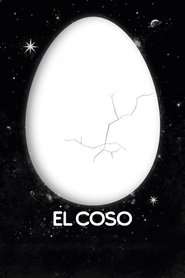
El coso
Federico Manuel Peralta Ramos was an artist responsible for the creation of a work that it was as ephemeral as it is eternal. He was born in a traditional family, but some years later the curiosity for the art scene, night life and avant-garde development pushed him to live within the iconoclastic and unbiased young 60's crowd.
Movie
2025•
7.3
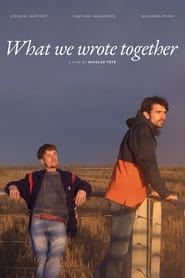
What We Wrote Together
Mariano and Juan have been dating for several years; they have a dog and a quiet life. Mariano always wanted to have a small plant nursery away from the city and now that Juan’s work as a writer is more established due to the success of his latest novel, they decide to make that change. While they adjust to their new space and their new routines, they receive a visit from Juan's best friend, who has news to tell them.
Movie
2022•
7.0
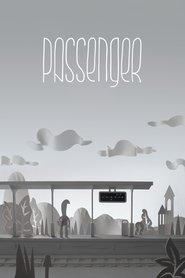
Passenger
A journey through the conflicting relationship between a man, his social environment and codes.
Movie
2021•
7.0
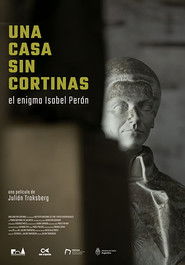
A House Without Curtains
María Estela Martínez, better known as Isabel Perón, achieved what Evita Perón never could: From an unknown cabaret dancer she became the first female president of the Americas. But after surviving prison and exile under South America’s most brutal military dictatorship, Isabel was forgotten in popular memory. “Una casa sin cortinas” (A House Without Curtains) uncovers why Isabel still haunts Argentina today.

Movie
1965
Carta de Fader
Short film that reenacts a letter from artist Fernando Fader.

Movie
2023•
9.0
Analog Thinking
In a world where technological progress is conceived as an arrow pointing forward, why do some people insist on continuing to work with equipment others refer to as obsolete? Analog Thinking answers that question by documenting the meticulous work of those who choose that path. The screen becomes filled with wonderful objects—optical toys, cameras, projectors, film stock cans, moviolas… And the testimonies from those creators invite us to discover a universe that has a lot to do with both craftsmanship and the collective experience—an instance of thinking with your hands that is only possible with curiosity and patience. And among the words, practices and artifacts, Analog Thinking also saves a place for the images that are born from all of that. And it reminds us that, even in this digital age, they still have a lot to teach us about waiting and making mistakes, surprise and beauty.
Movie
2017•
6.7
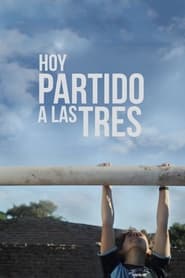
Today Match at 3
Las Indomables await with anxiety the start of a neighborhood women's soccer tournament. During the wait all kinds of events happen, love, conflicts, politics and even a rain, stalk the passion for which they are there: Play football at all costs
Movie
2023
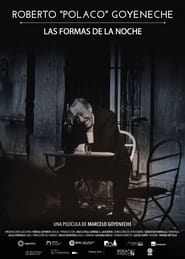
Roberto "Polaco" Goyeneche: Las formas de la noche
It tells the story of one of the greatest exponents of Argentine tango, who captivated audiences with his unique voice. Using previously unseen archival footage (home movies, unreleased recordings, interviews), anecdotes told by family, friends, and various figures from the artistic world, the documentary reconstructs Goyeneche's life through his own voice. An emotional and sensorial journey through the life of one of the greatest legends of Argentine popular culture.
Movie
2025
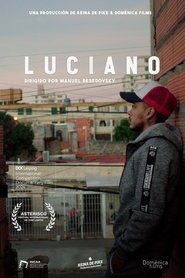
Luciano
Luciano lives with his mother and younger sister in a low-income neighborhood in the Argentine city of Rosario. He studies and helps with the housework. Since money is always short, he takes any temporary work he can get to support his family, while he looks for a steady job. After years of spending long hours at the gym, he has managed to see himself in the body he longed for. Life, however, imposes new challenges on him in his relentless journey to pursue his identity.
Movie
2020•
7.6
Splinters
On 3 November 1995, the Rio Tercero Military Factory exploded in Cordoba, prompting thousands of projectiles to fire and spread in the surrounding villages, in a tragedy that would leave seven dead and hundreds injured and affected. At the time, Natalia Garayalde was a twelve-year-old girl who lived with her family near the place, and he was still playing filming with the video camera her father had bought, when she recorded the immediate moments of the burst, while her family escaped the explosions, as well as the daily activities of the village in the days and weeks that follow. Twenty-five years later, that material captured from a girl's candid and surprised gaze it becomes a thoughtful and painful testimony about the family, the destruction of a city, the traces of horror, the sinister truth about the case.
Movie
2018
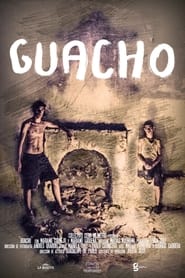
Guacho
'Guacho' narrates a summer day in the life of two teenage friends, Maikol and Darío, who want to escape their everyday crushing reality, at least for a day. They spend up to the last penny to get to the mountains where, taking refuge in tranquility and mutual love, they manage to get a grasp of happiness. But freedom does not seem to be so available to them.