Content from Film & Sociologie

Movie
1993
Kam panenky...
Movie
1995
Herci
Movie
1998
Rychlé starty
Movie
2005•
7.0
Love Your Enemies
The story of a Swiss woman and a Czech man, who changed hundreds of lives.
Movie
1993
Kašpar
Movie
1994
Tell Me Something About Yourself - Martin
"The whole film talks about the time when I was first locked up, from sixteen till now, I’m 22 now, and during that whole time I was out maybe five months, and I’ve really had it by now. It’s also about why I’d given my life to Jesus Christ and then failed that Jesus in me because I was tempted by earthly pleasures; and it’s also about how every time I’m ready to start a new life, I get locked up again because it’s always too late. It’s just too late. That’s the greatest shame and that’s what it’s about..."
Movie
1997
Tell Me Something About Yourself: Ripening of Evil - Milan
Movie
1995
„Já jít a uvidět světlo...“
Movie
1994
Tell Me Something About Yourself - Láda
Lada is a product of "educational“ or "corrective“ institutions. Not only is he not educated or corrected, he simply does not understand anything about life. He solves his problems in his own way – by swallowing sharp objects.
Movie
2014•
5.0
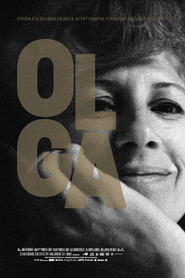
Olga
Olga Havlová was the closest and most trustworthy companion of Václav Havel. A friend who was always generous with her time. She was an entertaining host, passionate games-player, mushroom-gatherer, nature-lover, sharp commentator, and courageous and diligent dissident. In 1990 she founded Výbor dobré vûle (Committee of Good Will), which is still doing vital work today.
Movie
2024
Zánik Československa v parlamentu
Movie
2014
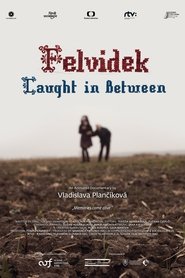
Felvidek – Caught in Between
In her documentary on Hungarian-Slovak relations, Vladislava Plancíková focuses on the word "felvidék", which refers to the now non-existent northern part of Austro-Hungary. In a personal collage consisting of the stories of members of her Slovak-Hungarian family and of visual references to historical events, she follows the eventful and today often taboo history of the post-war fate of Hungarians on Slovak soil. The abstract topic grabs our interest not only through the witnesses' testimony, but also by using thre novel technique of animating real objects, including a number of contemporary and modern photographs.
Movie
1997
Do života
Movie
1999
Ekologia viva
Movie
1995
„Bílý i černý má červenou krev“
Movie
2024
Kde je pravda?
How is it possible that in one country, in one half of the century, in a turbulent and unclear time, two people live not far from each other - a businessman with so-called "right-wing" views and an artist with so-called "left-wing" views, and both can be right? What is this truth and where is it to be found? Is there only one? What do these so different people have in common? What strange time was that second half of the twentieth century? These are the questions that may come to mind when watching the confrontation between two Czech Chileans, Milan Platovsky and Hanns Stein. The fate of the former could be written in the Guinness Book of Records - he is a twice-nationalised capitalist. The latter, on the other hand, has always been where the violence has come - in 1939 (Hitler), 1968 (Brezhnev) and 1973 (Pinochet) - on the other side, of course. You can meet both of them in the documentary film by Pavel Koutecký and Jan Burian, made in January 1999.
Movie
1994
Po letech 1989-1994
Movie
1994
Kdo je chudý a kdo bohatý...
Movie
1993
Amici, tanec s přáteli
Movie
2021
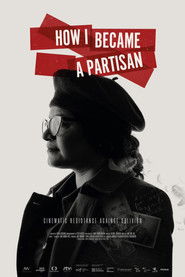
How I Became a Partisan
This documentary film reveals how the lives of the descendants of a partisan fighter in the Second World War are still impacted by the events of that period, 75 years after the end of hostilities. In making her case, Lacková provides glimpses into her private surroundings. Over the course of her film, she also points out frightening parallels between the reign of the Nazi terror regime and the resurgence of racist currents throughout today's Europe.