Content from DEFA-Studio für Spielfilme
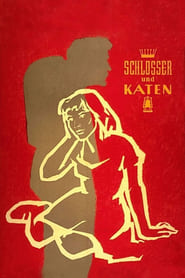
Movie
1957
Castles and Cottages
Lifelong hard work for the count makes the servant Anton a cripple. Everybody calls him Crooked Anton. When, after the end of the war, the land of the count gets divided amongst the farmers, Anton receives a piece and hopes to be able to work freely. But an old debt and intrigue keep Anton and his family from finding peace. The farmers of the village begin to discover their own power when Annegret, Anton's daughter, leaves. Is a new beginning possible for Anton? This film paints an impressive panorama of the development of a minor village in Mecklenburg from the end of the war to the uprising of 17 June 1953.
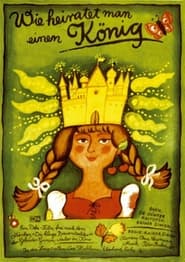
Movie
1969•
4.4
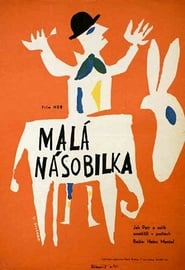
The Farmer's Clever Daughter
A farmer receives land from the king and discovers a buried golden mortar. He decides to give it to the king out of gratitude, but his clever daughter warns him that the king will surely want him to bring a corresponding pestle as well. When the king throws the farmer into jail for fraud, he bemoans the fact that he did not listen to his daughter.
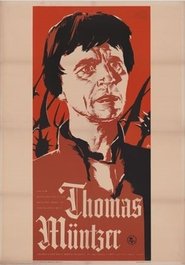
Movie
1956
Thomas Müntzer
In 1523, young Thomas Müntzer arrives with his wife Ottilie in the Thuringian village Allstedt to assume the rectorate. As a follower of Luther′s teachings, he finds in the Bible not only reasons for clerical, but also for secular reforms. But when Luther turns away from the rural population after a discord with Müntzer, it is Müntzer who becomes the peoples′ spokesman. He is forced to go to Southern Germany, where he convenes with revolting farmers. But his way leads him back to Thuringia. In 1525, he and Heinrich Pfeiffer form the centre of the Thuringian peasant uprising in Mühlhausen, but their success is diminished by the fact that peasants and craftsmen don′t seem to be able to work together. In Frankenhausen, Müntzer becomes the leader of a peasants′ army that is set to fighting the ruler′s army – and sustains a devastating loss. Müntzer is arrested and sentenced to death by decapitation for his insurgency.
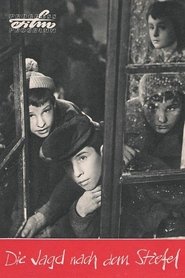
Movie
1962
The Hunt for the Boot
Germany 1932, constant fights between Communists and Nazis tear the country apart. When a Communist is found dead, the police accuses another Communist being his murderer. But the Communist youth group follows another trail - the murderer left a characteristic boot print at the scene of the crime.
Movie
1962
Peter und das Einmaleins mit der Sieben
Peter is unwilling to learn the multiplication tables at school. He would rather work as an acrobat at the circus, just like his friend Susanne. When the class plans a trip to the circus, Peter is supposed to buy the tickets. Since he miscounts and buys one ticket less than needed, he cannot join his schoolmates. Susanne, however, comes up with an idea and lets him work in the circus arena where he is supposed to check on the arithmetic problems of a numerate donkey. When Peter fails to control the donkey, he feels deeply ashamed and has to assess that math is needed in all parts of life.
Movie
1955
52 Weeks Make A Year
Krestan Serbin, a 64-year-old Sorbian farm-worker, considers himself non-political. He owns a few acres, a few pigs and a cow, and intends to pass all this on to his daughter Lena. Lena, however, shows only little interest. Krestan’s situation becomes more difficult when he is meant to become integrated into the agricultural production cooperative. He even gets offered a position as Training Supervisor. Although Krestan does not oppose the new policy, he is unwilling to surrender his properties. When the political die-hards who intend to hinder the progressive movement try to win him over, Krestan realizes that it is time to show colours.
Movie
1971•
5.1
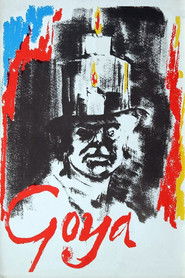
Goya: Or the Hard Way to Enlightenment
As a painter in the court of King Carlos IV, Goya has attained wealth and reputation. He believes in King and Church, yet he is also a Spaniard who dearly loves his people. This contradiction presents him with a dilemma.

Movie
1968
The Boss Will Be Here at Noon
A dead body is found in a burning car on the Berlin-Leipzig highway. The police investigate: Murder. Objects found in the car point to gold smuggling. At the funeral of the murdered man, his circle of acquaintances is scrutinized. They are all suspects. The trail leads detective Lindner to a bar.
Movie
1981•
6.0
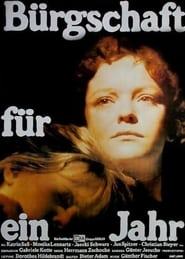
On Probation
Nina Kern, a divorced woman in her late twenties, will soon be fully deprived of her custody rights for her three children, who already reside in a home for the displaced due to Nina’s many years of willful neglect. Although she has broken her promise to change her moral conduct many times, she is given one last chance on probation.
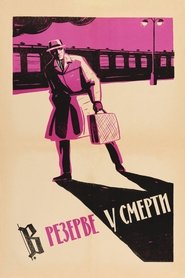
Movie
1963
Reserved for the Death
Former East German engineer Erich Becker had been lured to West Germany by promises of a high reward. Now residing in Stockholm, he is recalled to serve as a spy in the East. He is to convince Dr. Jadenburg to flee from the GDR with the help of his daughter Hanna, who works for the West. While travelling on the train with Hanna, he is told that he is also to murder another agent who betrayed and now works for the Stasi. The traitor is revealed to be a former friend of Becker, Harry Korb.
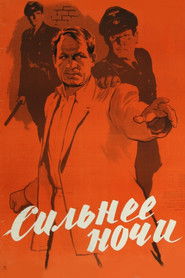
Movie
1954
Stronger Than the Night
The story of a resistance fighter in the Nazi era: Communist Hans Löning was arrested in 1933, imprisoned in a concentration camp and tortured. The Gestapo plans to smash the resistance group around Löning. Despite the imminent threat to his life, Löning, together with his wife, organized the passive resistance of the Hamburg workers against the Hitler regime. In 1944, Löning was again taken and killed.
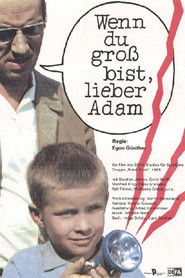
Movie
1966•
4.6
When You’re Grown Up, Dear Adam
Adam receives a flashlight with special powers: every liar it shines on flies into the air. Production was cancelled in 1965/66 due to the film's political content. Only in 1989/90 could the director reconstruct the film, where missing sounds and images are replaced with script inserts.
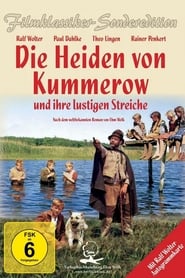
Movie
1967•
5.2
The Heathens of Kummerow
Kummerow, a village in North East Germany, around 1900: Mean-spirited miller Düker wants to drive cowherd Krischan out of the village. Being popular with the local children, Krischan can rely on the help of schoolboys Martin and Johannes and their friends, who try to prevent the miller's plans by playing pranks on him.

Movie
1973•
7.5
Three Wishes for Cinderella
Popelka, a resourceful and independent young girl, is a servant in her stepmother's house and confides in her closest friend the owl. When she comes across three magical acorns, she's granted a single wish for each one of them.
Movie
1987
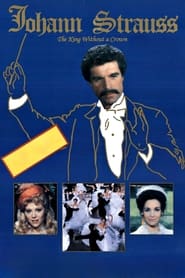
Johann Strauss: The King Without a Crown
A biopic about Austrian composer Johann Strauß.
Movie
1955
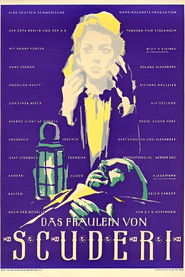
The Lady of Scuderi
Several men have been murdered lately, mostly rich lovers on their way to meet their mistresses with gifts of fine jewelry. To fight this scourge, King Louis XIV decides to create a special court named "La chambre ardente", designed to find and punish the perpetrators of such heinous crimes. An unexpected person, Mademoiselle de Scudéry, the famous poetess, will find herself entangled in the web of a criminal intrigue linked with the jewel murders, along with a a goldsmith, his daughter and her fiancé...

Movie
1989•
6.5
Coming Out
Philipp, a closeted teacher, is dating a female colleague to keep up appearances. One night he stumbles into a gay bar and falls for a man. Transformed by this love, he is no longer afraid to face up to who he is.

Movie
1966•
5.0
The Sons of Great Bear
As American settlers encroach on the lands of the Lakota people, Tokei-ihto witnesses the murder of his father at the hands of Red Fox, who wanted information on where the tribe finds its gold. Two years later, at the height of the Great Sioux War, Tokei-ihto and Red Fox meet again.

Movie
1969
Androcles and the Lion
Rome at the time of the persecution of Christians: Androclus, a poor tailor, frees a lion in the forest from terrible pain caused by a thorn in his paw. The two meet again by chance when the devout Christian is about to be thrown to wild animals in the arena. The lion spares him with gratitude, but the real danger for Androklus comes from another direction.
Movie
1972•
6.5
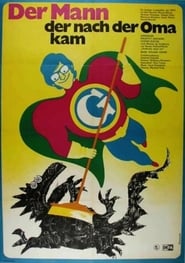
Der Mann, der nach der Oma kam
Günter and Gudrun Piesold are very busy with their careers as a TV comedian and an actress, so Grandma takes care of household chores and childcare. But when Grandma remarries, the Piesolds are faced with chaos at home and a burning question: Who will take care of the household?
TV
1985•
5.9
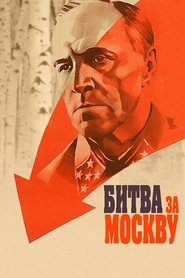
Battle for Moscow
The Battle of Moscow is a 1985 Soviet multi-part war narrative, presenting a dramatized account of the 1941 Battle of Moscow and the events preceding it. The battle was the first major defeat of German Wehrmacht in the Second World War.

TV
1968•
6.6
The Shield and the Sword
The year is 1940 and Nazi Germany is at the height of its military prowess, having captured most of Europe and eyeing the Soviet Union to the East. The Russian military command suspects hostile intent from Germany and so arranges for its spies to infiltrate ranks of the German military and the SS. Alexander Belov is a Russian spy, who travels from Soviet-held Latvia to Nazi Germany under an alias of Johann Weiss. His mastery of the German language, steel nerves and an ability to manipulate others help him to use his connections in the SS to ascend the ladder of the German intelligence. He uses his position to identify sympathetic Germans, who help him to procure vital intelligence, and to help local resistance movements in their collective fight against Nazism.
TV
1977•
4.1
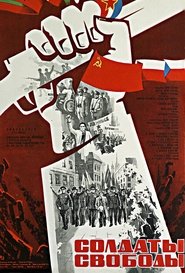
Soldiers of Freedom
The action of the epic film takes place in the second half of World War II. The plot focuses on the liberation of European countries from German occupation and the anti-fascist activities of the communist parties of these countries. After the victory at Stalingrad, a decisive turn occurred during the war. The main aim is the rallying of all patriotic forces, the creation of a national anti-fascist front in the struggling countries. The swift offensive of the Soviet troops, problems with the opening of a second front, major operations and the offensive of the Soviet army lead to the liberation of Europe. Rebellions are rising in different countries - such as the heroic uprising in Warsaw, in Slovenia, Bucharest and other cities. Brave heroes who performed immortal feats in the name of the happiness of mankind and freedom.
TV
1982•
6.8
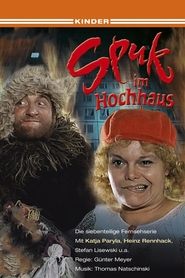
Spuk im Hochhaus
200 years ago, innkeepers Jette and August Deibelschmidt led a rapacious life. Out of greed, they repeatedly got their guests drunk in order to steal from them. When police commissioner Friedrich Wilhelm Licht tried to put them out of action, the house caught fire and all three died. In his last words, he curses the pair of thieves, saying that they will not find peace until they have done seven good deeds after 200 years.
TV
1980•
8.5
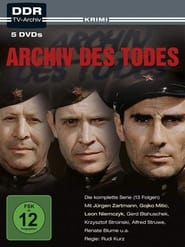
Archiv des Todes
Archiv des Todes is a 1980 13-part television series German war television film series set during World War II.

TV
1977•
9.5
Zur See
This series is about the "adventures" and problems of the crew of the East German cargo ship "MS-Fichte" at sea. In the first part, the main engine had a piston jam during a storm at sea, so that the piston had to be removed. Mutual recriminations ensue between the captain, who ordered a higher speed, and the chief, who is against it out of concern for the high fuel consumption and is also said not to have bothered to maintain the engine...
TV
1977•
8.0
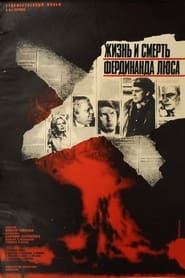
The Life and Death of Ferdinand Luce
A West German concern is conducting secret negotiations with an interested state on the production of an atomic bomb. The son of the head of the concern, realizing the enormity and scope of his father's activities, interrupts the negotiations and returns home with the intention of publicizing his father's activities.
TV
1973•
10.0
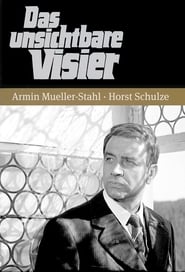
Das unsichtbare Visier
The Invisible Visor was an East German television series, broadcast with long intervals between 1973 and 1979. In its first and longest season it starred Armin Mueller-Stahl in the role of Werner Bredebusch, a Stasi agent active abroad under the alias Achim Detjen.
TV
1965
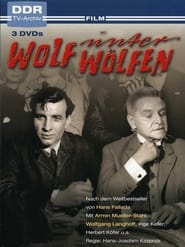
Wolf Among Wolves
The living conditions during the period of inflation in the early 1920s are depicted in a fascinating way. Behind a shiny façade, ordinary people struggle for bare survival. Opposite them stand landowners and former military personnel with their complacency, ignorance, and emptiness! The title character, Wolfgang Pagel—a cadet officer, unemployed and a gambler out of desperation—loses everything on the night before his wedding and sets out in search of money in the inflation-ridden Berlin of the 1920s.
TV
1987•
6.4
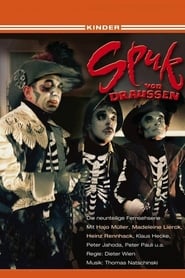
Ghosts from Outside
An adventures of a Berlin family spending summer in haunted house.
TV
1984•
7.0
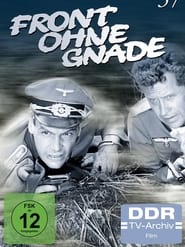
Front Without Mercy
A story about German resistance group fighting SS units during WWII.

TV
1987•
6.0
Sachsens Glanz und Preußens Gloria
Love, intrigue, favouritism and corruption at the Dresdner Hof.
TV
1980•
4.3
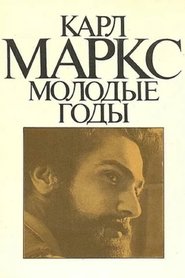
Karl Marx. Early Years
As a student at the University of Berlin, Karl Marx joins the "Doctoral Club," a refuge for young free thinkers. Karl Marx decides to devote himself to philosophy, defends his thesis, becomes a Doctor of Philosophy, but hopes to teach at the University of Bonn. When this plan falls through, Marx accepts an offer to work as editor of a Rhine newspaper...
TV
1970
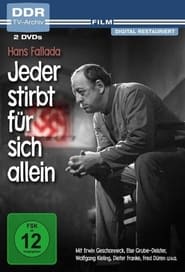
Everyone Dies Alone
The story is adapted from the Hans Fallada novel, Every Man Dies Alone, known in the UK as Alone in Berlin. It was directed by Hans-Joachim Kasprzik and starred Erwin Geschonneck.

TV
1967
Hannes Scharf

TV
1972
Aller Liebe Anfang

TV
1978•
1.0
A Room With a View
Little Jette befriends her new neighbor Martin who recently returned after army service.

TV
1968•
6.0
Rote Bergsteiger
Rote Bergsteiger is a German television series.
TV
1979
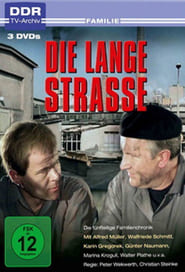
Die Lange Strasse
1949. Grafenberg in Brandenburg shortly before the foundation of the GDR. Here lives Michel Hollmann and works in roadmaking. His purpose in life are his wife Lotte and the two children Gerda and Heinz, for whom he is reconstructing a summerhouse into a “nest”. In Grafenberg, his siblings are living as well: His brother Karl, the mayor, and sister-in-law Edith, who works in a textile factory, with their son Jürgen. Edeltraut, his sister, has married the lamp fabricant Berthold Bennert and leads a well-off life. They as well have a son: Harald. Part of the family are further sister Hanna and brother-in-law Hermann, who is a fisherman on one of the local lakes and conducts a tenacious private war against old Stegewald and his presumptive prince-electoral rights. They are living their lives with their large and small conflicts, with different intentions, and yet remain connected always.
TV
1983
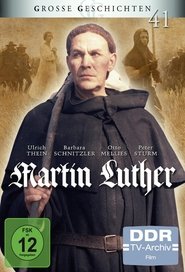
Martin Luther
This five-part East German biographical drama chronicles the life and religious reforms of Martin Luther, the 16th-century monk who sparked the Protestant Reformation. Produced by DEFA Studios for East German television to commemorate Luther's 500th birthday, the series follows Luther from his early protests against the Catholic Church's sale of indulgences in 1517 through his translation of the Bible.