Content from Ciné-Tamaris
Movie
2024•
7.6
Tehachapi
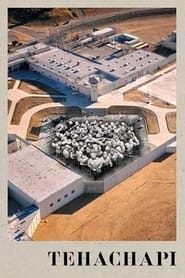
French visual artist-director JR (co-director of the Oscar-nominated documentary FACES PLACES with the legendary Agnès Varda) situates his latest social-art intervention in a Southern Californian supermax prison, where he has imagined an enormously ambitious collaboration with the facility’s inmates.

Movie
1979•
5.6
Lady Oscar
Oscar François de Jarjayes was born female, but her father insisted she be raised as a boy as he had no sons. She becomes the captain of the guards at Versailles under King Louis XVI and Marie Antonette. Her privileged, noble life comes under fire as she discovers the hard life of the poor people of France. She is caught up in the French Revolution, and must choose between her loyalty and love.
Movie
2011•
4.9
Americano
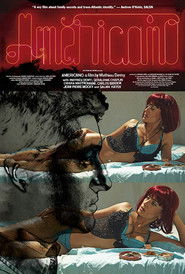
A real estate agent from Paris arrives in Los Angeles to settle his late mother's estate, but a found photograph sends him on an impromptu journey to Mexico to find a woman named Lola.
Movie
1981•
7.4
Mur Murs
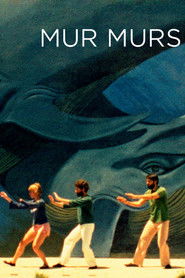
Venturing from Venice Beach to Watts, Varda looks at the murals of LA as backdrop to and mirror of the city’s many cultures. She casts a curious eye on graffiti and photorealism, roller disco & gang violence, evangelical Christians, Hare Krishnas, artists, angels and ordinary Angelenos.
Movie
1962•
7.7
Cléo from 5 to 7
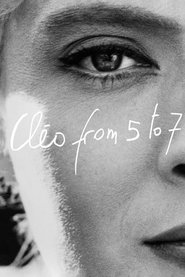
Agnès Varda eloquently captures Paris in the sixties with this real-time portrait of a singer set adrift in the city as she awaits test results of a biopsy. A chronicle of the minutes of one woman’s life, Cléo from 5 to 7 is a spirited mix of vivid vérité and melodrama, featuring a score by Michel Legrand and cameos by Jean-Luc Godard and Anna Karina.

Movie
2023•
8.1
Viva Varda!
A pioneering post-war female film director, an instigator of the New Wave who was honored by Hollywood in her own lifetime, Agnès Varda has become a source of inspiration for a whole new generation of young filmmakers. With movies like Cléo de 5 à 7, Le Bonheur, Sans toit ni loi, Les Glaneurs et la glaneuse, she created a quirky, open to the world, sensitive to the disenfranchised, often silly body of work. Always one finger on the pulse, she shook everything up, including cinema itself which she refused to constrict to pure fiction or long-form films.
Movie
1958•
6.5
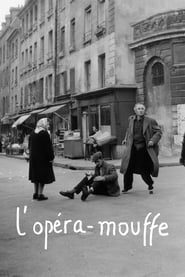
Diary of a Pregnant Woman
Impressions of the rue Mouffetard, Paris 5, through the eyes of a pregnant woman.
Movie
2008•
7.6
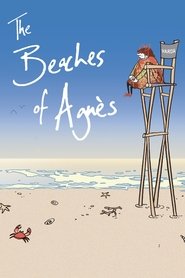
The Beaches of Agnès
Filmmaking icon Agnès Varda, the award-winning director regarded by many as the grandmother of the French new wave, turns the camera on herself with this unique autobiographical documentary. Composed of film excerpts and elaborate dramatic re-creations, Varda's self-portrait recounts the highs and lows of her professional career, the many friendships that affected her life and her longtime marriage to cinematic giant Jacques Demy.
Movie
1995•
6.8
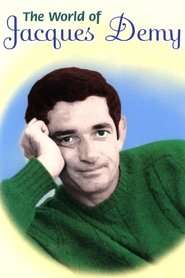
The World of Jacques Demy
Agnès Varda's documentary portrait of her late husband, Jacques Demy. A companion piece to her Jacquot de Nantes.
Movie
1977•
7.1
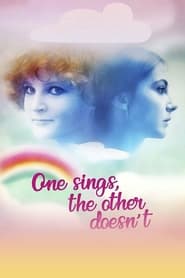
One Sings, the Other Doesn't
The intertwined lives of two women in 1970s France, set against the progress of the women's movement in which Agnes Varda was involved. Pomme and Suzanne meet when Pomme helps Suzanne obtain an abortion after a third pregnancy which she cannot afford. They lose contact but meet again ten years later. Pomme has become an unconventional singer, Suzanne a serious community worker - despite the contrast they remain friends and share in the various dramas of each others' lives, in the process affirming their different female identities.
Movie
1985•
7.3
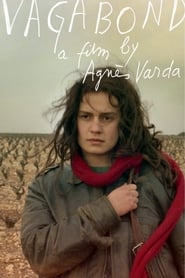
Vagabond
Mona Bergeron is dead, her frozen body found in a ditch in the French countryside. From this, the film flashes back to the weeks leading up to her death. Through these flashbacks, Mona gradually declines as she travels from place to place, taking odd jobs and staying with whomever will offer her a place to sleep. Mona is fiercely independent, craving freedom over comfort, but it is this desire to be free that will eventually lead to her demise.

Movie
1988•
6.7
Jane B. by Agnès V.
The interests, obsessions, and fantasies of two singular artists converge in this inspired collaboration between Agnès Varda and her longtime friend the actor Jane Birkin. Made over the course of a year and motivated by Birkin’s fortieth birthday—a milestone she admits to some anxiety over—Jane B. by Agnès V. contrasts the private, reflective Birkin with Birkin the icon.
Movie
2022•
7.2
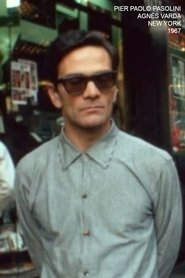
Pier Paolo Pasolini - Agnès Varda - New York - 1967
Holding her 16mm camera, an optical prosthesis for a 20th-century stroller, Agnès Varda filmed 42nd Street in NYC in 1967, filming crowds of passers-by to the beat of the Doors. Recovered from the French director's boxes, with images of Varda, Pasolini and New York. Pasolini is shown walking in the Big Apple (where he went to present 'Hawks and Sparrows').
Movie
1988•
6.5
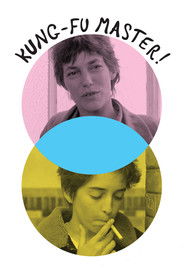
Kung-Fu Master!
A lonely 40-year old woman finds herself shattering taboos by falling in love with the 14-year old Julien – but is it romance, or a desperate attempt to turn back time in the face of middle age?
Movie
2005•
6.9
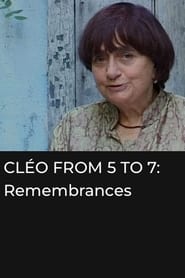
Cléo from 5 to 7: Remembrances and Anecdotes
More than 40 years after making "Cléo de 5 à 7," Agnes Varda invites her star, two other cast members, and her assistant directors to look back. She takes us through the film, from opening scene to the end, visiting its Paris locales, placing her aged actors in the same spots, telling stories, and listening to others' reflections on the making of the film. She and they talk about making a film on a low budget, its showing at Cannes, and trying to fix a problem in the last shot. Her assistant directors discuss casting, costumes, sets, and the ways the film changed their approaches to filmmaking.
Movie
1981•
6.6
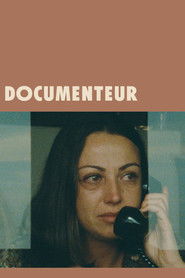
Documenteur
After separating from the father of her son, a young French woman tries to find lodging and a fresh start in L.A. for herself and her son.
Movie
1995•
6.0
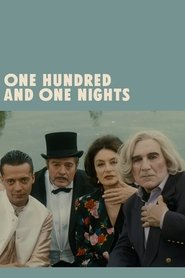
One Hundred and One Nights
Monsieur Cinema, a hundred years old, lives alone in a large villa. His memories fade away, so he engages a young woman to tell him stories about all the movies ever made.
Movie
2003•
5.9
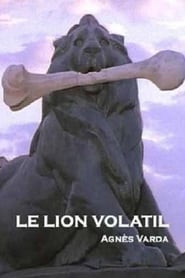
The Vanishing Lion
An adventure of three characters: Clarisse, a psychic’s apprentice, Lazare, who works at the Parisian catacombs, and the bronze statue of a lion at the Denfert-Rochereau (in the 14th arrondissement). Clarisse and Laraze meet daily, but one day Lazare disappears and the lion disappears as well!
Movie
1984•
6.7
Seven Rooms, Kitchen, Bathroom, for Sale
An unusual visit to a large, empty apartment. But is it empty or not? Maybe a family has lived there or is going to live there. Maybe a young girl is going to escape from there. Maybe some of the old-timers who lived there never left. The walls themselves tell the stories of the time passing by.
Movie
2019•
7.9
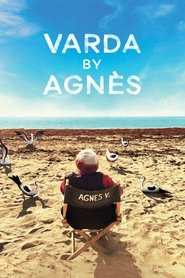
Varda by Agnès
An unpredictable documentary from a fascinating storyteller, Agnès Varda’s last film sheds light on her experience as a director, bringing a personal insight to what she calls "cine-writing," traveling from Rue Daguerre in Paris to Los Angeles and Beijing.
TV
2019•
10.0
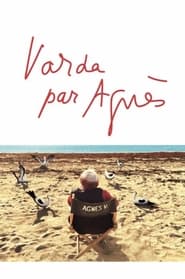
Varda by Agnès
An unpredictable documentary from a fascinating storyteller, Agnès Varda’s last film sheds light on her experience as a director, bringing a personal insight to what she calls “cine-writing,” traveling from Rue Daguerre in Paris to Los Angeles and Beijing.