Content from CC&C

Movie
2017•
7.5
Tokyo Phoenix
In 150 years, twice marked by total destruction —a terrible earthquake in 1923 and incendiary bombings in 1945— followed by a spectacular rebirth, Tokyo, the old city of Edo, has become the largest and most futuristic capital in the world in a transformation process fueled by the exceptional resilience of its inhabitants, and nourished by a unique phenomenon of cultural hybridization.

Movie
2024•
6.7
Russia, China, Iran: The Axis of Revenge
Russia, China and Iran: three former empires are determined to take their revenge and reassert their power after centuries of humiliation. Since the start of the war in Ukraine, they have never been so aligned on the international stage. Their common goal: to put an end to Western hegemony, restore their zone of influence and propose a new model of society. To achieve this, they are waging a hybrid war against the democracies: military, technological, economic, informational and ideological. Are they on the verge of joining forces to create a new world order?

Movie
2003
The Wings of the Fame
It is the epic of the heroes of the first century of aviation, since the flight of the first plane on December 17, 1903 until today. A striking collection of portraits of outstanding men and women like Louis Blériot, the first to cross the Channel, to Lindbergh who crossed the Atlantic and Amelia Earhart and many more...

Movie
2011•
6.8
Love and Sex under Nazi Occupation
Love & Sex under Nazi Occupation questions the burning mystery of intimate heterosexual and homosexual relations in times of war... and shows how being close to death reinforces the yearning for passion, for pleasure, for transgression, for desire as a last burst of freedom, as an ultimate call to life. Nearly two hundred thousands children are thought to be born of the union of French women with German soldiers. Women weren't the Germans' only conquests; indeed, occupied Paris swarms with all kinds of homosexuals—from Genet to Cocteau—who treated with the occupier. The fate of those women who were shaved at the end of the war for fraternizing with Germans is the punishment of a France that lied down and slept with the enemy.

Movie
2020•
7.0
Pablo–Paris–Satie
Pablo Legasa from the Paris Opera Ballet dances in the sky in live-action, to Erik Satie's Gnossienne No. 1.

Movie
2020•
8.0
The Voyages of Matisse, Chasing Light
On the occasion of the 150th anniversary of Matisse's birth and of the exhibition at the Center Pompidou which will be dedicated to him in 2020, this art documentary brings us back to life of the journeys made by Matisse that influenced his art. And particularly his last trip to Polynesia in 1930 which will bring him to the threshold of contemporary art with the invention of his gouache cut-out papers.
Movie
2017•
6.0
Dawn of the Nazis
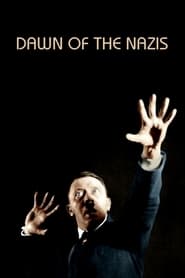
How Germany was when its people entered the nightmare of World War II? Despair and fear lead a hungry population to follow the chilling call of just one man to world domination. A real-life horror story, an ominous tale of violence and deception, which takes place from 1919 to 1934. (Entirely made up of restored, colorized archival footage.)
Movie
2005•
7.3
Capitulation, the Final Hours that Ended World War II
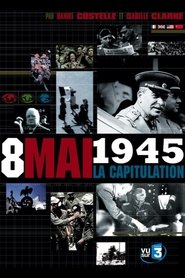
A film made of archives mostly unknown, on the last day of the Second World War in Europe and on the events which preceded it. This film also shows the growing tension between the Allies and the Soviets at the time: May 8, 1945 is also the first day of the Cold War.
Movie
2007•
6.3
In Love with Adolf Hitler
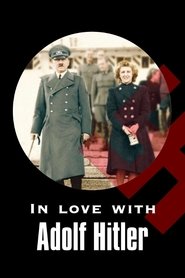
This film captures the affair, full of love, lust, and despair, between Adolf Hitler and Eva Braun, from 1932 until their double suicide in 1945.

Movie
2005
Pierre Teilhard de Chardin
This documentary delivers a moving portrait of Pierre Teilhard de Chardin. The narrative of the life of this Jesuit and scientist of international reputation is read as an adventure novel.
Movie
2010•
8.0
June 1940, the Great Chaos
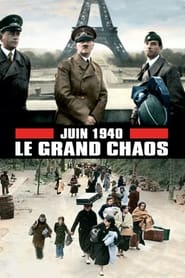
From May 10, 1940, France is living one of the worst tragedies of it history. In a few weeks, the country folds, and then collapsed in facing the attack of the Nazi Germany. On June 1940, each day is a tragedy. For the first time, thanks to historic revelations, and to numerous never seen before images and documents and reenacted situations of the time, this film recounts the incredible stories of those men and women trapped in the torment of this great chaos.
Movie
2016•
7.0
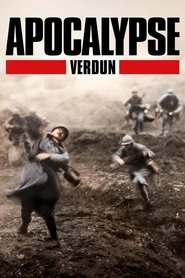
Apocalypse: The Battle of Verdun
A detailed account of one of the bloodiest battles of World War I. Between February and December 1916, the French and German armies relentlessly fought in the devastated camps around the village of Verdun.

Movie
2020•
8.0
When Paris was German
Discovering Paris under the German occupation through the story of an SS soldier and more generally of Wehrmacht soldiers allows us to follow the daily life on the German side. These soldiers enjoyed privileged status, during their stay, they were led to believe that they belong to a social elite, a status unreachable back in Germany during peacetime. And who better than a German who has led such lifestyle to serve as a common thread and tell this story?
Movie
2015•
7.2
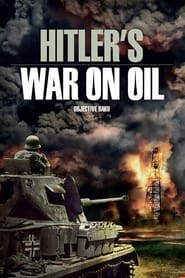
Hitler's War on Oil: Objective Baku
This film tells the story of World War II as experienced by the inhabitants of Baku, the capital of Azerbaijan, at the time a satellite of Moscow. The very rich oil deposits of the region aroused the covetousness of Hitler who needed the oil from Baku to carry out his program of world domination. His entire campaign of 1942-1943 was aimed at seizing them. But the Soviets and the Allies were determined to prevent him from doing so, by all means, including the most radical, even if it meant wiping the city off the map.
Movie
2011•
6.5
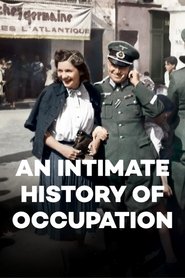
An Intimate History of Occupation
June 14, 1940. The German Army marches into Paris. France is an occupied country. Through exclusive amateur footage, personal stories, and popular songs from the time, this fi lm recounts life with the enemy during the occupation, as seen by the French... and the Germans! Despite the Nazis and the troubled war times, day-to-day life in occupied France went on. People learnt to live with the rationing, the cues, the curfew... Many try to forget the hard times, mainly thanks to the movies in which big stars provide a little dream and lead a privileged life. These stars don't actually collaborate, butadapt and give the impression of normal life during the war. After all, is it necessarily shameful to shake the hand of an enemy?

Movie
2008
Five Wheelchairs for Egypt
For two years, five young adults affected by Cerebral Palsy (CP) have followed the crew of the sailboat Kifouine during their sail around the world through daily mail exchanges. Until they felt ready to break the moorings and take up the challenge to join the sailors. They spent two weeks on board of the Kifouine in Egypt. An exceptional experience that has, in many ways, changed their way to look at things, and the way they're being looked at...
Movie
2007•
7.4
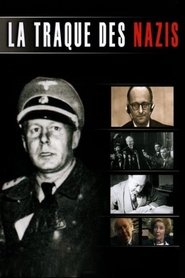
Hunting Down the Nazis
For the first time, a film recounts the story of the long pursuit of Nazis in hiding from 1945 to the present day. Sixty years of investigations, set-backs trials and dramas, brought about principally by three extraordinary individuals—the Austrian Simon Wiesenthal, and the German-French couple, Beate and Serge Klarsfeld.

Movie
2010
De Gaulle and the Free French in World War II
In June 1940 nothing was written. The appeal of June 18 by General de Gaulle was a hope but also a start. The start for an essential page of the History of France, written by De Gaulle and his followers, without whom nothing would have existed in the Resistance to the German tyranny and this film wishes to honor their memory.
Movie
2020•
7.0
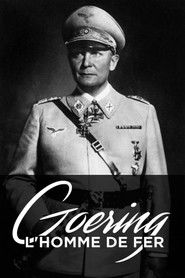
Goering: Nazi Number One
This is the story of an incredible rise to power, the most comprehensive documentary on Hermann Goering ever made. He was a man of many faces: vain, ambitious, more brutal than any other of Hitler's minions, yet the most popular Nazi official of all, at times even more popular than Hitler himself. He embodied the jovial side of the Third Reich. Yet the same man who organised dissolute bacchanals also founded the Gestapo, set up the first concentration camps, and had his own comrades murdered in the purge of 1934. These unique personal records form the largest and most important single film find from the Nazi era in past years.

Movie
2012
Surgeon during the Algerian War
Has everything really been said about the Algerian war? Although the archives are opening up, almost fifty years after the signing of the Evian Agreements (March 18, 1962), direct witnesses are beginning to disappear. They are, however, unique bearers of history, often the only ones able to illustrate the harsh reality of a long-hidden period. Gérard Zwang, surgeon of the contingent between May 1956 and June 1958, is one of these essential witnesses who help us discover an original history of the Algerian War. During his service, in charge of treating the most atrocious wounds of his fellow soldiers, he sees the war from the side of its victims. He did not fight with a machine pistol in his hand, but behind the closed doors of an operating room where life gives way to death in a matter of seconds.

TV
2023•
9.0
Unveiling Arafat
A portrait of Palestinian political leader Yasser Arafat (1929-2004).
TV
2009•
8.4
Apocalypse: The Second World War
A six-part French documentary about the Second World War composed exclusively of actual footage of the war as filmed by war correspondents, soldiers, resistance fighters and private citizens. The series is shown in color, with the black and white footage being fully colorized, save for some original color footage. The only exception to the treatment are most Holocaust scenes, which are presented in the original black and white.
TV
2024•
8.5
Apocalypse: D-Day
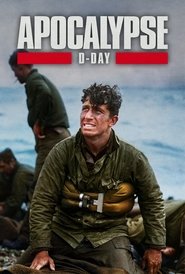
6 June 1944. A titanic fleet launched an assault on the beaches of Normandy. Objective: to liberate Europe from Hitler's yoke. Drawing on the lessons learned from the Dieppe raid in August 1942, the mission was a spectacular success.

TV
2019•
7.7
Apocalypse: War of Worlds (1945-1991)
The story of this fantastic period of history between 1945 and 1991, which was defined by the confrontation of two worlds and two systems. The capitalist West, dominated by the ever-powerful United States, is pitted against the Communist East, the Soviet Empire.
TV
2011•
7.6
Apocalypse: The Rise of Hitler
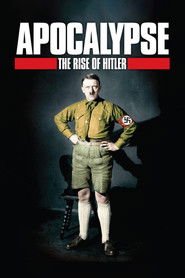
Adolf Hitler (1889-1945) was a mediocre who rose to power because of the blindness and ignorance of the Germans, who believed he was nothing more than an eccentric dreamer. But when the crisis of 1929 devastated the economy, the population, fearful of chaos and communism, voted for him. And no one defended democracy. As the dictatorship extended its relentless shadow, the leader claimed peace, but was preparing the Apocalypse.
TV
2014•
7.7
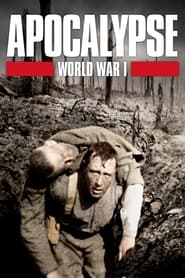
Apocalypse: World War I
Colorized historical footage in ascending order of World War 1. Not only the relatively known Flanders and France battles, but also the generally unknown Italian-Austrian, German-Polish-Russian, Japanese-German, Ottoman Empire- Allied and African German Colonies, and other unknown or forgotten fronts and battles.
TV
2021•
7.8
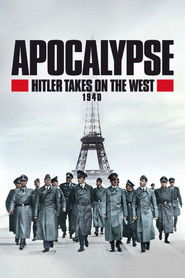
Apocalypse: Hitler Takes on the West
May 10th, 1940, Hitler takes on the West. Will he precipitate Europe into the Apocalypse?
TV
2014•
6.9
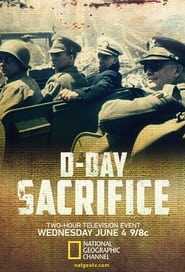
D-Day Sacrifice
Comprised entirely of re-mastered and colorised archive footage from World War II, much of it never before seen, Sacrifice recounts the story of D-Day through the testimonies of those who lived it. These important historical days are seen through the eyes of French civilians and members of the military fighting on both sides. The testimonies of famous individuals like Dwight D. Eisenhower and Erwin Rommel are intertwined with those of anonymous soldiers and citizens, such as film director Samuel Fuller and Eisenhower's chauffeur, Kay Summersby. From the preparations for D-Day all the way through to the liberation of Paris, the accounts of these men and women provide a moving and invaluable retelling of this pivotal time in history.
TV
2018•
7.8
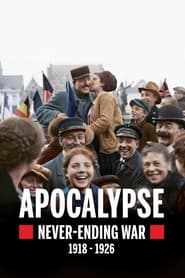
Apocalypse: Never-Ending War (1918-1926)
November 11, 1918. The world emerges from the most horrific conflict ever known. While leaders of the victorious countries design a new world order, traumatized societies struggle to find their footing. In the aftermath of war the Russian, German, Austro-Hungarian and Ottoman Empires fall apart, currencies fluctuate wildly, and vast numbers of refugees flee misery. Before long, age-old hatreds, fears, and resentments resurface and drive the world to the brink of a new apocalypse.
TV
2021•
8.7
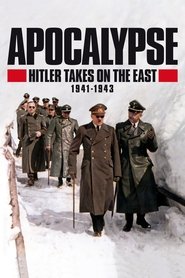
Apocalypse: Hitler Takes on the East
In June 1941, Hitler took his greatest gamble - launching an attack against the Soviet Union. Despite being the largest German operation of WWII, Operation Barbarossa was one of his biggest failures.
TV
2015•
7.3
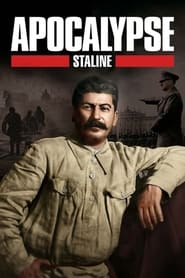
Apocalypse: Stalin
The rise of Stalin, from his early beginning as a bankrobber to the cold-blooded leader of the Soviet Union.
TV
2023•
7.8
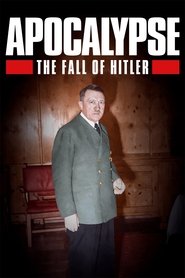
Apocalypse: The Fall of Hitler
Summer 1943: Hitler engages in a decisive battle in Kursk to win the war in the East. This is without counting on the pugnacity of the Red Army and the Allied intervention in the West. Month after month, the noose tightens on the Nazi tyrant who refuses to admit defeat and precipitates his country in its fall.

TV
2004
Day for Night in Paris
Isabelle Clarke's follows with her camera the shooting of Claude Lelouch's film Les Parisiens ("The Parisians"). With an artistic and lighthearted vision of a movie set, Isabelle Clarke takes us into the bonding of the family of a film team, which only lasts for a couple of months.
TV
2007
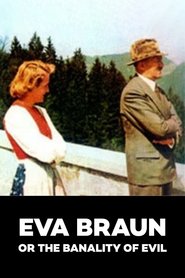
Eva Braun or the Banality of Evil
Daniel Costelle and Isabelle Clarke have found at the NARA (National Archives in Washington DC) almost four hours of footage, mostly in colour, filmed by Hitler's mistress, Eva Braun between 1938 and 1944. It's an unbeleivable eyesight on Hitler's private life from the happy life in the "Eagle's nest" till his suicide in his bunker.
TV
2020•
8.2
Royals at War
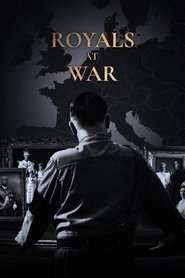
"Royals at War" examines the strategies used by the royal families of Europe during World War II in the face of increasingly powerful nationalist parties. Connected by family ties, the families witnessed the rise of power of Fascism and Nazism and found themselves, voluntarily or involuntarily, at the centre of Hitler's political scheming. The two episodes will recount the various families' ambiguous and difficult dealings with these.
TV
1977•
8.0
History of Aviation
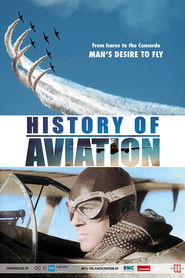
From the first men in their flying machines to World War One, from the first Atlantic crossing to the supersonic era, this is the story of the most daredevil challenges the world has ever known, braved by the men and women who wrote the history of human flight.
TV
2016•
8.0
Apocalypse: Verdun
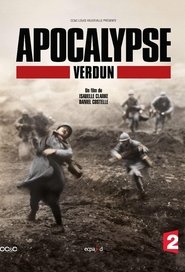
February 1916. World War I has been raging for two years and has killed over three million people, neither side gaining the upper hand. The Germans mobilize more artillery and men in Verdun than in any other offensive -- for three hundred days -- but the French hold out. Constructed from over five hundred hours of restored, colorized archival footage.