Content from CBA

Movie
1998•
7.4
State of Dogs
In Ulan Bator, Mongolia, the cur Baatar is shot by a hunter hired by the authorities to get rid off the dogs in the city...
Movie
2010•
7.3
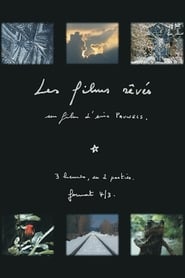
The Dreamed Films
Belgian filmmaker Eric Pauwels' meditation on dream, travel and film.
Movie
2005
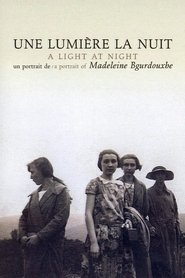
Une lumière la nuit - Un portrait de Madeleine Bourdouxhe

Movie
2002
Two Sisters
Violeta and Vyollca Dukay live in the south of Kosovo, close to the border with Albania. Faced with a very high unemployment in their country since the end of the war, they became deminers. They’ve been going to the minefields every day for six years now. The unique and very strong relationship that exists between the two sisters helps them to overcome their fear and to keep hoping in spite of the precariousness of their situation and the risks they run each day to earn their living.
Movie
2007•
7.0
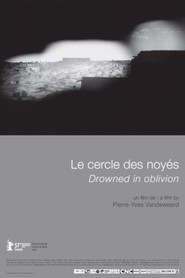
Drowned in Oblivion
Le Cercle des noyés is the name given in Mauritania to black political prisoners imprisoned from 1987 in the old colonial fortress of Oualata. This film touches on the fragile process of unveiling memories by one of these former prisoners who remembers his story and that of his companions. In a visual echo, the places of their confinement come one after another denuded from any traces of that past.
Movie
2001
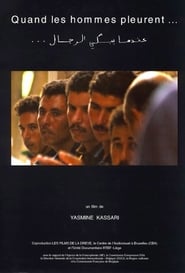
When Men Cry
Four young Moroccans, like thousands of others, cross the sea illegally to work in Spain.
Movie
2020•
10.0
In a Silent Way
A film crew crisscrosses England trying to unravel the mystery surrounding a record released 30 years earlier, 'Spirit of Eden', that defined the passage from light to shadow of its makers, the band Talk Talk and its lead singer Mark Hollis. From overwhelming obstacles to unpredictable encounters, their journey soon turns into an organic quest. With silence as a horizon line. And punk as a philosophy, thinking that music is accessible to all and that the human spirit is above the technique.

Movie
1991•
4.0
Nylon Blues: A History of the Nylon Stocking
Events of strange and serious nature mark the invention and the manufacture of the nylon stockings. For example inhuman exploitation of workers in artificial silk factories. The US army was a substantial promoter of the nylons.
Movie
2017
Tremor - Es ist immer Krieg
This polyphonic film by the Belgian film artist about the history of Europe and art is an unforgettable, sensual journey between memory and nightmare. To a meditative, threatening soundtrack, we hear a series of monologues by poets and crazy people, mothers and children. Meanwhile, the image forces the eye to reflect on what and where.
Movie
2019•
8.0
By the Name of Tania
The Amazon flows lazily through the goldmine-gashed landscape of northern Peru. Using real eyewitness accounts, directors Bénédicte Liénard and Mary Jiménez tell the story of a young woman who winds up in the clutches of forced prostitution when her initially hopeful attempt to escape the constrictions of her village goes wrong. Step by step, she is robbed of her moral and physical integrity. The film reconstitutes a space of dignity and returns voice and identity to a fate formally made nameless. With its powerful imagery, the girl’s traumatic odyssey embodies the destruction of life in a capitalist world in connection with horrific natural devastation.
Movie
1997
William Cliff, poète
Movie
2018
Kev
Everyone calls him Kev, this pale-looking redhead, who a social worker found, as a child, locked in a bedroom where he had only rays of sunshine to play with. Now a teenager, Kevin suffers from a form of autism so severe that the majority of so-called specialised institutions have long refused to take him in. Clémence Hébert followed him with her camera, from one place to another. She, who is gifted with speech and he, who lives without, tamed each other as peers with a lens as the only medium of recognition, which captures what palpitates, appears, withers, and recommences. A discontinued but living link.

Movie
2025
The Godmother
Marzena Sowa is a quintessential contemporary European: independent, aware of how the world works—or should work—and single. After her mother’s death, she is consumed by longing and sets off for her distant homeland, a Polish village where her beloved aunt Niuszka—an embodiment of joie de vivre and peace with herself—lived her entire life under the heavy weight of patriarchy. The film becomes a collision of social models, resolved with an open ending.
Movie
2011•
6.3
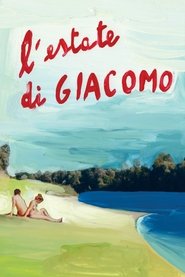
Summer of Giacomo
A summer day in Italy. The camera follows the deaf-mute Giacomo and a childhood girlfriend Stefi closely – in the woods, by the river – without wanting to disrupt the mystery of their relationship, between restrained sensuality and childhood games.
Movie
2021•
6.0
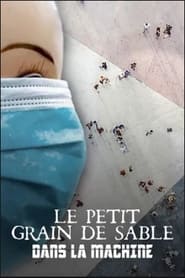
A Grain of Sand in the Gear
A chronicle of a year of health crisis. A film that travels to the four corners of the planet to question us about our model of society. The grain of sand is Covid. The gear is the system in which we live. The subject: how could a small piece of genetic code stop our system?
Movie
2002•
8.0
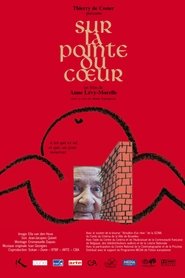
Sur la pointe du cœur
"On the Tip of the Heart" - is a documentary on the St Peter's Hospital in Brussels, structured around seven doors from the maternity to the morgue. This is an opportunity for the director to ask the audience a question, namely: what is there in common between a medieval city, human life and a hospital?

Movie
2014•
7.0
Before We Go
Brussels, La Monnaie Opera House. Three people near the end of their lives meet with choreographers, actors and musicians. They take part in a unique experience which involves music, dance and silence. Their journey becomes a tribute to the fragility of the human condition, between reality and representation, tragedy of the body and freedom of the spirit. Together they question their own relationship with death.
Movie
2023•
7.0
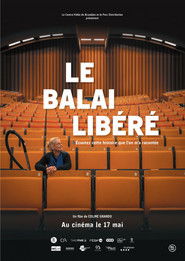
Le Balai Libéré
In the 1970s, the cleaning ladies of the Catholic University of Louvain fired their boss and created their cleaning cooperative, Le Balai Libéré. 50 years later, the cleaning staff of UCLouvain meets the workers of yesterday: working without a boss, is it still an option?

Movie
2021•
10.0
A letter to Nikola
As a letter to her son, the filmmaker testifies her experience as a photographer aboard the Aquarius, a ship that rescued 29,523 people in the Mediterranean between 2016 and 2018.

Movie
2000•
6.0
Letter from a Filmmaker to His Daughter
A playful, free, and personal film in the form of a letter, a film interwoven with a thousand stories knit together with different textures, a book of images where a filmmaker shows the images and the stories he wants to share.