Content from Belgische Radio en Televisie
Movie
1990•
6.5
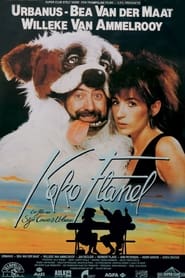
Koko Flanel
Placide's dad tells him on his deathbed he'll haunt Placide if he doesn't find a wife soon. Placide cautiously agrees, but he only wants to settle for a very beautiful woman. That might be easier said than done, since he is a vagabond. When he accidentally enters a photo shoot, Placide meets Sarah. He falls in love, but she is way out of his reach.
Movie
1984•
6.0
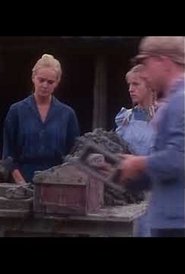
Klinkaart
The film describes the first working day of a twelve-year-old girl, shortly after the turn of the century. After a miserable childhood in a proletarian family, where she was mother to five toddlers, the sensitive girl follows in the footsteps of her parents and seventeen-year-old sister and sets off for the brickworks. The girl bravely defends herself at work, enduring the boys' bullying without tears, but when the day comes to an end, the foreman tells her that she must go to Krevelt, the boss, to be registered.
Movie
1989
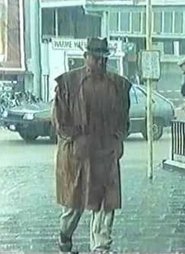
Het landhuis
1989. Hugo (Michael Pas) is in his first master's year economics. At the same time he is training for the 110 meter hurdles. And he has another sport: chasing girls. But when his latest catch (Antje De Boeck) suddenly disappears, he's obsessively starts looking for her. She seems to have ended up in an idyllic, utopian countryhouse.
Movie
1983
Leer Om Leer
We follow the small-time con artist Max and a white Lancia. The Lancia belongs to his mistress Lysette. Secretly renting out the Lancia to foreigners brings in a lot of money. Until it is used in a hit-and-run accident. And so Max ends up in a world of extortionists, gamblers, and blackmailed politicians.

Movie
1991
Precious
A 17 year old girl runs away form home and finds shelter with a 50 year old man with a psychiatric past.
Movie
1982
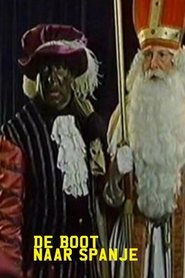
Gaston en Leo: De Boot naar Spanje
George (Martin) and retired Desiré (Berghmans) are two sworn comrades. Life at Desiré's home is made quite miserable for him by his wife, son, and daughter-in-law. Only his granddaughter cares about him. It will soon be Sinterklaas. They want to earn some money as Piet and Sint, but things are really not going well.

Movie
1996•
5.9
Taxandria
A lighthouse guardian leads a young prince towards an imaginary world, Taxandria, where the boy learns about the power of love and the value of liberty. A totalitarian regime has forbidden time: time watches have been confiscated, photo cameras are illegal as they freeze a point in time. A typical Servais theme: a power is oppressed by a constraint that denies what is best in the individual, and therefore has to be twisted in various ways, to establish an entirely artificial world, that has rules that may question some of the rules of our world at this side of the mirror.
Movie
1972
Sammy
A woman who can hear what animals are thinking meets a man who hears the dead...
Movie
1990
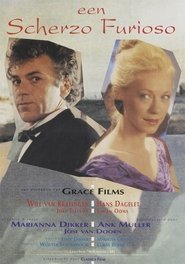
Een scherzo furioso
A woman takes revenge on her cheating husband by inviting his mistresses on their anniversary party. She thanks all of them and announces she's going to divorce him.
Movie
1983
Lente
Leontientje, the Parisian niece of an East Flemish farming family, comes to stay. Aunt Zeunia is dying and has asked for her. Her visit completely disrupts life on the farm. The men fight for her attention, and the city girl is delighted by every bit of nature: 'Comme c'est beau!'. Her Parisian manners—two kisses for everyone—drive the farmer's wife up the wall: "All that fuss!" But the youngest farmer starts dreaming...
Movie
1966•
6.7
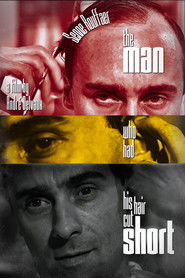
The Man Who Had His Hair Cut Short
Govert Miereveld is a lawyer from a small Flemish town who also teaches in a school for girls. He harbors a secret love for one of his young students, Fran, whom he loses touch with after her graduation. Some time later, Miereveld has to attend an autopsy, and the shock of the experience deeply affects his mental balance. He finds out - or he believes so - that Fran has become a popular singer. He arranges to meet her to finally reveal his feelings. An ambiguous but perhaps tragic denouement follows which might be a figment of the protagonist's disturbed mind.
Movie
1988
De Zoete Smaak Van Goudlikeur
A batch of bottles of gold liqueur (also known as Bruidstranen) containing the original drink mixed with clandestinely distilled, toxic methyl alcohol is put on the market. One bottle is purchased by a couple on their way to a wedding party. During the wedding, the television in the kitchen next to the reception hall is showing images of the port of Antwerp, where three sailors have died after drinking from a bottle of gold liqueur. The police launch a manhunt for the perpetrators and the remains of the batch.
Movie
1989
Het Spook Van Monniksveer
Burdened with debt trauma, Mermans is murdered as the wife of Dingenen, a tired, unemployed man in his forties. All suspicions fall on him, but ultimately everything works out in this film adaptation of Aster Berkhof's novel of the same name.
Movie
1982
Ekster
The film revolves around Ekster. Ekster is the nickname of a shrewd extortionist who plays a game with the police. The action takes place in the diamond world.
Movie
1984•
8.0
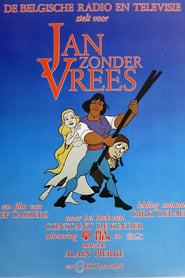
John the Fearless
He's the "Rocky" of the 15th century-defender of the poor, enemy of evil, champion of justice. He's fearless and the strongest man in the land. He's ready and willing to take on all wrong doers-rich and poor. Accompanied by a lovable, meek little friend, his quest takes him on an unforgettable journey. Swamp monsters, knights in armor, duels, royal pageantry, and damsels in distress all abound in this story of timeless values. In the spirit of "Robin Hood," it's a robust, romantic tale: a feast for the eyes and a joy for the heart.
Movie
1988
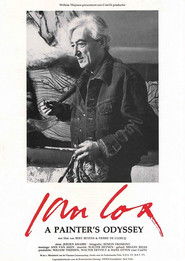
Jan Cox, a Painter's Odyssey
Biographical film about the life and work of the Belgian painter Jan Cox. Cox had a tempestuous youth, during which he co-founded the Jeune Peinture Belge group and worked on the fringes of the Cobra movement.
Movie
1992•
5.0
Het contract
"What are we actually doing here?" Miel asks Jack Van Poll, the pianist. "Earning a living, I suppose?" is the laconic reply. But Miel wants more out of life than playing in a jazz band, away from the worries of his wife and child who constantly need money from him. Between dream and deed... but then he is suddenly confronted with harsh reality.
Movie
1969•
10.0
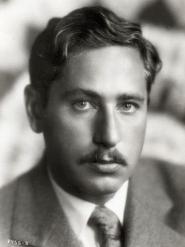
Josef von Sternberg, A Retrospective
An interview with film director Josef von Sternberg, produced for Belgium television.
Movie
1977
Gombrowicz: Incidents, Adventures
An actor pretends to be a writer. He sits in his office, reflects and puts words to paper, which are then performed by Jan Decorte. The text influences the situations shown and vice versa [Avila].
Movie
1988•
10.0
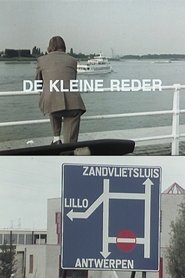
The Little Shipowner
A film made for television, based on the book of the same name by Libera Carlier. A Flemish family decides to spend the summer holidays on de Schelde. Father Janssen buys a second-hand boat and together with his wife and two sons he sets sail. What follows is a sequence of pleasant moments and disappointments, watched by the sceptical mother Janssen.
TV
1977•
7.5
Secret Army
World War II drama about covert organisation Lifeline helping allied airmen escape after being shot down in occupied Europe, working with the Resistance and hiding from the Gestapo.
TV
1983•
5.5
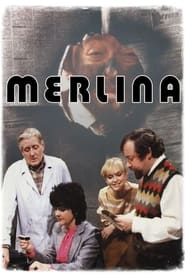
Merlina
TV
1985•
2.0
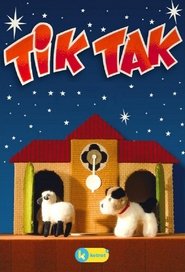
Tik Tak
Tik Tak was a Belgian children's television program that aired from on BRTN 1981 to 1991. It was aimed at toddlers.
TV
1996•
5.6
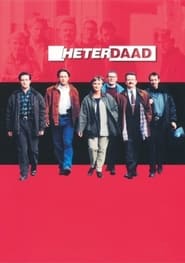
Heterdaad
In this Flemish detective series, the Dutch title of which means in the act, notably "in flagrante delicto", a team of the Belgian (national) police lead by John Nauwelaerts investigates serious crimes, often against the clock as victims sometimes may still be in danger. Special attention is also given to the legally necessary, but sometimes frustrating, interaction with the judicial authorities, other police forces (this inefficiency required a major reform in reality), various experts and lawyers.
TV
1989
Oops
"Oei" is a Flemish dramedy series that captures the everyday struggles, awkward moments, and small triumphs of ordinary people. With a blend of humor, warmth, and subtle absurdity, the show offers a fresh and relatable look at modern life in Flanders. Each episode explores a different slice of life, highlighting the beauty and chaos of the unexpected.
TV
1964•
10.0
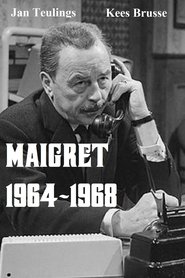
Maigret
TV
1969•
8.0
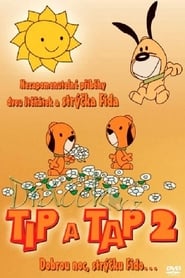
Tip en Tap
Two puppies who get into some kind of mischief in each episode, but who are always saved by their uncle (a flying adult dog) at the last second. At the end, their uncle brings them back home to their beds and tucks them in under the sheets.
TV
1977•
8.0
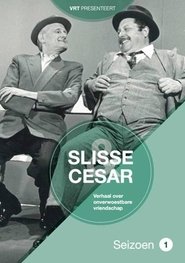
Slisse & Cesar
This series by Jos Gevers and Jeroom Verten is set in 1958 and revolves around the friendship between the wealthy insurance broker Sander Slisse and the simple Cesar. Other characters are Slisse's wife Melanie, his sons Rik and Jan, his daughter Tinneke and the eternal factor who always comes begging for a drop of gin. Joanna Geldof also contributed to this series. The sitcom was interpreted in Antwerp. The series was also adapted into a play, in which other actors took on the roles.

TV
1964•
6.7
Kapitein Zeppos
A strange man arrives in Belder on horseback, and introduces himself as Captain Zeppos. Initially, he is met with suspicion and jealousy, but he soon befriends a local, Ben Kurrel. It becomes apparent that Zeppos had a motive to come to Belder: when in Greece a stranger had made him an offer on a piece of land he had inherited near the town. Ben Kurrel and his friend Rita Mees help him investigate the mystery.

TV
1967
Midas
TV
1991•
7.0
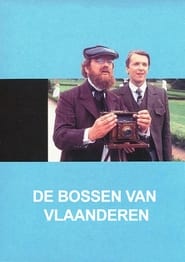
De Bossen Van Vlaanderen
The Dutch title means "The woods of Flanders", referring to the rustic setting of this costume drama about the complex context of a number of murders in 19th century Belgium before, during and after the German occupation in World War I.
TV
1984•
6.0
De burgemeester van Veurne
TV
1986•
8.0