Content from Barrandov Studio

Movie
2012•
6.2
Oldies but Goldies
A bitter-sweet comedy about two people who wish to live life to the full despite their age. Ota is a retired high-school teacher and at this point in life has various foibles that complicate life for his son and daughter-in-law. Moreover, he has a complicated and risky eye operation ahead. That is why Ota decides that this is the time to look up Jana, the retired actress who had influenced the course of his life many years ago. However, his reunion with Jana - who lives in a retirement home - works out differently to his expectations. Although disappointed at first, it is actually this zestful lady who sets Ota in the right direction again. Thanks to Jana, Ota finds the courage to set out on an exciting road-movie trip of the kind he would never have had the courage for in his youth. Their meeting and the excursion, full of unexpected turns and new impressions, give their lives a new dimension.

Movie
2003•
4.3
Národ sobě aneb České moře v 18 přílivech
"Situation of the Street" - An experimental study about Czech life, focusing on Prague's National Street, its businesses and the varied people who frequent it.
Movie
1996
What Is to Be Done? A Journey from Prague to Ceský Krumlov, or How I Formed a New Government
Quite a few years have passed since November 1989. Czechoslovakia has been divided up and, in the Czech Republic, Václav Klaus’s right-wing government is in power. Karel Vachek follows on from his film New Hyperion, thus continuing his series of comprehensive film documentaries in which he maps out Czech society and its real and imagined elites in his own unique way.

Movie
2024•
7.5
Waves
At the end of the 1960s, when the air is filled with rock-and-roll and student rebellions are changing the world, the older of two brothers joins a prestigious newsroom of the public radio broadcaster. Not long after, he finds himself in the middle of a dangerous conflict between journalists and the secret service.

Movie
2017•
3.4
Garden Store: Suitor
In late-1950s Czechoslovakia, a young couple's new love is tested by their parents' expectations and the toll of the Communist regime.

Movie
2019•
5.9
On the Roof
Situated in Prague, a 20-year-old Vietnamese named Song, hoped for a better future in Europe. But now in a Vietnamese district in Prague, he is trapped in a marijuana grow house and has life of a modern slave. Police rounds up the place. Song runs away on the rooftop of a condo building in a nearby district where he breaks down. Mr. Rypar (78) lives alone. He is fond of the old times, living in a strong opposition to modern world. Rypar goes up on the roof and meets Song standing on the very edge of the roof crying and the story begins.
Movie
2013•
6.4
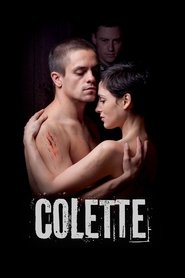
Colette
As World War II rages on, Villi and Colette are captured and sent to Auschwitz concentration camp. Imprisoned within separate compounds, the lovers must risk their lives to be together again.
Movie
1993•
6.1
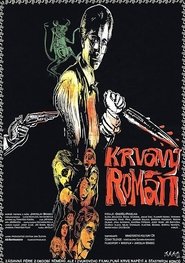
Horror Story
The distinctive artist, typographer, and writer Josef Váchal is known to the public primarily for his Blood Novel. The surrealistic exuberance of this defense of 19th-century pulp fiction caught the attention of Jaroslav Brabec and his colleagues, who found a corresponding image of 20th-century "trash." The authors' interest focuses primarily on the silent film era, with a journey through the history of cinema continuing through the advent of sound film to the present day (auteur cinema of the 1960s, modern horror), formally employing techniques such as tinted film. The versatile parody intertwines a colorful plot with the story of the author (Váchal/Paseky), who comments on and creates his book, and is further split in the plot into the characters of Fragonard and the Master. As with Váchal, reality increasingly enters the fiction, so that the only "happy ending" turns out to be the artist's finished work.

Movie
2017•
5.3
Barefoot
Story of a small boy is forced to move out of Prague during World War 2 to a small village of Slavonice where he meets the rest of his family. He needs to make new friends and get used to a new life which is immensely different from what this city boy was used to.
Movie
1998•
7.1
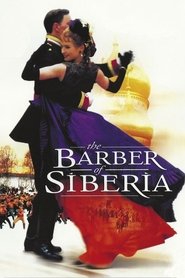
The Barber of Siberia
Douglas is a foreign entrepreneur, who ventures to Russia in 1885 with dreams of selling a new, experimental steam-driven timber harvester in the wilds of Siberia. Jane is his assistant. On her travels, she meets two men who would change her life forever: a handsome young cadet Andrej Tolstoy with whom she shares a fondness for opera, and the powerful General Radlov who is entranced by her beauty and wants to marry her.
Movie
2003•
7.0
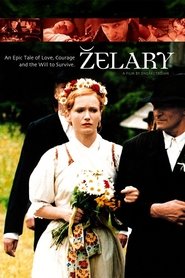
Zelary
A nurse and her surgeon-lover are part of a resistance movement in 1940s Czechoslovakia. When they are discovered, her lover flees and she must find a place to hide. A patient whose life she saved, a man from a remote mountain village where time stopped 150 years ago, agrees to hide her as his wife.
Movie
2019•
2.5
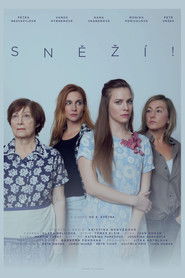
Sněží!
After her father's wedding, Tereza travels to her grandmother's house with her boyfriend and sister. Their mother takes care of their grandmother and the house. Tereza feels that everything in the house has been left to its own devices, just like her grandmother, who is losing touch with reality due to a lack of attention. Unfortunately for everyone involved and the whole family, Tereza decides to stay in the house and take care of the repairs. But not everything needs a breath of fresh air and repair, and without realizing it, she cleans up much more than just dusty cobwebs in the family.
Movie
1996•
5.1
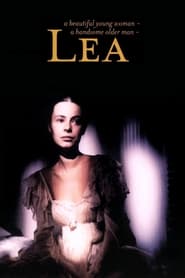
Lea
51-year-old Herbert Strehlow, a furniture restorer, falls in love with 21-year-old Lea, who has not spoken a word since childhood when her father killed her mother. She bears a striking resemblance to Herbert's dead wife. They get married, but their relationship seems doomed, until gradually each one manages to penetrate the mysterious world of the other, and they begin to realize that they are bound by a kind of spiritual relationship. For Lea it is the death of her mother, for Herbert it is the death of his first wife. His hard exterior slowly beings to thaw, and he starts to show feelings and responses that soften Lea's initial hatred and fear of him, and which put their relationship in a more positive light.
Movie
2003•
5.3
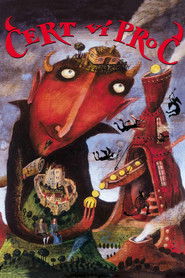
The Devil Knows Why
A good king rules this land, but still things are going from bad to worse. The point is that the greedy Minister of State has an interesting pact with the Devil — for bringing the kingdom into a state of dire poverty and the king to hell, he himself would sit on the throne. And he would have been well nigh successful, were it not for Princess Annie, Filip and magic Apolena — because true love cannot be quelled even by the Devil's machinations.
Movie
1995•
2.0
Revenge
A celebrated theatre director’s perfect life unravels when his wife’s secret lover exposes the hollowness beneath his success, leading to a calm divorce and his isolation in a luxurious but empty villa with his nearly grown daughter. His attempts to fill the void through a high-end escort only delay the real crisis, when he cannot accept his daughter’s first great love.
Movie
1995•
7.7
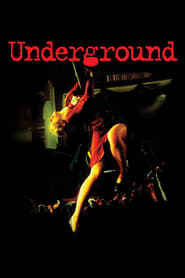
Underground
A group of Serbian socialists prepares for the war in a surreal underground filled by parties, tragedies, love and hate.

Movie
2020•
6.7
Charlatan
Born in the early 20th century, herbalist Jan Mikolasek became rich and famous after curing countless diseases with unorthodox means. A true emblem of Czechoslovakia before World War II, the healer became even more appreciated during the Nazi occupation and the communist regime. Each regime appreciates his skill and protects him. But how much will it cost him to maintain his status in a new political change?

Movie
2014•
6.0
Fair Play
In the 1980s, Anna, a Czech sprinter, starts training for the Olympics. After she collapses during training, she learns she is being given steroids and decides to stop using them until her mother helps the coaches give them to her.
Movie
2012•
6.3
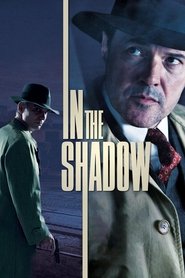
In the Shadow
In the former Czechoslovakia, 1950s, police captain Hakl investigates a jewelry robbery. An opened safe deposit leads to a known burglar. What seems an easy case soon starts to tangle. When he is called off the case, he continues on his own. The investigation leads him onto thin ice. Can he beat a stronger enemy and save his family and his own life?

Movie
2025•
5.3
Franz
Conceived as a kaleidoscopic mosaic, the film follows the imprint Franz Kafka left on the world from his birth in 19th-century Prague to his death in post-WW1 Vienna.
TV
2008•
7.0
Maharal – Tajemství talismanu
TV
1992