Content from ARTE
Movie
2023•
3.5
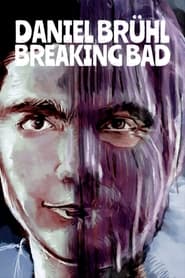
Daniel Brühl: Breaking Bad
A portrait of the Spanish-German actor Daniel Brühl, a versatile performer capable of moving easily from the gentlest to the darkest role.

Movie
2009•
8.0
Iran: The Hundred Year War
What kind of world power is Iran becoming, and how will Western countries deal with it?

Movie
2005•
8.0
Through This Night
The film portrays the final days of the most famous Czech authoress, Božena Nìmcová, who in the mid-19th century dared to live a life free of social constraints.

Movie
2014•
8.0
Das Rätsel der Gefälschten Mumie
Movie
2014•
6.7
Caligari: When Horror Came to Cinema
On February 26, 1920, Robert Wiene's world-famous film The Cabinet of Dr. Caligari premiered at the Marmorhaus in Berlin. To this day, it is considered a manifesto of German expressionism; a legend of cinema and a key work to understand the nature of the Weimar Republic and the constant political turmoil in which a divided society lived after the end of the First World War.

Movie
2021•
8.5
A Life for Movies: Lotte Eisner
Born in Berlin in 1896, Lotte Eisner became famous for her passionate involvement in the world of both German and French cinema. In 1936, together with Henri Langlois, she founded the Cinémathèque Française with the goal of saving from destruction films, costumes, sets, posters, and other treasures of the 7th Art. A Jew exiled in Paris, she became a pillar of the capital's cultural scene, where she promoted German cinema.
Movie
2019•
7.0
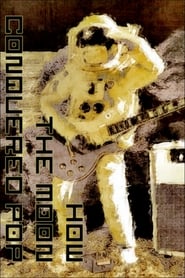
How the Moon Conquered Pop
Musicians inspired by the Moon. Since the Apollo landings, the Moon has entered popular consciousness like never before. A journey through pop music's lunar obsession.
Movie
2023•
5.4
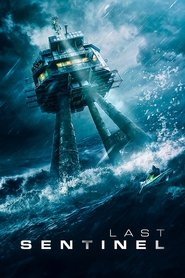
Last Sentinel
Set in the future on a war-ravaged Earth, four exhausted soldiers man Sentinel - a remote military base in a vast ocean that separates two warring continents. While their tour of duty ended three months ago, the relief crew still hasn't arrived and as the empty weeks turn to months, paranoia descends, testing relationships to breaking point...

Movie
2020•
6.7
Frenemies: Putin and Trump
Russian President Vladimir Putin was one of the first politicians to congratulate Donald Trump on his election as president of the United States in 2016, but over time the relationship between the two heads of state has had its ups and downs. Are they friends or enemies? Has their mutual admiration turned into mutual distrust?
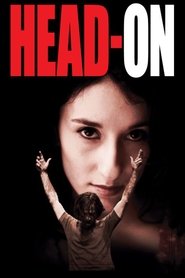
Movie
2004•
7.5
Head-On
With the intention to break free from the strict familial restrictions, a suicidal young woman sets up a marriage of convenience with a forty-year-old addict, an act that will lead to an outburst of envious love.
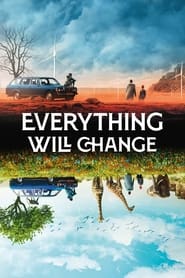
Movie
2022•
6.4
Die 2050er - Everything will change
In a dystopian 2054, three young rebels go on a journey to find traces of the long lost beauty of nature, hoping to discover what happened to their planet.

Movie
2024
Die Brust in der Kunst
The female breast has been a motif for as long as there has been art. For centuries, people have been creating works that showcase this intimate and emotionally charged part of the body. Today, female artists are questioning traditional ideals of beauty and countering the male-dominated perspective of the breast with their own.
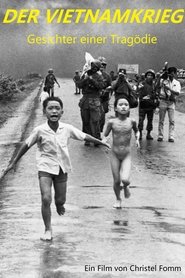
Movie
2015•
8.0
Der Vietnamkrieg - Gesichter einer Tragödie
The Vietnam War was the longest conflict of the 20th century. It was the first time that the media brought a war into our living rooms. This had consequences: Its images are deeply engraved in our memories: the widespread dropping of napalm bombs, the naked girl fleeing screaming from a cloud of fire. This war came to an end on May 1, 1975.
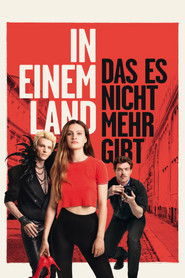
Movie
2022•
6.2
In a Land That No Longer Exists
It's 1989 in East Berlin: Suzie is kicked out of school shortly before she graduates from high school and has to defend herself as a worker in the cable factory. However, a randomly taken photo leads her to the fashion world of the GDR. The editor-in-chief Elsa Wilbrodt put her on the cover of Sibylle, the fashion magazine of the GDR. In the Berlin underground scene she made the acquaintance of the gay fashion designer Rudi and the photographer Coyote. Suzie must decide if she's brave enough to leave the old strands behind forever.

Movie
2021•
6.1
The Case of Bruno Lüdke
The incredible story of Bruno Lüdke (1908-44), the alleged worst mass murderer in German criminal history; or actually, a story of forged files and fake news that takes place during the darkest years of the Third Reich, when the principles of criminal justice, subjected to the yoke of a totalitarian system that is beginning to collapse, mean absolutely nothing.

Movie
2005•
6.3
The Piano Tuner of Earthquakes
Dark fairytale about a demonic doctor who abducts a beautiful opera singer with designs on transforming her into a mechanical nightingale.

Movie
2022•
3.0
Spain: A Country Divided
Obsessively referring to the traumas and wounds that the Spanish civil war (1936-39) and Franco's dictatorship (1939-75) caused in their day no longer serves to explain the impassable abyss of incomprehension and hatred that the abject policies and radical positions adopted by both the right and the left in recent decades have opened up before the citizens of a country that is barely known beyond hackneyed cultural clichés.
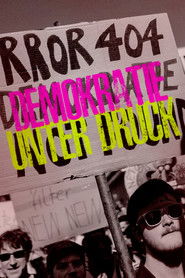
Movie
2019•
5.0
Demokratie unter Druck – Europa vor der Wahl
Thoughts of a diversity of public and private citizens on the virtues of democracy, its faults, its decadence, its fall and the rise of populism.

Movie
2024•
10.0
Lyonel Feininger – Ein Künstler zwischen den Welten
Lyonel Feininger's work is as individual and unmistakable as he is himself. As a classical modernist artist, he is difficult to categorize. He lived and worked in Germany for a long time. He began his career as a caricaturist, later became known as a painter and headed the printing workshops at the Bauhaus. His work cannot be classified as cubism or expressionism. The film visits places that inspired him, such as Paris, the villages around Weimar and, above all, the Baltic coast - many of which are reflected in Feininger's work and make the development of his oeuvre comprehensible.

Movie
2021•
8.0
Christoph Waltz - The Charm of Evil
Christoph Waltz, the villain with the friendly face, has become an integral part of the international cinema landscape. His breakthrough came with his roles as an SS standard bearer and bounty hunter in films by Quentin Tarantino. His charming portrayal of evil breaks with all clichés and won him two Oscars.

TV
2018•
7.3
Bad Banks
Ambitious Jana is confronted with the unscrupulous machinations of the world of finance. Her working life is determined by egotism, the pressure to succeed and machismo. She soon has to decide how far she is prepared to go for her career.

TV
N/A
Karambolage
Words, rituals, objects, references... Karambolage offers an amused comparative anthropology of the locals on both sides of the Rhine.
TV
2021•
9.5
42 – The Answer to Almost Everything
What would we be without mucus? Can we live on water? How much does life weigh? Finding out the answers is the aim of ARTE's new science show. In a nod to Douglas Adams's "Hitchhiker's Guide to the Galaxy", where the figure 42 is the ultimate answer to all questions, 42 tries to provide the answers.
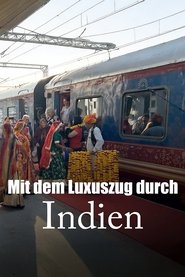
TV
2006•
8.0
With the Train Through...

TV
2019
Flüsse des Lichts
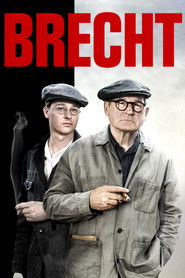
TV
2019•
5.3
Brecht
East Berlin, 1956. Bertolt Brecht, revolutionary of the theater and poet of the state, looks back: his exploits as a teenager during the World War I; his romantic adventures during the twenties; the escape of the Nazi regime; the return from exile. The life of a timeless classic, a class fighter, an indefatigable free spirit, a committed artist.
TV
2017•
6.9
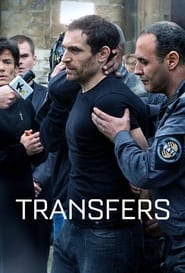
Transfers
Thanks to science, after five years of coma, Florian has his mind transferred into another's body. Now he has to hide his identity, living as an officer with BATI, the anti-transfers unit.
TV
2024•
6.5
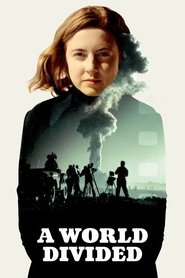
A World Divided
When World War II breaks out in 1939, several people from different countries and social backgrounds must decide which cause they want to defend.

TV
2020•
8.0
Brothers at War
A look back at a cruel conflict, the Franco-Prussian War (1870-71), which changed the political geography of Europe and sowed the seeds of a deep antagonism between France and Germany that culminated in two world wars. Excerpts from the diaries of the witnesses, photographs and painted panoramas tell the truth about a forgotten war.

TV
2020•
6.5
Labyrinth of Peace
1945 Zero hour. Europe is reduced to rubble. Thirty million displaced and uprooted people. At the heart of this ravaged continent lies Switzerland. This small neutral country, which has been all but spared by the war, becomes a hub for Nazi war criminals, Allied Secret Services and Holocaust survivors.
TV
2019•
7.5
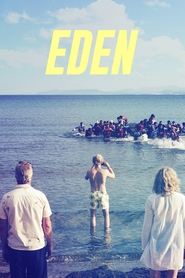
Eden

TV
2011•
7.0
Wild Germany
The fairytale river landscape of the Spreewald, the flocks of birds of the North Frisian Wadden Sea and the striking chalk cliffs on the island of Rügen. You can see unique landscapes and their fauna in the different regions of Germany.
TV
2024•
8.0
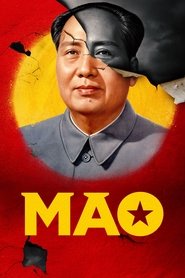
Mao
The People’s Republic of China now plays a central role in global politics, economics and diplomacy – more than it ever has before. Its president, Xi Jinping openly espouses the model forged by former Chairman, Mao Zedong, known as the Great Helmsman. But what do we really know about Mao? And how does his legacy relate to Xi’s ‘China Dream’? This 3-part documentary series explores Mao Zedong, his beliefs and his methods. It shows how these have shaped Xi’s philosophy and the reality of today’s China. Mao had set China on the road to true sovereignty, freeing it from the humiliation of foreign domination. Xi is now completing that journey towards the strong Middle Kingdom and cultural predominance that Mao aimed for – while sweeping under the carpet the unthinkable victims and costs of Mao’s rule. The story arc of Mao’s astonishing biography provides varied and profound insights into the ideals, strategies and ambitions of today’s People’s Republic and its position in the next decade.

TV
2010•
3.0
Gier
An employee of a real estate company falls for an impostor.

TV
2021
Mit dem Postschiff durch die Südsee - Die magischen Marquesas-Inseln

TV
2024•
8.1
House of Glass
The slow descent into family hell. Four brothers and sisters get together for the wedding of their youngest daughter. The atmosphere, initially joyful, grows heavier as old family grudges resurface.

TV
2015•
9.0
Jan Hus
Prague at the end of the 14th century: King Wenceslas, his brother Sigismund, the Archbishop of Prague Zbynek and three popes are locked in a power struggle. All lay claim to influence over the Holy See. Jan Hus, a master of Charles University and preacher, feels partly responsible for the fate of the divided church and its faithful, for whom it serves as a role model. He thus attracts the resentment of the powerful. "Jan Hus" is the story of a man who, because of his convictions, faced death in the battle between the opinions and ambitions of ecclesiastical and secular authorities.

TV
2022•
10.0
L’Autriche, la nature en mouvement

TV
2020•
7.0
Colonia Dignidad
The self-proclaimed preacher Paul Schäfer gathered people around him in post-war Germany. The sect founded a youth home near Cologne. But in 1961 Schäfer had to flee. Many followers followed him to Chile. 350 kilometers south of Santiago, far away from civilization, they begin building the Colonia Dignidad. A supposed model village with workshops, agriculture, livestock breeding was being created. But paradise became hell because slave labor, violence and sexual abuse soon became a part of everyday life. After the military coup in 1973, Schäfer served the new rulers: secret police chief Manuel Contreras and dictator Augusto Pinochet now came and went in the colony, while the opponents of the terrorist regime are tortured and killed in the cellars. Using unpublished archive material and contemporary witness statements, this 4-part documentary miniseries traces the complex, 50-year history of perpetrators, victims, supporters and opponents of this place that became the epitome of evil.
TV
2024•
10.0
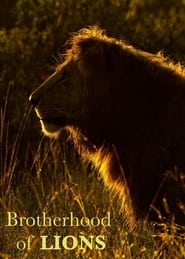
Brotherhood of Lions
A story of the daily lives and struggles of five young lions in the Black Rock region of Kenya’s Masai Mara reserve. Born in 2017, the lions were given names by the Masai people to suit their personalities: Olumina, the lame one, is the most sexually active but has difficulty walking. Olosiadu, the stay-behind, is cautious and often isolates himself. Lorkulup, the tag-along, has a permanent runny nose that hinders him from hunting with his brothers. Orpadan, the hunter, is always in the lead and first to their prey. Oloborr, the sister-killer, is the strongest male and the boss of the group