Content from Argos Comunicación

Movie
2009•
6.4
Backyard
Officer Blanca Bravo arrives in Juarez, Mexico — a grim nexus of corporate colonialism and sexual tourism — to investigate a rash of killings targeting female migrant workers. But with no help from the locals, bringing the responsible parties to justice becomes a frustrating exercise. As Bravo rails against indifference and local corruption, she finds herself on a collision course with Mickey Santos, a Mexican mogul with a taste for young prostitutes.
Movie
2018•
5.3
Traición
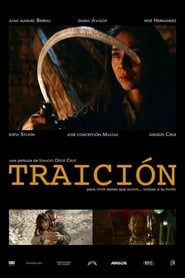
Felix (56) a criminal boss in the south of Mexico, has always wanted to go to San Francisco so see how drawbridges rise for ships to go through. Misela (23), whose romantic partners die if they make her cry, seeks comfort in her mother and wants to know where she is buried. They are father and daughter, and one must betray the other in order to go on living.

Movie
2021•
5.2
Feral
The mountains of Oaxaca harbor the remains of a ravaged and burnt shelter, once home to a psychoanalyst priest who used it to look after savage children, trying to re-integrate them into society. Through videotape diaries and interviews, the truth of what happened is shockingly revealed.

Movie
2013•
4.9
Abolition of Property
(In a dark basement) Norma hears the faint voice of Everio and her own, from an Ampex vintage tape recorder. They have been talking incessantly, and *oftentimes the taped conversations coincide with their *chats. The only thing troubling Norma is that until that day, she and Everio had never met and the last she heard was Everio strangling her.

Movie
2022
Una Obra del Pueblo

TV
2013•
7.9
El Señor de los Cielos
Set in the 1990s, these are the life and times of Amado Carrillo Fuentes, a man who became the head of the Juárez cartel. Nicknamed “El Señor de los Cielos” (Lord of the Skies) because of the large fleet of airplanes he used to transport drugs, he was also known for washing more than $200 million through Colombia to finance his huge fleet. He is described as the most powerful drug trafficker of his time.

TV
2014•
7.8
Senora Acero
The adventures of Vicenta Acero, the feared coyote who now leads the dynasty of illicit dealings once under the control of her father.

TV
2013•
7.7
The Return
La Patrona is a Spanish-language telenovela produced by United States-based television network Telemundo Studios, Miami and Mexican Argos Comunicación. The telenovela is a remake of the Venezuelan telenovela La Dueña, written by José Ignacio Cabrujas. The name reflects a local term or slang in Mexico to address a person recognized as the main boss. However, the title is also a reflection of both the protagonist and the antagonist struggle to conquer power, authority and respect in a labor field traditionally deemed to be a man's job.

TV
2018•
7.6
False Identity
Isabel and Diego, two complete strangers, must assume the identity of a married couple in order to flee the state of Sonora.

TV
2016•
7.4
La Doña
A story of revenge and ambition, seduction and betrayal; all told from the perspective of an offended and abused woman named Altagracia. Altagracia represents the hundreds of thousands of Mexican women who have been victims of the violence by faceless men who are protected by impunity. But Altagracia, transformed into a strong-willed, ruthless man-eater known as La Doña, will seek out each and every one of these men to bring them to justice.

TV
2006•
2.0
Marina
Marina is a beautiful, sweet young woman who makes a living driving a tourist boat. Her simple life transforms when her mother dies unexpectedly and she inherits a large family fortune. Marina moves into an elegant mansion owned by the wealthy Alarcón Morales family, who treat her with evil, scorn and rejection.

TV
2023•
7.6
Triptych
After learning she was separated at birth from her two identical sisters, Rebecca embarks on a perilous journey to uncover the truth about her origins.

TV
2014•
7.2
The Impostor
La Impostora, is a Spanish-language telenovela presumably to be produced by United States-based television network Telemundo Studios, Miami.

TV
1997•
4.4
Mirada de Mujer
Mirada de mujer is a Mexican telenovela, which was produced by and broadcast on TV Azteca in 1997, based in the Colombian telenovela of 1994 " Señora Isabel". It is considered one of the best Telenovelas in the history of the television industry in Mexico. It came a year after TV Azteca's first telenovela, Nada personal and was the first telenovela in that TV station for its five mayor stars, who had been working for the rival station, Televisa, prior to this production. In 2003 the sequel for this telenovela Mirada de mujer: El Regreso was produced. This telenovela can be dated so far as the only TV Azteca telenovela that got the TVyNovelas Award as Best Telenovela of the Year in a shocking moment, making Televisa know to the audience the respect that got over his competitor product as long as the TVyNovelas Awards are only given to Televisa programs. Aside from enjoying wide viewership in Latin America, it was also broadcast in countries like Afghanistan and Israel and Eastern Europe. In India, this was shown by Sahara TV, dubbed in Hindi, under the title of Maria.

TV
2025•
8.2
Con esa misma mirada
After 25 years of marriage, Eloísa learns her husband is having an affair with a younger man and separates. Her newfound solitude leads her to self-discovery and the pursuit of new love.

TV
2012•
7.7
Infames

TV
2007
Mientras haya vida

TV
2013•
2.0
Fortuna
Fortuna is a Mexican Spanish language telenovela produced by Argos Television for Cadena Tres. It stars Andrés Palacios and Lisette Morelos.

TV
2011•
2.0
El Octavo Mandamiento

TV
2013
Las Trampas del Deseo

TV
1996
Nothing Personal
Police chief Fernándo Gomez Miranda kills his friend, the well-respected lawyer and likely candidate for Attorney General, Raúl de Los Reyes and his youngest daughter of only thirteen in a vehicle ambush. Gomez' son, Luis Mario – a sad-eyed broadcast journalist of passionate conviction – arrives on the scene soon after with his camera and discovers a wounded survivor in the car; Camila, the eldest daughter of de Los Reyes. Luis rushes her to the hospital, saving her life and thereby creating a bond between them that he cannot escape. Luis' half-brother, police detective Alfonso Carbajal, is assigned to the case. An old schoolmate of Camila's, Alfonso has long been in love with her and conflicts arise when all evidence points to Camila being involved in the drug trade. The two brothers find themselves caught between their professional duty that would require them to expose Camila and their desire to protect her.

TV
2019•
7.6
Dani Who?

TV
2008
Deseo Prohibido

TV
2014