Content from AP Films
Movie
2016
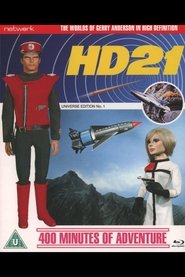
HD21 The Worlds of Gerry Anderson in High Definition
Episodes from Gerry Anderson's Supercar, Fireball XL5, Stingray, Thunderbirds, Captain Scarlet, Joe 90 and The Secret Service in High Definition.
Movie
1965
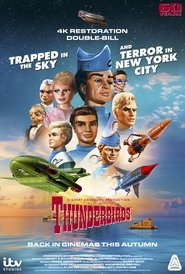
Thunderbirds: Terror In New York City
Largely regarded as the most exciting Thunderbirds episode made, after Thunderbird 2 is heavily damaged in a mistaken attack, it leaves the team seemingly without a swift means to transport any rescue gear to New York City to save a news crew trapped underneath the collapsed Empire State Building.
Movie
1965
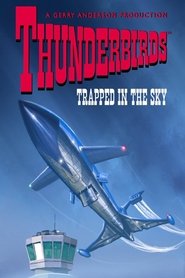
Thunderbirds: Trapped in the Sky
A criminal known only as the Hood places a bomb in the landing gear of a new supersonic airliner, Fireflash, hoping to draw out a newly created, privately funded emergency response team called International Rescue.
Movie
1985
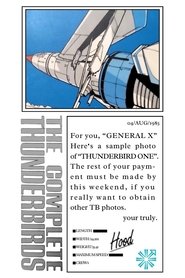
The Complete Thunderbirds
Hideaki Anno's first major professional work in which he served as lead editor on a highlights compilation that combined several Thunderbirds episodes into one movie.

Movie
1965
Thunderbirds: Pit of Peril
The US Army are testing their new armoured vehicle, the Sidewinder, when suddenly the ground gives way, leaving the machine stuck in a burning pit. International Rescue are called in to haul it out and rescue the three-man crew on board.
Movie
1999•
6.4
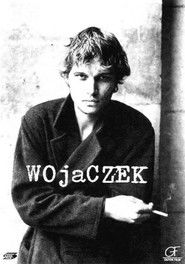
Wojaczek
Polish rebel Rafal Wojaczek writes poetry and lives life on the edge before his suicide in 1971.
TV
1965•
7.5
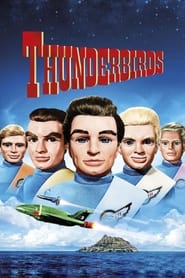
Thunderbirds
Thunderbirds is a 1960s British science-fiction television series which was produced using a mixed method of marionette puppetry and scale-model special effects termed "Supermarionation". The series is set in the 21st century and follows the exploits of International Rescue, a secret organization formed to save people in mortal danger with the help of technologically advanced land, sea, air and space vehicles and equipment, launched from a hidden base on Tracy Island in the South Pacific Ocean.
TV
1964•
6.7
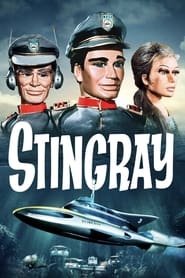
Stingray
A British children's Supermarionation television series.
TV
1961•
6.6
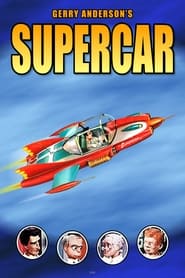
Supercar
Follows the adventures of Mike Mercury and the test crew at Black Rock Laboratory in the Nevada Desert in 1962, as they test out Supercar, a prototype vehicle capable of traveling on land, can dive underwater, and can fly through the air.
TV
1962•
6.1
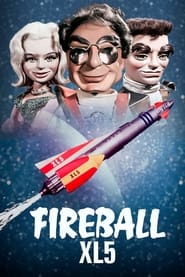
Fireball XL5
Fireball XL5 is a science fiction-themed children's television show following the missions of spaceship Fireball XL5, commanded by Colonel Steve Zodiac of the World Space Patrol. The show was produced in 1962 by husband and wife team Gerry and Sylvia Anderson through their company APF, in association with ATV for ITC Entertainment. While developing his new show, Anderson thought a brand of motor oil—Castrol XL—had an interesting sound. A phonetic change created the name "Fireball XL", with the "-5" added as the title seemed a bit flat without the numeral. The show featured the Andersons' Supermarionation, a form of puppetry first introduced in Four Feather Falls and Supercar and used again in their subsequent productions such as Stingray and Captain Scarlet. Thirty-nine black and white half-hour episodes of Fireball XL5 were made on 35mm film: all future Anderson series were produced in colour. Several Anderson series have been shown in syndication in the US, but Fireball XL5 is the only Anderson series to have run on a US network. NBC ran the series in its Saturday morning children's block from 1963 through to September 1965. A similar programme often confused with Fireball XL5 is Space Patrol, produced by Gerry Anderson's ex business partner and co-founder of AP Films, Arthur Provis due to a number of similarities and settings.

TV
1960•
5.7
Four Feather Falls
Four Feather Falls was the third puppet TV show produced by Gerry Anderson for Granada Television. It was based on an idea by Barry Gray, who also wrote the show's music. The series was the first to use an early version of Anderson's Supermarionation puppetry. Thirty-nine 13-minute episodes were produced, broadcast by Granada from February until November 1960. The setting is the late 19th-century fictional Kansas town of Four Feather Falls, where the hero of the series, Tex Tucker, is sheriff. The four feathers of the title refers to four magical feathers given to Tex by the Indian chief Kalamakooya as a reward for saving his grandson: two allowed Tex's guns to swivel and fire without being touched whenever he was in danger, and two conferred the power of speech on Tex's horse and dog. Tex's speaking voice was provided by Nicholas Parsons, and his singing voice by Michael Holliday. The series has never been repeated on British television, but it was released on DVD in 2005.
TV
1957•
7.5
The Adventures of Twizzle
The Adventures of Twizzle is the very first television show produced by AP Films and specifically Gerry Anderson, after being approached by author Roberta Leigh and her colleague Suzanne Warner. Sources vary as to who directed the series. In addition to his production duties, Anderson also directed the action whilst photography was directed by Arthur Provis, Anderson's founding partner at AP Films. The music for the songs were written by Leslie Clair, the music was scored by Barry Gray, art direction came from Reg Hill and special effects were by Derek Meddings, all of whom would become long-time collaborators with Anderson.
TV
1960•
5.0
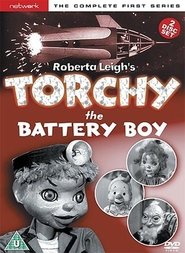
Torchy the Battery Boy
Torchy the Battery Boy was the second television series produced by AP Films and Gerry Anderson, running from 1960 to 1961. It was another collaboration with author Roberta Leigh and was directed by Anderson, with music scored by Barry Gray, art direction from Reg Hill and special effects by Derek Meddings. The second series of 26 episodes was produced by Associated British-Pathé without the involvement of Anderson and AP Films. Both series have been released on DVD. The series followed adventures of the eponymous boy doll with a battery inside him and a lamp in his head, and his master Mr Bumbledrop, voiced by Kenneth Connor, who also voiced a number of other characters.
TV
2022
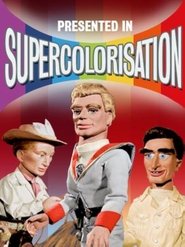
Presented in Supercolorisation
Prior to Stingray, Gerry Anderson produced three series in black and white - their only colour representation being a small number of on-set stills taken during production. Using these as a basis, key episodes of Four Feather Falls, Supercar and Fireball XL5 have been colourised from High Definition remasters using state-of-the-art software, enabling fans to see their favourite shows in a whole new way!