Content from American Experience Films

Movie
2025
Change, Not Charity: The Americans with Disabilities Act
Change, Not Charity: The Americans with Disabilities Act tells the emotional and dramatic story of the decades-long push for equality and accessibility that culminated in the passage of the Americans with Disabilities Act (ADA) in 1990. While curb cuts, ramps at building entrances, and braille on elevator buttons seem commonplace today, they were once the subject of a pitched battle that landed on the steps of Congress. Told through the voices of key participants and witnesses, the film highlights the determined people who literally put their bodies on the line to achieve their goal and change the lives of all Americans. A story of courage and perseverance, the film brings to life one of the great civil rights movements in American history, where ordinary people made their voices heard and Congress responded. A testament to the power of coalition building and bipartisan compromise, the passage of the ADA is a shining example of democracy in action.
Movie
2022•
8.0
Casa Susanna
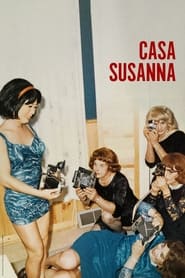
In the 50s and 60s, deep in the American countryside at the foot of the Catskills, a small wooden house with a barn behind it was home to the first clandestine network of cross-dressers. Diane and Kate are now 80 years old. At the time, they were men and part of this secret organization. Today, they relate this forgotten but essential chapter of the early days of trans-identity. It is a story full of noise and fury, rich in extraordinary characters, including the famous Susanna, who had the courage to create this refuge that came to be known as Casa Susanna.
Movie
2025
Kissinger
This two-part, three-hour biography, offers an incisive portrait of Henry Kissinger, the enigmatic powerbroker who served in the topmost echelons of American diplomacy. Whether celebrated or reviled, Kissinger’s contradictions reflect those at the heart of America’s foreign policy during the second half of the 20th century, a period in which America became the unchallenged superpower in the world yet often pursued policy at odds with its own highest ideals.By examining his life up to and throughout his tortured relationship with President Richard Nixon, Kissinger endeavors to understand precisely what drove his relentless drive for power. It is a story of deep contradictions — of Kissinger’s obsession with securing American supremacy, staving off nuclear war, and checking the power of our enemies, even while consorting with dictators and tolerating widespread violation of human rights.
Movie
2017•
6.9
Oklahoma City
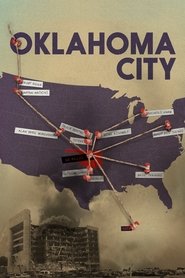
The bombing of the Alfred P. Murrah Federal Building in Oklahoma City in April 1995 is the worst act of domestic terrorism in American history. This documentary explores how a series of deadly encounters between American citizens and federal law enforcement—including the standoffs at Ruby Ridge and Waco—led to it.
Movie
2018•
6.0
The Circus
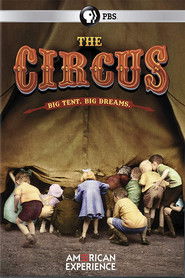
Drawing upon a vast and richly visual archive and featuring a host of performers, historians and aficionados, this four-hour mini-series follows the rise and fall of the gigantic, traveling tented railroad circus and brings to life an era when Circus Day would shut down a town and its stars were among the most famous people in the country.
Movie
2020•
7.0
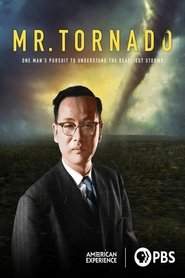
Mr. Tornado
Meteorologist Tetsuya Theodore "Ted" Fujita spent ten months studying The Super Outbreak of 1974, which was the most intense tornado outbreak on record. Mr. Tornado is the remarkable story of the man whose groundbreaking work in research and applied science saved thousands of lives and helped Americans prepare for and respond to dangerous weather phenomena.
Movie
2023•
8.0
The Harvest: Integrating Mississippi's Schools
In The Harvest, Pulitzer Prize-winning author Douglas A. Blackmon looks back at how school integration transformed his hometown of Leland, Mississippi. After the 1954 Supreme Court ruled that racial segregation in public schools was unconstitutional, little more than token efforts were made to desegregate Southern schools. That changed dramatically on October 29, 1969, when the high court ordered that Mississippi schools to fully — and immediately — desegregate. As a result, a group of children, including six-year-old Blackmon, became part of the first class of Black and white children who would attend all 12 grades together in Leland.
Movie
2010•
7.6
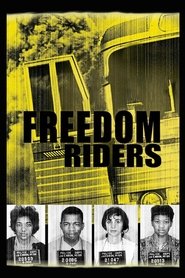
Freedom Riders
This is the story of more than four hundred Americans who participated in a bold and dangerous experiment designed to awaken the conscience of a complacent nation. These self-proclaimed, 'Freedom Riders' challenged the mores of a racially segregated society by performing a disarmingly simple act.
Movie
2025•
10.0
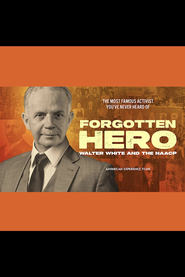
Forgotten Hero: Walter White and the NAACP
While many consider the birth of the civil rights movement to be 1955, when Rosa Parks refused to give up her seat on an Alabama bus, the stage had been set decades before by activists of the National Association for the Advancement of Colored People. Some of the NAACP leaders are familiar, including W.E.B. Du Bois and Thurgood Marshall, but Walter White, head of the NAACP from 1929 to 1955, has been all but forgotten. With his blond hair and blue eyes, Walter White looked white; he described himself as “an enigma, a Black man occupying a white body.” Like virtually all light-skinned African Americans of his day, White was descended from enslaved Black women and powerful white men. But he was Black — by law, identity, and conviction and spent his entire life fighting for Black civil rights. Forgotten Hero: Walter White and the NAACP traces the life of this neglected civil rights hero and seeks to explain his disappearance from our history.
Movie
2021
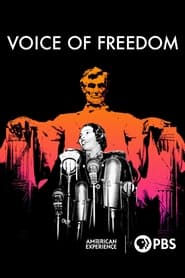
Voice of Freedom
On Easter Sunday, 1939, contralto Marian Anderson stepped up to a microphone in front of the Lincoln Memorial. Inscribed on the walls of the monument behind her were the words “all men are created equal.” Barred from performing in Constitution Hall because of her race, Anderson would sing for the American people in the open air. Hailed as a voice that “comes around once in a hundred years” by maestros in Europe and widely celebrated by both white and black audiences at home, her fame hadn’t been enough to spare her from the indignities and outright violence of racism and segregation.

Movie
2023•
8.5
The Riot Report
In 1967, President Lyndon B. Johnson appointed the Kerner Commission to investigate why Black neighborhoods all over the country were “rioting” in protest. He was blindsided by the findings, which blamed the government for race-exclusive policies that fomented poverty, housing crises, unemployment, and discrimination. The film commemorates the landmark report and hints at lessons for a world where racism continues to be a divisive, damaging force.
Movie
2024•
8.0
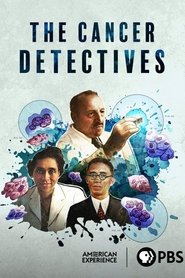
The Cancer Detectives
The story of how the life-saving cervical cancer test became an ordinary part of women’s lives is as unusual and remarkable as the coalition of people who ultimately made it possible: a Greek immigrant, Dr. George Papanicolau; his intrepid wife, Mary; Japanese-born artist Hashime Murayama; Dr. Helen Dickens, an African American OBGYN in Philadelphia; and an entirely new class of female scientists known as cyto-screeners. But the test was just the beginning. Once the test proved effective, the campaign to make pap smears available to millions of women required nothing short of a total national mobilization. The Cancer Detectives tells the untold story of the first-ever war on cancer and the people who fought tirelessly to save women from what was once the number one cancer killer of women.
Movie
2005
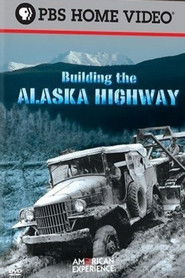
Building the Alaska Highway
In May of 1942, across the rugged sub-Arctic wilderness of Alaska and Canada, thousands of American soldiers began one of the biggest and most difficult construction projects ever undertaken-building the Alaska Highway. This program tells how young soldiers battled mud, muskeg, and mosquitoes; endured ice, snow, and bitter cold; and cut pathways through primeval forests to push a 1,520-mile road across one of the world's harshest landscapes.
Movie
2023•
6.7
The War on Disco
The War on Disco explores the culture war that erupted over the spectacular rise of disco music. Originating in underground Black and gay clubs, disco had unseated rock as America’s most popular music by the late 1970s. But many diehard rock fans viewed disco, with its repetitive beat and culture that emphasized pleasure, as shallow and superficial. A story that’s about much more than music, The War on Disco explores how the powerful anti-disco backlash revealed a cultural divide that to some seemed to be driven by racism and homophobia. The hostility came to a head on July 12, 1979, when a riot broke out at “Disco Demolition Night” during a baseball game in Chicago.

Movie
2025
Clearing the Air: The War on Smog
In July 1943, dark, smoky clouds suddenly descended over Los Angeles, causing residents to complain of burning eyes, nausea, and difficulty breathing. People couldn’t see across the street and visibility was so bad that cars crashed. With World War II raging, many feared a chemical attack by the Japanese, but it soon became evident that no foreign enemy was to blame. The waves of pollution called “smog” — a combination of “smoke” and “fog” — continued and the cause remained a mystery. It was the beginning of an epic struggle for clean air involving years of scientific investigation and civic pressure, bringing together people across ideological divides in a remarkable example of bipartisanship. Their work would lead to the creation of the Environmental Protection Agency and the Clean Air Act, which have had an enduring effect on the quality of air Americans breathe.
Movie
2005•
6.0
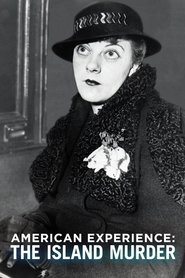
The Massie Affair
In the waning days of summer 1931, Honolulu's tropical tranquility was shattered when a young Navy wife made a drastic allegation of rape against five nonwhite islanders. What unfolded in the following days and weeks was a racially-charged murder case that would make headlines across the nation, enrage Hawai'i's native population, and galvanize the island's law enforcers and the nation's social elite.
Movie
2024•
7.5
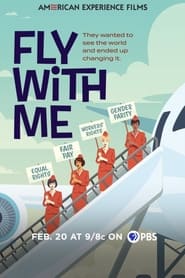
Fly With Me
Fly With Me tells the story of the pioneering young women who became flight attendants at a time when single women were unable to order a drink, eat alone in a restaurant, own a credit card or get a prescription for birth control. Becoming a “stewardess,” as they were called, offered unheard-of opportunities for travel, glamour, adventure and independence. Although often maligned as feminist sellouts, these women were on the frontlines of the battle to assert gender equality and transform the workplace. Featuring firsthand accounts, personal stories and a rich archival record, the film tells the lively and important but neglected history of the women who changed the world while flying it.
Movie
2024•
8.2
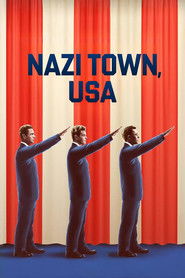
Nazi Town, USA
In February 1939, more than 20,000 Americans filled Madison Square Garden for an event billed as a “Pro-American Rally.” Images of George Washington hung next to swastikas and speakers railed against the “Jewish controlled media” and called for a return to a racially “pure” America. The keynote speaker was Fritz Kuhn, head of the German American Bund. Nazi Town, USA tells the largely unknown story of the Bund, which had scores of chapters in suburbs and big cities across the country and represented what many believe was a real threat of fascist subversion in the United States. The Bund held joint rallies with the Ku Klux Klan and ran dozens of summer camps for children centered around Nazi ideology and imagery. Its melding of patriotic values with virulent anti-Semitism raised thorny issues that we continue to wrestle with today.
Movie
2026
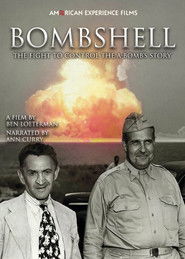
Bombshell
Eighty years after the devastating atomic bombings that ushered in the nuclear age, Bombshell explores how the U.S. government manipulated the narrative about the atomic bombings of the Japanese cities Hiroshima and Nagasaki. Through propaganda, censorship and the co-opting of the press, the government presented a benevolent picture of atomic power, minimizing the horrific human toll. Bombshell sheds light on the efforts of a group of intrepid reporters to let the world know the truth.
Movie
1998•
6.5
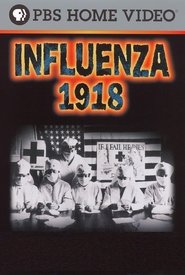
Influenza 1918
Influenza 1918 is the story of the worst epidemic the United States has ever known. Before it was over, the flu would kill more than 600,000 Americans - more than all the combat deaths of this century combined.
TV
2015•
8.0
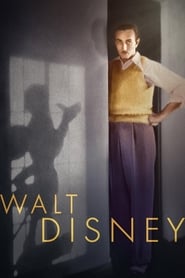
Walt Disney
Two-part documentary series about the life and legacy of Walt Disney, featuring archival footage only recently released from the Disney vaults, alongside scenes from some of his greatest films.